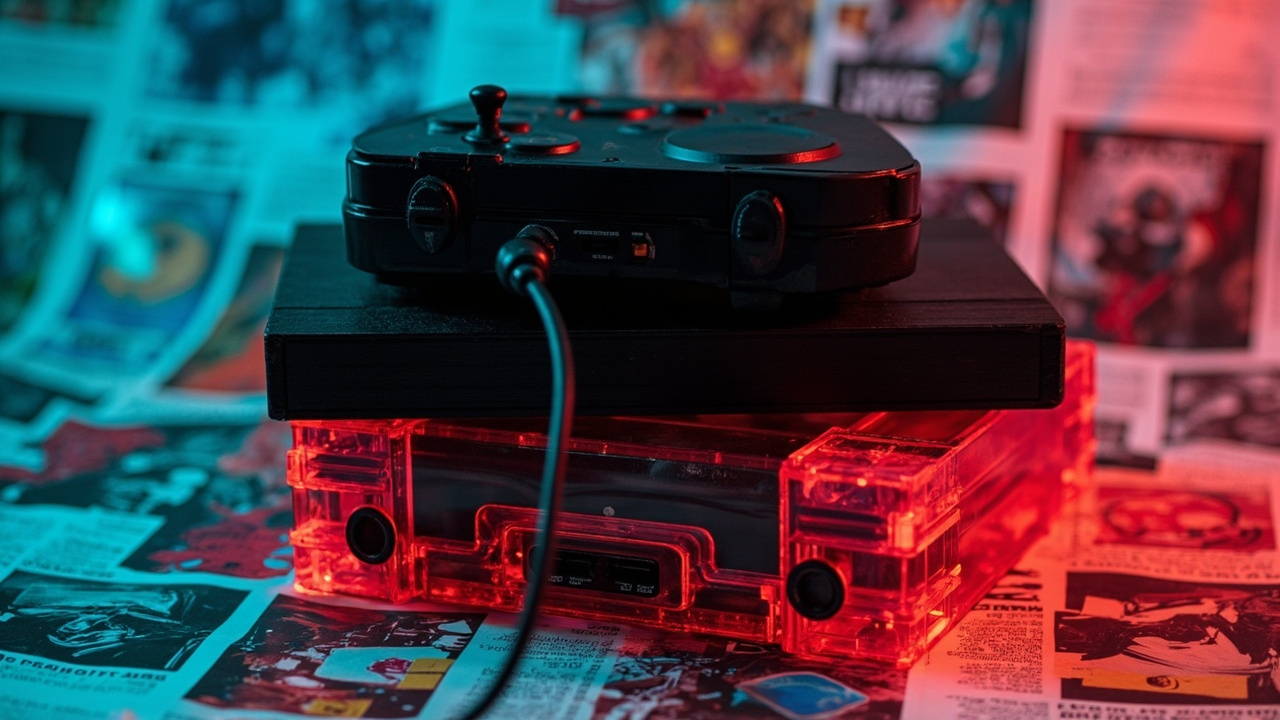
Analogue has shipped firmware update 3DOS v1.5.0 for the Analogue 3D, its FPGA-based Nintendo 64 console. The headline addition is a new feature called Internal Graphical Upscaling, which the company says “enhances detail and clarity” while preserving the look and behavior of the original hardware rendering pipeline.
The release lands as a free firmware update, continuing Analogue’s long-standing pattern of expanding the capabilities of its FPGA consoles well after launch through software revisions rather than locked-down hardware. Owners apply the update through the company’s standard firmware channel, and 3DOS v1.5.0 represents another step in the maturing software stack that ships with the Analogue 3D.
Why It Matters for Retro Enthusiasts
For purists running N64 cartridges on original hardware, the Analogue 3D has long been pitched as a way to play faithful software on modern displays without the lag and quirks of software emulation. The new upscaling option sits squarely in that lane: it is implemented at the FPGA level, meaning the system reconstructs the original graphics output before resampling it for higher-resolution panels, instead of leaning on a host GPU to guess what the pixels should be.
That distinction matters to collectors and competitive players who have been wary of post-processing filters that smooth over the chunky polygons, low-resolution textures, and color quirks that defined late-1990s console visuals. Sharper edges and cleaner output without abandoning the look of an N64 is exactly the balancing act the retro community has been asking FPGA manufacturers to pull off.
Beyond image quality, frequent firmware drops have become part of the value proposition for Analogue hardware. Each update tends to add new features, refine compatibility, and occasionally unlock capabilities the original silicon could not deliver at the time, keeping the device relevant long after the box arrives on a collector’s shelf. The 3DOS line in particular has steadily matured since the Analogue 3D first shipped.
Background: Analogue’s FPGA Approach
Analogue has built its reputation on FPGA implementations of classic consoles, a hardware path that differs fundamentally from software emulation. Rather than translating a console’s CPU and GPU instructions on the fly, an FPGA can be configured to physically recreate the original logic gates, yielding cycle-accurate behavior. Earlier Analogue releases brought this approach to systems ranging from the Game Boy and Neo Geo pocket form factor to the Super Nintendo and Sega Genesis, and the 3D extended that philosophy to the Nintendo 64’s notoriously complex Reality Coprocessor.
The original Nintendo 64 debuted in 1996 in Japan and the following year in North America, establishing a library known for ambitious 3D experiments along with the visual rough edges that came with the territory. Modern HDTVs have historically been unkind to those signals, which is part of why FPGA-based recreation and high-quality upscaling have become such a focal point for hardware makers serving the retro community.
With Internal Graphical Upscaling now part of 3DOS, the Analogue 3D joins a growing list of retro-focused devices that attempt to bridge original hardware intent and modern display expectations, and Analogue has hinted that more refinements are likely to land through future firmware updates. For ongoing coverage of these developments and the wider retro scene, follow the RetroArcade news section.
Source: Time Extension