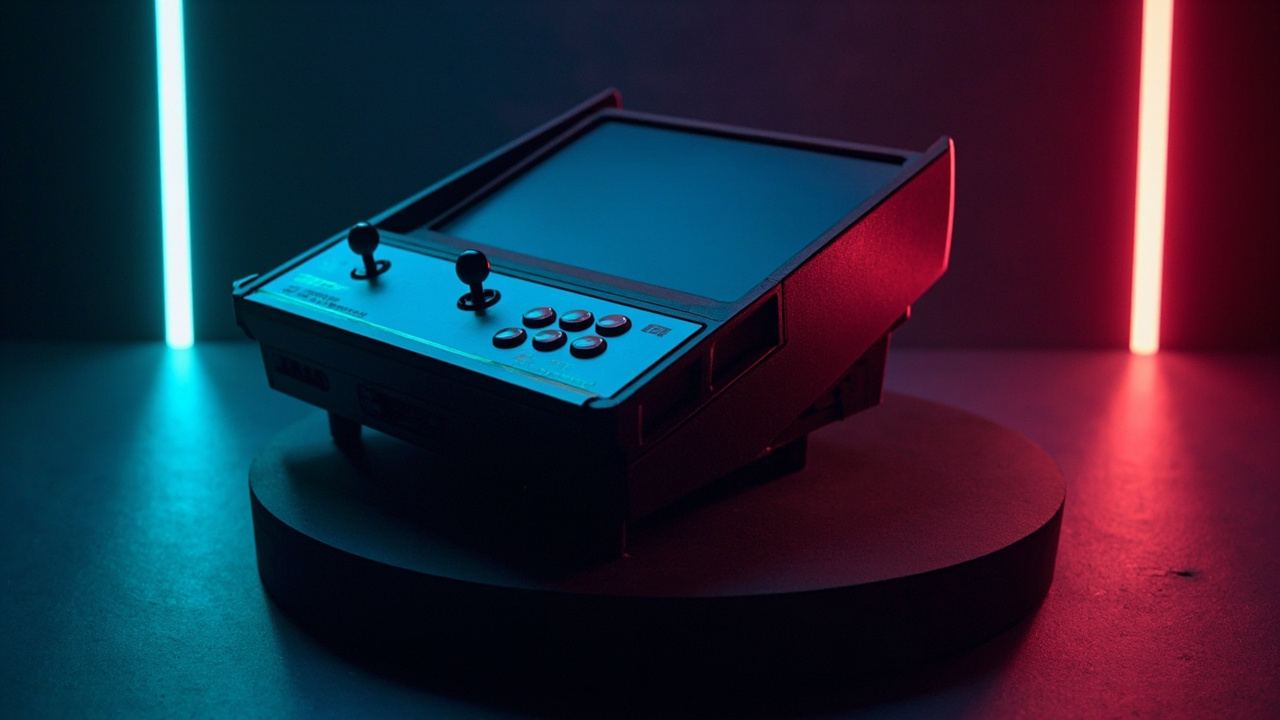
The Red Jade is one of the more curious footnotes in the story of sixth-generation handheld gaming. Announced in the final years of the dot-com boom, the Ericsson-developed device promised to fuse a portable gaming console with the personal digital assistant functionality that was beginning to spread across consumer electronics in the early 2000s. It was conceived at exactly the moment when smartphones, PDAs, and dedicated gaming handhelds were all converging on overlapping feature sets, and its designers clearly hoped to ride that wave with a premium device.
Yet the Red Jade never reached store shelves. It exists today as vaporware — a machine described in press releases, trade-show reports, and historical entries, but one that was cancelled before a single retail unit was ever shipped. Its story offers a window into the financial pressures that reshaped consumer technology in the early twenty-first century, and into a specific moment when Ericsson, better known for its telecom infrastructure, briefly entertained ambitions in the gaming industry.
Quick Facts
| Field | Detail |
|---|---|
| Maker | Ericsson |
| Type | Handheld |
| Generation | Sixth |
| Released | Cancelled before release |
| Launch Price (planned) | $150 USD |
| Media | Digital distribution |
| CPU | 32-bit or 64-bit MIPS architecture processor |
History
The Red Jade project originated inside an Ericsson subsidiary established in 2000 with roughly $10 million in startup investment. At the time, Ericsson was navigating one of the most difficult stretches in its corporate history. The Swedish telecommunications giant had watched its standalone mobile phone business collapse during the late 1990s and early 2000s, ultimately merging its handset division with Sony’s in 2001 to form Sony Ericsson. In that climate, the Red Jade represented something of a lateral move — an attempt to find new consumer-electronics revenue streams in an adjacent market while the parent company worked through its wider restructuring.
The console was positioned as a high-end handheld aimed at the Christmas 2002 retail window. Its specifications, as advertised, would have placed it ahead of most contemporaries: a 32-bit or 64-bit MIPS architecture processor, Bluetooth wireless connectivity, integrated GPS, DivX movie playback, and a robust suite of PDA functions. Games and other media would have been delivered through digital distribution rather than physical cartridges or optical discs, an unusually forward-looking approach for a portable gaming device of that era.
Those plans unraveled quickly. In April 2001, with the dot-com bubble still deflating and Ericsson’s broader financial situation continuing to deteriorate, the Red Jade project was cancelled. The combination of a high-risk hardware launch in a contracting economy and a parent company desperate to streamline operations left little room for a speculative gaming venture. Within months, Ericsson was shedding non-core businesses and refocusing on its core telecom infrastructure roots. The Red Jade’s planned Christmas 2002 release date passed without incident, and the device slipped quietly into the history of unreleased consoles.
The Game Library
Because the Red Jade was cancelled more than a year before its intended launch, no commercial game library ever materialized. The platform’s most famous software association is with Quake III Arena, which was reportedly ported to the system during development. id Software’s fast-paced multiplayer shooter was, at the time, one of the most recognizable PC franchises of its era, and its presence on a handheld would have served as a major marketing point — proof that the device could handle sophisticated 3D action well beyond the simpler fare typical of portable gaming.
That the title reached even a working port on prototype hardware is a testament to how far along the project had progressed before cancellation. Beyond Quake III Arena, no other specific games have been publicly tied to the Red Jade in surviving documentation. The console’s planned reliance on digital distribution suggested that, had it launched, its library might have grown through downloadable channels rather than retail shelves — a model that would not become standard for handheld gaming until well over a decade later.
Legacy
The Red Jade occupies a small but distinctive place in retro gaming history as one of the more ambitious handhelds ever cancelled before release. Its planned $150 retail price, combined with specifications that exceeded those of most contemporary competitors, made it an enticing “what if” for collectors and historians interested in the road not taken. Bluetooth, GPS, DivX support, and PDA functionality were not a common combination in any handheld of that era, and the Red Jade’s projected feature set anticipated several trends that would later become standard in smartphones and tablets.
The project’s commercial failure to attract major partners has also become part of its lore. Despite outreach, neither Sony nor Sega expressed interest in collaborating with Ericsson on the platform — a notable rejection given that both companies were established players in the gaming market at the time. The absence of a major games-industry backer likely made it harder for Red Jade to build a credible software ecosystem even before its financial troubles forced cancellation. Prototype units may exist, and the port of Quake III Arena is the strongest piece of evidence that working hardware was produced before the project ended.
There is no direct successor or predecessor to the Red Jade. It stands as a one-off venture that never produced a follow-up, and the Ericsson gaming subsidiary did not survive the broader corporate retrenchment of the early 2000s.
Collecting It Today
For collectors, the Red Jade presents a particular kind of challenge: it is a console that was never sold. There are no retail boxes, no instruction manuals distributed to consumers, and no commercial software to track down on the secondary market. What collectors can look for instead are prototype or development hardware, internal documentation, trade-show promotional materials, and any surviving press kits that were produced before the project’s cancellation. Patents filed by Ericsson relating to the device, magazine coverage from 2000 and 2001, and developer interviews are all worth pursuing as part of a serious Red Jade archive.
Because the device was never mass-produced, there is no established aftermarket pricing for Red Jade hardware, and any specific price guidance would amount to speculation. Collectors interested in unreleased consoles of the early 2000s should approach purchases cautiously, verify provenance carefully, and be aware that documentation and ephemera from the project can be just as historically valuable as any hardware that might surface. Given the limited public record, even a clear photograph of a working prototype would be a significant find for the retro gaming community.
For more context on handhelds, unreleased consoles, and the broader history of gaming hardware, see the consoles hub.