
This article contains Amazon affiliate links — as an Amazon Associate, RetroArcade earns from qualifying purchases.
The Sport Vii arrived in 2007 at a moment when motion-controlled gaming was making its mainstream debut. With Nintendo’s Wii having just introduced millions of players to gesture-based play the previous year, a wave of inexpensive imitators emerged in markets where official hardware was either unaffordable or unavailable. The Sport Vii was one of the most ambitious entries in that wave, a dedicated plug-and-play system that mimicked the Wii’s motion-sports formula while targeting buyers who wanted a similar experience at a fraction of the cost.
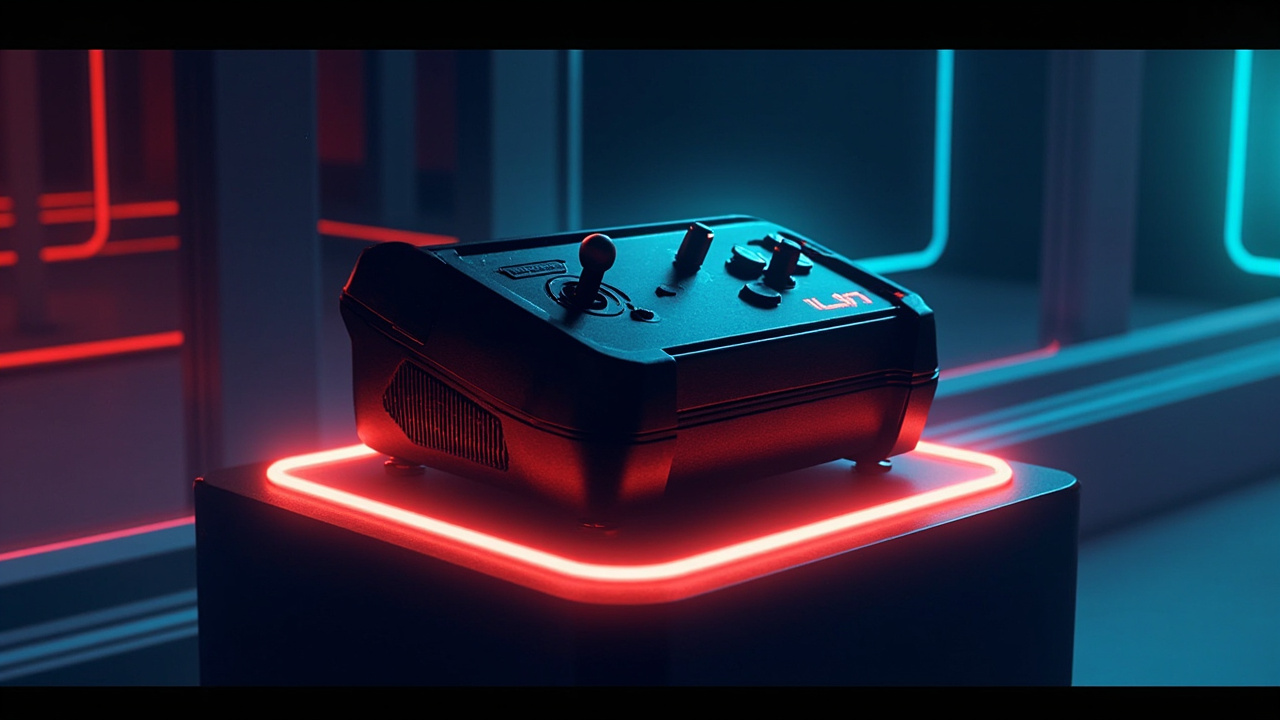
Manufactured by JungleTac, a Chinese electronics firm also known as Jungle Soft, the Sport Vii was a self-contained home console designed around an accelerometer-equipped wireless controller. Unlike the Wii, the system did not depend on a sensor bar; instead, motion was detected directly within the wand itself, allowing the device to function in nearly any room setup. The console was initially distributed primarily in mainland China beginning in 2007, with a broader release following in 2008.
The Sport Vii occupies a curious place in the broader story of seventh-generation gaming hardware. It was not part of Nintendo’s official lineup, and it did not compete on technological parity with the Wii, PlayStation 3, or Xbox 360. Instead, it served a parallel market: budget-conscious households, gift buyers, and casual players curious about motion gaming. Its history reflects both the rapid globalization of motion-control design and the equally rapid rise of regional hardware imitations in the late 2000s.
Quick Facts
| Spec | Details |
|---|---|
| Maker | JungleTac (Jungle Soft) |
| Type | Home console |
| Released | 2007 (China), 2008 (Expanded) |
| Media | Cartridge |
| CPU | 16-bit Sunplus SPG |
History
The Sport Vii was developed and released by JungleTac in 2007, entering a global market that was just beginning to embrace motion-controlled gaming as a mainstream concept. Nintendo’s Wii had launched worldwide in late 2006 and quickly demonstrated that gesture-based play could appeal to audiences far beyond the traditional gaming demographic. In mainland China, official Wii hardware carried a premium price tag that put it out of reach for many potential players. JungleTac positioned the Sport Vii as an affordable alternative, packaging motion sports titles into a single compact unit with cartridge-based expansion.
The console’s design drew obvious visual inspiration from the Wii, complete with a slim white-and-black main unit and a wand-style controller. Internally, however, the Sport Vii ran on entirely different hardware: a 16-bit Sunplus SPG processor paired with 8.5 MB of internal memory. Sunplus SPG chips were a familiar component in the budget console space, having powered several earlier JungleTac products and many other inexpensive plug-and-play devices of the era. This shared architecture kept manufacturing costs low and allowed JungleTac to focus on software variety rather than raw processing power.
The system launched in China in 2007 and expanded to additional markets in 2008. It was distributed primarily through electronics retailers and informal channels, often sold as a gift or family entertainment device rather than as a serious competitor to name-brand consoles. Its plug-and-play nature meant that buyers could simply attach the unit to a television and begin playing without the need for separate accessories, internet setup, or region-specific concerns. That simplicity, combined with the appeal of motion-based sports mini-games, made the Sport Vii one of the earliest and most recognizable Wii-style knockoffs in the consumer marketplace.
The Game Library
The Sport Vii shipped with twelve built-in games on the system itself, supplemented by additional titles available on optional cartridges. Among the most recognizable entries in its library were Happy Tennis, Catch Fish, Bowling, Alacrity Golf, Ping Pong, Smart Dart, Fry Egg, and Bird Knight. These titles reflected the console’s sports-and-casual focus, each designed to take advantage of the motion controller’s tilting and swinging inputs.
The library was deliberately diverse in subject matter while remaining unified by its lightweight, pick-up-and-play design. Sport Vii games tended to feature simplified graphics, short play sessions, and mechanics that could be grasped in seconds — qualities that aligned with the console’s positioning as a casual family device. The inclusion of arcade-style sports such as bowling and tennis mirrored the Wii Sports formula, while titles like Catch Fish, Fry Egg, and Bird Knight offered more whimsical variations on the motion-control concept.
Cartridge support allowed JungleTac and other regional publishers to extend the system’s lineup beyond its initial twelve titles, though the library remained modest compared to mainstream seventh-generation consoles. The cartridge format also made the system easy to localize: new game collections could be assembled for different markets without requiring firmware changes. For collectors and historians, the Sport Vii’s catalog offers an interesting window into how regional manufacturers approached the motion-sports concept without access to licensed Nintendo properties.
Legacy
The Sport Vii is widely regarded as one of the earliest Wii-inspired knockoffs to incorporate true accelerometer-based motion control. Whereas many earlier imitators relied on infrared pointers or basic tilt sensors, the Sport Vii’s wand detected swinging and gesturing through an accelerometer, producing a play experience that more closely resembled the genuine article.
The console’s use of the Sunplus SPG architecture placed it within a recognizable family of budget devices produced across East Asia in the mid- to late-2000s. Earlier JungleTac products had used the same chip family, and the Sport Vii was among the more polished entries in this lineage. Its combination of internal storage, motion control, and cartridge expansion set a template that other low-cost manufacturers would follow in subsequent years.
Although the Sport Vii was initially marketed in mainland China before reaching a wider audience, its design philosophy proved influential. The system demonstrated that motion-controlled gaming could be delivered through inexpensive, self-contained hardware, and it foreshadowed the proliferation of similar plug-and-play motion devices that would appear throughout the late 2000s and into the 2010s. Because JungleTac did not announce a direct successor and the original system’s later production status is not clearly documented, the Sport Vii stands largely on its own within the company’s hardware catalog.
Collecting It Today
For collectors interested in budget-era plug-and-play consoles, the Sport Vii represents a relatively accessible entry point. Units appear on secondary markets with some regularity, often accompanied by their original wand controllers and bundled cartridges. Buyers should check that the accelerometer-equipped controller is present and functioning, as replacement controllers are scarce and the system is designed around that single input method. The console’s plastic housing is generally durable, but the internal wiring connecting the controller to the main unit can degrade over time, particularly in units stored in humid environments.
Cartridge compatibility should also be verified when possible, since the Sport Vii’s expansion library was produced in small runs and varies by region. Original packaging, manuals, and bundled cartridges tend to command higher interest among collectors of regional gaming hardware, even though published price guides for these items are not widely available. As with most Sunplus SPG-based systems, documentation and English-language resources are limited, and prospective buyers may need to consult enthusiast communities for technical guidance and repair advice.
The Sport Vii is best understood as a representative example of a broader wave of motion-control hardware that emerged alongside the seventh generation of mainstream consoles. It belongs to a category of devices that includes other inexpensive regional alternatives and plug-and-play systems covered in the consoles hub. Collectors approaching this corner of the hobby should expect to do some hands-on research, but the reward is a tangible piece of late-2000s gaming history that helped define the budget motion-control market.