This article contains Amazon affiliate links — as an Amazon Associate, RetroArcade earns from qualifying purchases.
Legacy
The CPS Changer is best understood as an encased SuperGun arcade converter, a category of hardware that typically consists of bare circuit boards and exposed wiring intended for hobbyist use. By packaging that concept in a finished consumer shell with controller ports and standard AV outputs, Capcom produced something rare: a retail-grade device that nonetheless required users to swap physical boards to change games. It was a deliberate choice that made the console impractical for most households but irresistible to dedicated arcade fans.
Capcom also leaned on physical incompatibility between the home console and conventional CP System boards as a form of piracy protection. Because the consumer unit required specially prepared arcade PCBs, casual duplication of the games was significantly more difficult than with standard cartridges. The strategy foreshadowed later debates about region locking, dongles, and proprietary media in subsequent console generations, even if the CPS Changer itself never reached a large enough audience to make anti-piracy a major concern in practice.
The CPS Changer competed directly with SNK’s Neo Geo AES, which followed a similar model of pairing a home base unit with interchangeable arcade cartridges and boards. While the Neo Geo AES built a long-running enthusiast community and continued in some form for nearly two decades, the CPS Changer failed commercially almost immediately. Capcom never produced a true successor console, instead returning its focus to third-party software development for the PlayStation, Saturn, and later systems. Its immediate predecessor, the CP System arcade board, remained in use at arcades long after the home version had been discontinued.
Collecting It Today
For collectors, the CPS Changer is a milestone piece of Capcom hardware history. Its tiny production run of around 1,000 units means that complete consoles, particularly boxed examples with original manuals and packaging, are exceptionally scarce on the secondary market. Buyers should look for the console itself, the required power and AV cabling, and ideally at least one compatible CP System arcade board, since the system cannot function without a PCB installed. Controller compatibility with Super Famicom pads is a practical benefit, as those pads remain widely available and affordable.
Condition is especially important with hardware of this era. Aging capacitors, degraded plastic, and brittle cables are common considerations for devices produced in the mid-1990s, and any console or board being considered for purchase should be inspected for signs of capacitor leakage, yellowing, or repaired traces. Documentation, including original Japanese-language manuals and registration paperwork, can significantly affect desirability for serious collectors. As with any niche import console, potential buyers should also confirm regional compatibility with their display equipment, since the CPS Changer was released only for the Japanese market.
More broadly, the CPS Changer serves as a useful case study in how arcade-to-home transitions were attempted during the fourth generation and why most of those experiments failed. For readers interested in exploring similar hardware from the era, including dedicated consoles, plug-and-play units, and home arcade adapters, the broader catalog of systems covered on the consoles hub offers useful comparison points and additional context.
Legacy
The CPS Changer is best understood as an encased SuperGun arcade converter, a category of hardware that typically consists of bare circuit boards and exposed wiring intended for hobbyist use. By packaging that concept in a finished consumer shell with controller ports and standard AV outputs, Capcom produced something rare: a retail-grade device that nonetheless required users to swap physical boards to change games. It was a deliberate choice that made the console impractical for most households but irresistible to dedicated arcade fans.
Capcom also leaned on physical incompatibility between the home console and conventional CP System boards as a form of piracy protection. Because the consumer unit required specially prepared arcade PCBs, casual duplication of the games was significantly more difficult than with standard cartridges. The strategy foreshadowed later debates about region locking, dongles, and proprietary media in subsequent console generations, even if the CPS Changer itself never reached a large enough audience to make anti-piracy a major concern in practice.
The CPS Changer competed directly with SNK’s Neo Geo AES, which followed a similar model of pairing a home base unit with interchangeable arcade cartridges and boards. While the Neo Geo AES built a long-running enthusiast community and continued in some form for nearly two decades, the CPS Changer failed commercially almost immediately. Capcom never produced a true successor console, instead returning its focus to third-party software development for the PlayStation, Saturn, and later systems. Its immediate predecessor, the CP System arcade board, remained in use at arcades long after the home version had been discontinued.
Collecting It Today
For collectors, the CPS Changer is a milestone piece of Capcom hardware history. Its tiny production run of around 1,000 units means that complete consoles, particularly boxed examples with original manuals and packaging, are exceptionally scarce on the secondary market. Buyers should look for the console itself, the required power and AV cabling, and ideally at least one compatible CP System arcade board, since the system cannot function without a PCB installed. Controller compatibility with Super Famicom pads is a practical benefit, as those pads remain widely available and affordable.
Condition is especially important with hardware of this era. Aging capacitors, degraded plastic, and brittle cables are common considerations for devices produced in the mid-1990s, and any console or board being considered for purchase should be inspected for signs of capacitor leakage, yellowing, or repaired traces. Documentation, including original Japanese-language manuals and registration paperwork, can significantly affect desirability for serious collectors. As with any niche import console, potential buyers should also confirm regional compatibility with their display equipment, since the CPS Changer was released only for the Japanese market.
More broadly, the CPS Changer serves as a useful case study in how arcade-to-home transitions were attempted during the fourth generation and why most of those experiments failed. For readers interested in exploring similar hardware from the era, including dedicated consoles, plug-and-play units, and home arcade adapters, the broader catalog of systems covered on the consoles hub offers useful comparison points and additional context.
Legacy
The CPS Changer is best understood as an encased SuperGun arcade converter, a category of hardware that typically consists of bare circuit boards and exposed wiring intended for hobbyist use. By packaging that concept in a finished consumer shell with controller ports and standard AV outputs, Capcom produced something rare: a retail-grade device that nonetheless required users to swap physical boards to change games. It was a deliberate choice that made the console impractical for most households but irresistible to dedicated arcade fans.
Capcom also leaned on physical incompatibility between the home console and conventional CP System boards as a form of piracy protection. Because the consumer unit required specially prepared arcade PCBs, casual duplication of the games was significantly more difficult than with standard cartridges. The strategy foreshadowed later debates about region locking, dongles, and proprietary media in subsequent console generations, even if the CPS Changer itself never reached a large enough audience to make anti-piracy a major concern in practice.
The CPS Changer competed directly with SNK’s Neo Geo AES, which followed a similar model of pairing a home base unit with interchangeable arcade cartridges and boards. While the Neo Geo AES built a long-running enthusiast community and continued in some form for nearly two decades, the CPS Changer failed commercially almost immediately. Capcom never produced a true successor console, instead returning its focus to third-party software development for the PlayStation, Saturn, and later systems. Its immediate predecessor, the CP System arcade board, remained in use at arcades long after the home version had been discontinued.
Collecting It Today
For collectors, the CPS Changer is a milestone piece of Capcom hardware history. Its tiny production run of around 1,000 units means that complete consoles, particularly boxed examples with original manuals and packaging, are exceptionally scarce on the secondary market. Buyers should look for the console itself, the required power and AV cabling, and ideally at least one compatible CP System arcade board, since the system cannot function without a PCB installed. Controller compatibility with Super Famicom pads is a practical benefit, as those pads remain widely available and affordable.
Condition is especially important with hardware of this era. Aging capacitors, degraded plastic, and brittle cables are common considerations for devices produced in the mid-1990s, and any console or board being considered for purchase should be inspected for signs of capacitor leakage, yellowing, or repaired traces. Documentation, including original Japanese-language manuals and registration paperwork, can significantly affect desirability for serious collectors. As with any niche import console, potential buyers should also confirm regional compatibility with their display equipment, since the CPS Changer was released only for the Japanese market.
More broadly, the CPS Changer serves as a useful case study in how arcade-to-home transitions were attempted during the fourth generation and why most of those experiments failed. For readers interested in exploring similar hardware from the era, including dedicated consoles, plug-and-play units, and home arcade adapters, the broader catalog of systems covered on the consoles hub offers useful comparison points and additional context.
- Street Fighter II (Dash) Turbo
- Final Fight
- Captain Commando
- Knights of the Round
- Street Fighter Alpha
- Warriors of Fate
- Saturday Night Slam Masters
Legacy
The CPS Changer is best understood as an encased SuperGun arcade converter, a category of hardware that typically consists of bare circuit boards and exposed wiring intended for hobbyist use. By packaging that concept in a finished consumer shell with controller ports and standard AV outputs, Capcom produced something rare: a retail-grade device that nonetheless required users to swap physical boards to change games. It was a deliberate choice that made the console impractical for most households but irresistible to dedicated arcade fans.
Capcom also leaned on physical incompatibility between the home console and conventional CP System boards as a form of piracy protection. Because the consumer unit required specially prepared arcade PCBs, casual duplication of the games was significantly more difficult than with standard cartridges. The strategy foreshadowed later debates about region locking, dongles, and proprietary media in subsequent console generations, even if the CPS Changer itself never reached a large enough audience to make anti-piracy a major concern in practice.
The CPS Changer competed directly with SNK’s Neo Geo AES, which followed a similar model of pairing a home base unit with interchangeable arcade cartridges and boards. While the Neo Geo AES built a long-running enthusiast community and continued in some form for nearly two decades, the CPS Changer failed commercially almost immediately. Capcom never produced a true successor console, instead returning its focus to third-party software development for the PlayStation, Saturn, and later systems. Its immediate predecessor, the CP System arcade board, remained in use at arcades long after the home version had been discontinued.
Collecting It Today
For collectors, the CPS Changer is a milestone piece of Capcom hardware history. Its tiny production run of around 1,000 units means that complete consoles, particularly boxed examples with original manuals and packaging, are exceptionally scarce on the secondary market. Buyers should look for the console itself, the required power and AV cabling, and ideally at least one compatible CP System arcade board, since the system cannot function without a PCB installed. Controller compatibility with Super Famicom pads is a practical benefit, as those pads remain widely available and affordable.
Condition is especially important with hardware of this era. Aging capacitors, degraded plastic, and brittle cables are common considerations for devices produced in the mid-1990s, and any console or board being considered for purchase should be inspected for signs of capacitor leakage, yellowing, or repaired traces. Documentation, including original Japanese-language manuals and registration paperwork, can significantly affect desirability for serious collectors. As with any niche import console, potential buyers should also confirm regional compatibility with their display equipment, since the CPS Changer was released only for the Japanese market.
More broadly, the CPS Changer serves as a useful case study in how arcade-to-home transitions were attempted during the fourth generation and why most of those experiments failed. For readers interested in exploring similar hardware from the era, including dedicated consoles, plug-and-play units, and home arcade adapters, the broader catalog of systems covered on the consoles hub offers useful comparison points and additional context.
- Street Fighter II (Dash) Turbo
- Final Fight
- Captain Commando
- Knights of the Round
- Street Fighter Alpha
- Warriors of Fate
- Saturday Night Slam Masters
Legacy
The CPS Changer is best understood as an encased SuperGun arcade converter, a category of hardware that typically consists of bare circuit boards and exposed wiring intended for hobbyist use. By packaging that concept in a finished consumer shell with controller ports and standard AV outputs, Capcom produced something rare: a retail-grade device that nonetheless required users to swap physical boards to change games. It was a deliberate choice that made the console impractical for most households but irresistible to dedicated arcade fans.
Capcom also leaned on physical incompatibility between the home console and conventional CP System boards as a form of piracy protection. Because the consumer unit required specially prepared arcade PCBs, casual duplication of the games was significantly more difficult than with standard cartridges. The strategy foreshadowed later debates about region locking, dongles, and proprietary media in subsequent console generations, even if the CPS Changer itself never reached a large enough audience to make anti-piracy a major concern in practice.
The CPS Changer competed directly with SNK’s Neo Geo AES, which followed a similar model of pairing a home base unit with interchangeable arcade cartridges and boards. While the Neo Geo AES built a long-running enthusiast community and continued in some form for nearly two decades, the CPS Changer failed commercially almost immediately. Capcom never produced a true successor console, instead returning its focus to third-party software development for the PlayStation, Saturn, and later systems. Its immediate predecessor, the CP System arcade board, remained in use at arcades long after the home version had been discontinued.
Collecting It Today
For collectors, the CPS Changer is a milestone piece of Capcom hardware history. Its tiny production run of around 1,000 units means that complete consoles, particularly boxed examples with original manuals and packaging, are exceptionally scarce on the secondary market. Buyers should look for the console itself, the required power and AV cabling, and ideally at least one compatible CP System arcade board, since the system cannot function without a PCB installed. Controller compatibility with Super Famicom pads is a practical benefit, as those pads remain widely available and affordable.
Condition is especially important with hardware of this era. Aging capacitors, degraded plastic, and brittle cables are common considerations for devices produced in the mid-1990s, and any console or board being considered for purchase should be inspected for signs of capacitor leakage, yellowing, or repaired traces. Documentation, including original Japanese-language manuals and registration paperwork, can significantly affect desirability for serious collectors. As with any niche import console, potential buyers should also confirm regional compatibility with their display equipment, since the CPS Changer was released only for the Japanese market.
More broadly, the CPS Changer serves as a useful case study in how arcade-to-home transitions were attempted during the fourth generation and why most of those experiments failed. For readers interested in exploring similar hardware from the era, including dedicated consoles, plug-and-play units, and home arcade adapters, the broader catalog of systems covered on the consoles hub offers useful comparison points and additional context.
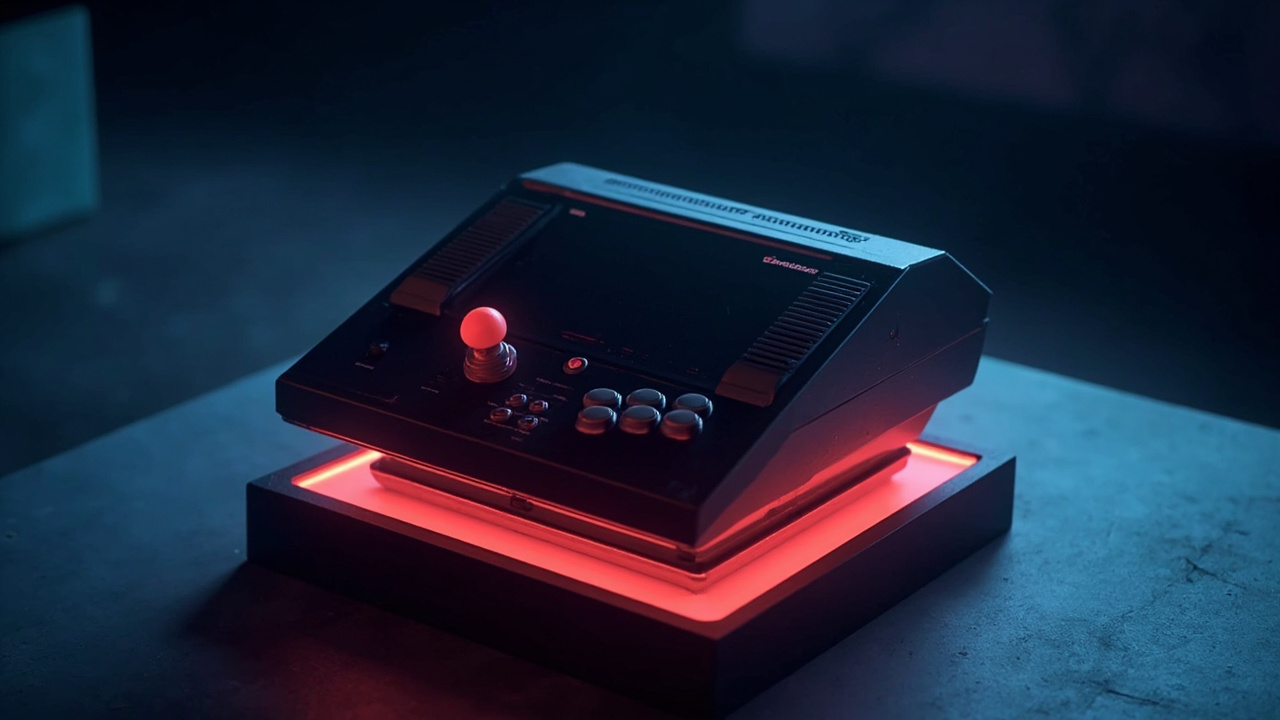
The Capcom CPS Changer occupies one of the more unusual corners of fourth-generation console history. Released in Japan in late 1994, it was not a traditional game console built from the ground up for the living room, but rather an elaborate consumer-grade adapter that allowed Capcom’s CP System arcade boards to operate on home television sets. At a moment when the Super Famicom and Sega Genesis were dominating living rooms worldwide, Capcom attempted to bypass the cartridge and disc-based home market entirely by literally selling its arcade hardware in plastic shells.
Positioned within the broader wave of arcade-to-home conversions of the era, the CPS Changer sat in direct competition with SNK’s Neo Geo AES, which used a similar strategy of pairing a home console with optional arcade board counterparts. Where SNK’s offering gained a cult following and endured for years, however, Capcom’s effort collapsed almost immediately, with only around 1,000 units ever leaving the factory. The console is therefore remembered less for commercial success and more as a fascinating technical and historical curiosity: a hybrid device that blurred the boundary between arcade hardware and home entertainment.
Quick Facts
| Spec | Details |
|---|---|
| Maker | Capcom |
| Type | Home console |
| Generation | Fourth |
| Released | Japan, 1994 |
| Launch Price | USD 375 |
| Units Sold | Approximately 1,000 |
| Media | CP System arcade PCBs |
| CPU | Motorola 68000 @ 10 MHz; Zilog Z80 @ 3.579 MHz |
History
The CPS Changer was conceived as a direct bridge between Capcom’s arcade division and Japanese consumers who wanted the genuine coin-op experience at home. Its predecessor hardware, the CP System, had been Capcom’s workhorse arcade platform since 1988 and powered some of the most influential fighting and beat-’em-up titles of the early 1990s. Rather than port those games to the Super Famicom through a conventional development cycle, Capcom instead designed a consumer enclosure that would accept unmodified arcade printed circuit boards. In effect, the device functioned as a specialized JAMMA converter wrapped in a console-shaped plastic shell.
When the unit launched in November 1994, it attracted immediate attention from arcade enthusiasts for the authenticity it offered. The hardware could drive the same Motorola 68000 and Zilog Z80 processors that powered arcade cabinets, and games such as Street Fighter II Turbo ran at full fidelity rather than as compressed cartridge conversions. The CPS Changer was also engineered to accept standard Super Famicom controllers, which gave it a familiar interface for home users who already owned the appropriate pads. Capcom leaned into the device’s exclusivity and technical novelty rather than competing on price or library breadth.
Despite that early momentum, the platform struggled to find a sustainable audience. The high retail price limited casual buyers, and the requirement to purchase separate arcade boards for each title quickly drove the cost of ownership well beyond that of a conventional console. Capcom manufactured only 1,000 units in total before pulling the plug, effectively abandoning the home console market altogether. The short lifespan of the CPS Changer stands in stark contrast to the CP System arcade boards themselves, which continued to receive new game releases for several years afterward.
The Game Library
Because the CPS Changer used actual CP System arcade boards rather than cartridges or discs, its library was determined entirely by what Capcom chose to release in that PCB format. The platform was positioned as a premium destination for the company’s flagship arcade franchises, particularly its fighting and beat-’em-up lineup. Street Fighter II (Dash) Turbo served as one of the marquee launch-era titles and demonstrated the kind of arcade-accurate performance the system was designed to deliver.
Other notable releases spanned a broad slice of Capcom’s arcade output from the early to mid-1990s. The roster included Final Fight, the company’s defining side-scrolling brawler, alongside Captain Commando and Knights of the Round, both staples of the coin-op beat-’em-up scene. Later entries such as Street Fighter Alpha and Warriors of Fate extended the system’s relevance into the next wave of Capcom arcade design, while Saturday Night Slam Masters offered a more wrestling-themed diversion. Together, these titles gave the CPS Changer a focused but high-quality library anchored by some of the most recognizable names in Capcom’s catalog.
- Street Fighter II (Dash) Turbo
- Final Fight
- Captain Commando
- Knights of the Round
- Street Fighter Alpha
- Warriors of Fate
- Saturday Night Slam Masters
Legacy
The CPS Changer is best understood as an encased SuperGun arcade converter, a category of hardware that typically consists of bare circuit boards and exposed wiring intended for hobbyist use. By packaging that concept in a finished consumer shell with controller ports and standard AV outputs, Capcom produced something rare: a retail-grade device that nonetheless required users to swap physical boards to change games. It was a deliberate choice that made the console impractical for most households but irresistible to dedicated arcade fans.
Capcom also leaned on physical incompatibility between the home console and conventional CP System boards as a form of piracy protection. Because the consumer unit required specially prepared arcade PCBs, casual duplication of the games was significantly more difficult than with standard cartridges. The strategy foreshadowed later debates about region locking, dongles, and proprietary media in subsequent console generations, even if the CPS Changer itself never reached a large enough audience to make anti-piracy a major concern in practice.
The CPS Changer competed directly with SNK’s Neo Geo AES, which followed a similar model of pairing a home base unit with interchangeable arcade cartridges and boards. While the Neo Geo AES built a long-running enthusiast community and continued in some form for nearly two decades, the CPS Changer failed commercially almost immediately. Capcom never produced a true successor console, instead returning its focus to third-party software development for the PlayStation, Saturn, and later systems. Its immediate predecessor, the CP System arcade board, remained in use at arcades long after the home version had been discontinued.
Collecting It Today
For collectors, the CPS Changer is a milestone piece of Capcom hardware history. Its tiny production run of around 1,000 units means that complete consoles, particularly boxed examples with original manuals and packaging, are exceptionally scarce on the secondary market. Buyers should look for the console itself, the required power and AV cabling, and ideally at least one compatible CP System arcade board, since the system cannot function without a PCB installed. Controller compatibility with Super Famicom pads is a practical benefit, as those pads remain widely available and affordable.
Condition is especially important with hardware of this era. Aging capacitors, degraded plastic, and brittle cables are common considerations for devices produced in the mid-1990s, and any console or board being considered for purchase should be inspected for signs of capacitor leakage, yellowing, or repaired traces. Documentation, including original Japanese-language manuals and registration paperwork, can significantly affect desirability for serious collectors. As with any niche import console, potential buyers should also confirm regional compatibility with their display equipment, since the CPS Changer was released only for the Japanese market.
More broadly, the CPS Changer serves as a useful case study in how arcade-to-home transitions were attempted during the fourth generation and why most of those experiments failed. For readers interested in exploring similar hardware from the era, including dedicated consoles, plug-and-play units, and home arcade adapters, the broader catalog of systems covered on the consoles hub offers useful comparison points and additional context.