This article contains Amazon affiliate links — as an Amazon Associate, RetroArcade earns from qualifying purchases.
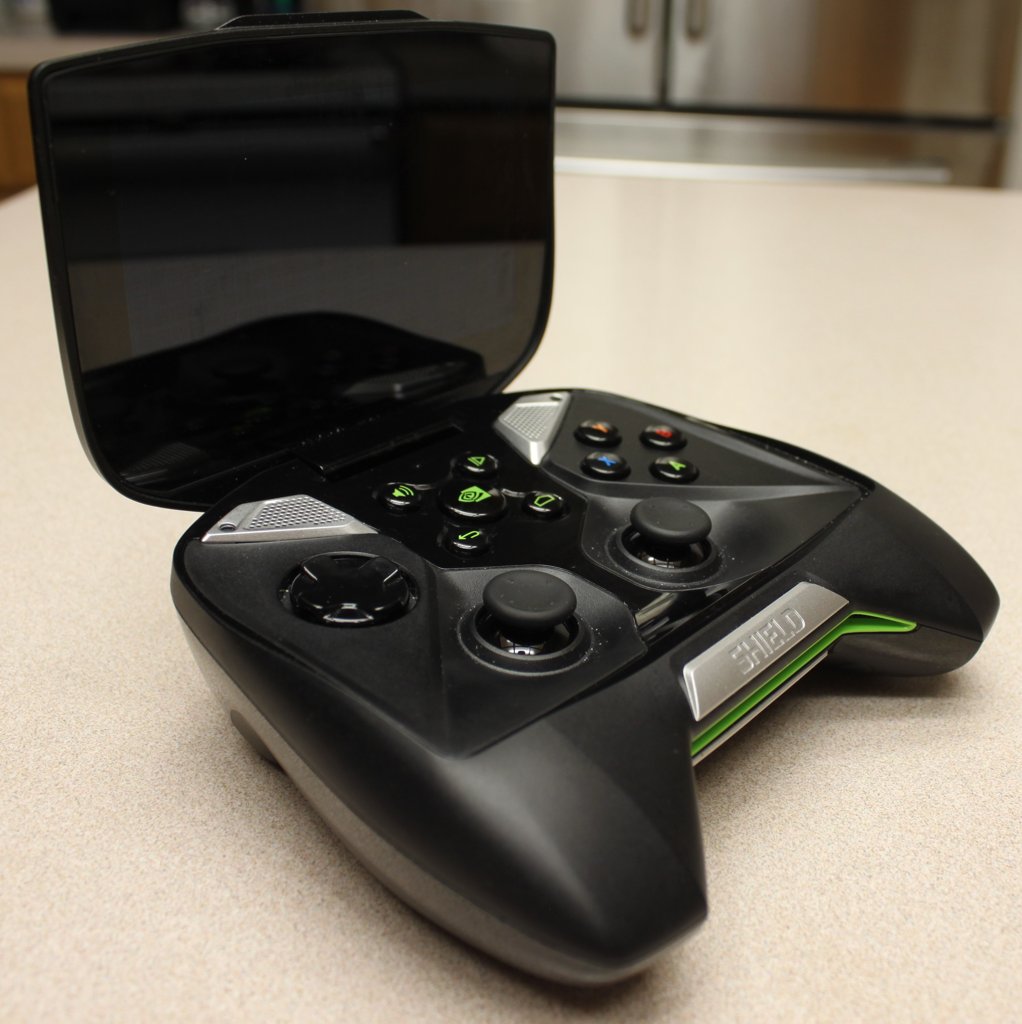
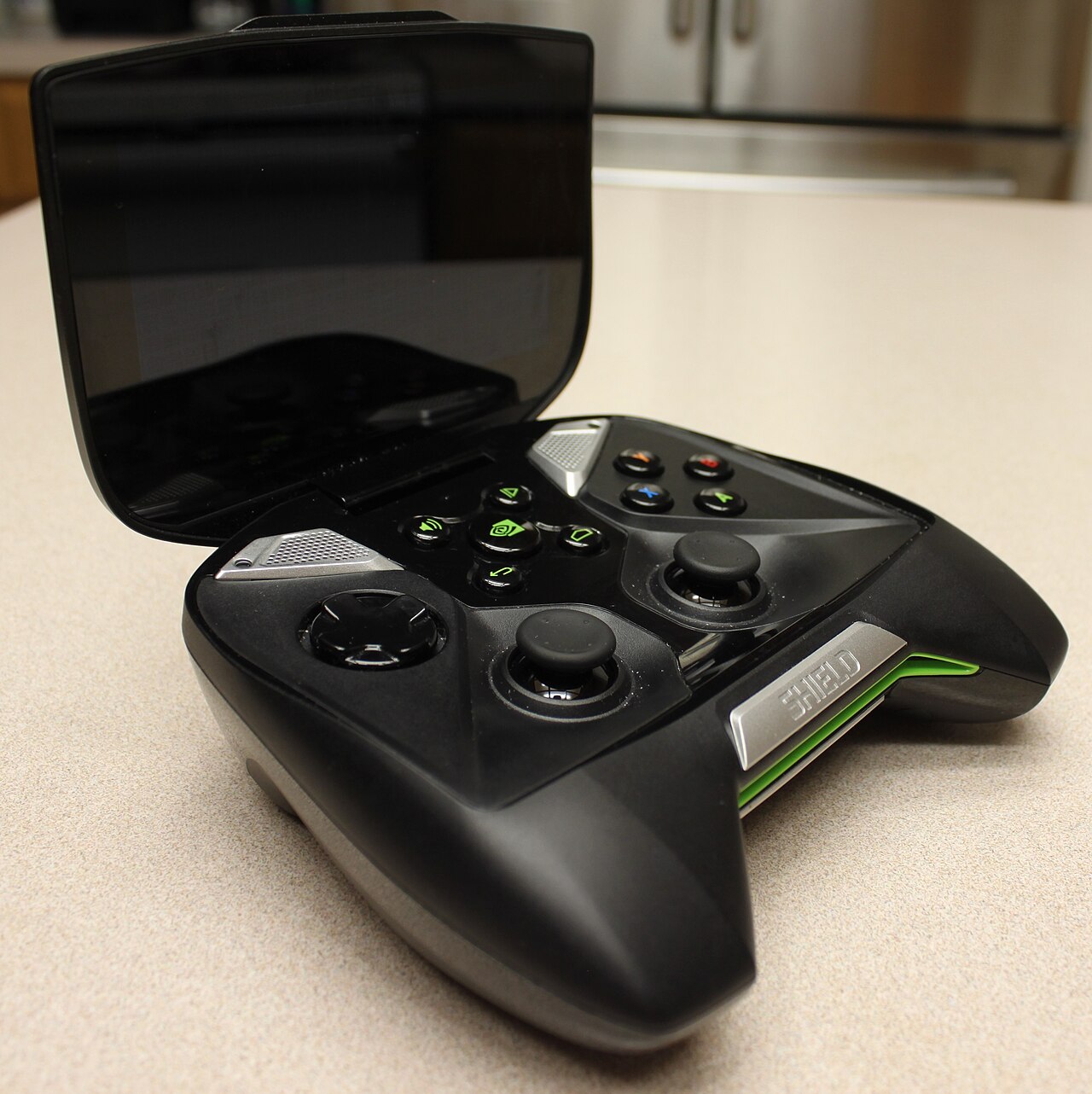
The Nvidia Shield Portable is an eighth-generation handheld released by Nvidia in 2013.
Spec Table
| Spec | Value |
|---|---|
| Maker | Nvidia |
| Type | Handheld |
| Generation | 8th generation |
| Release Date | 2013 |
| Launch Price | $299 USD |
| Units Sold | Not documented |
| Media | Digital |
| CPU | Tegra 4 SoC with 1.9 GHz quad-core ARM Cortex-A15 |
| Predecessor / Successor | None / Nvidia Shield Tablet |
History
Nvidia unveiled the device at CES 2013 under the codename Project Shield before releasing it commercially as the Shield Portable on July 31, 2013. It arrived at a $299 price point and paired a 5-inch, 1280×720 flip-up touchscreen with a fixed gamepad base built around dual analog sticks and an Xbox-style button layout. Under the hood sat Nvidia’s own Tegra 4 chip, a 1.9 GHz quad-core ARM Cortex-A15 processor backed by 2 GB of RAM and 72 GeForce graphics cores, numbers that made the Shield one of the most powerful handhelds on the market at launch.
Rather than compete on exclusive games the way Nintendo or Sony did, Nvidia bet the Shield’s identity on GameStream, a feature that let owners beam PC games wirelessly from a GeForce GTX-equipped desktop to the handheld’s screen. Reviewers found the results mixed: slower-paced titles like BioShock Infinite streamed smoothly, while fast, reflex-heavy shooters exposed input lag that made twitch aiming difficult. Local software came from a blend of TegraZone-curated titles, standard Google Play Store games, and early access to Nvidia’s GeForce Now cloud-streaming service, giving the Shield three separate ways to acquire and play games rather than one dedicated library.
Critical reception settled into a familiar pattern for the device: praise for the hardware’s raw capability, skepticism about whether the concept justified its price. Reviewers noted the recessed thumbsticks hurt precision aiming and that Android’s controller support still felt inconsistent from game to game, undermining the promise of console-like input. As part of the eighth console generation, the Shield Portable competed directly against the PlayStation Vita and 3DS for handheld attention, and lost that fight on both price and software depth; Nvidia cut the price to $199 by March 2014 to try to close the gap.
Nvidia kept updating the Shield’s software for years after launch, pushing Android 5.1 and Chromecast support in mid-2015 and additional firmware revisions into 2016, long after most handhelds of its generation had been abandoned by their makers. The company never issued a formal discontinuation notice; the Shield Portable simply drifted out of stock and stayed there, quietly making way for its successor, the Nvidia Shield Tablet, and eventually the Shield TV streaming boxes that carried the GameStream concept into the living room. Nvidia finally shut down GameStream service across all Shield hardware in December 2022, closing out the feature that had defined the product from day one.
Library Highlights
The Shield Portable never built a library of console-style exclusives; instead, its “library” was really a set of access routes to games running elsewhere, which is what reviewers meant when they called its game selection inconsistent rather than thin.
- Nvidia TegraZone exclusive titles
- Google Play Store games
- GeForce Now streaming titles
- Console-quality ports via GameStream
Variants
No major hardware variants are documented. The device did receive a significant price cut from $299 to $199 in March 2014 and multiple software revisions through 2016, but Nvidia did not release alternate physical models of the Shield Portable itself before moving the product line to the Nvidia Shield Tablet. See the Nvidia manufacturer hub for other systems the company released.
Collector Value
The Shield Portable is a niche pickup for collectors of Android and streaming-era gaming hardware rather than a mainstream retro target, and because Nvidia never officially discontinued it, complete units with the original charger and packaging show up less predictably than mass-market handhelds of the same era. Working examples matter more than cosmetic grading here, since the GameStream feature that defined the device has since been shut down server-side, so buyers should treat any purchase primarily as a local-Android and emulation device rather than a functioning streaming box.
Buying Guide
Before buying a used Shield Portable, confirm the seller includes the original AC charger, since the device uses a proprietary connector that is not easily replaced with generic cables. Ask whether the unit boots and holds a charge, as the built-in 7350 mAh battery is now over a decade old and prone to degradation. Because GameStream and the original TegraZone storefront no longer function, verify what the seller means by “working” before paying a premium, and expect to rely on the Google Play Store or side-loaded software rather than the console’s original streaming pitch.
FAQs
When did the Nvidia Shield Portable come out?
The Nvidia Shield Portable was released in 2013, launching commercially on July 31 of that year after being unveiled at CES 2013.
How many units did the Nvidia Shield Portable sell?
Sales figures for the Nvidia Shield Portable are not documented.
How much did the Nvidia Shield Portable cost at launch?
It launched at $299 USD and was later discounted to $199 to better compete in the handheld market.
What CPU does the Nvidia Shield Portable use?
It uses a Tegra 4 system-on-chip with a 1.9 GHz quad-core ARM Cortex-A15 processor.
What console followed the Nvidia Shield Portable?
Nvidia’s next device in the line was the Nvidia Shield Tablet, which succeeded the Shield Portable and carried its streaming-focused approach into a larger form factor.
Sources
- https://en.wikipedia.org/wiki/Nvidia_Shield_Portable
- https://www.engadget.com/2013-07-31-nvidia-shield-review.html
Facts on this page last verified 2026-07-15.