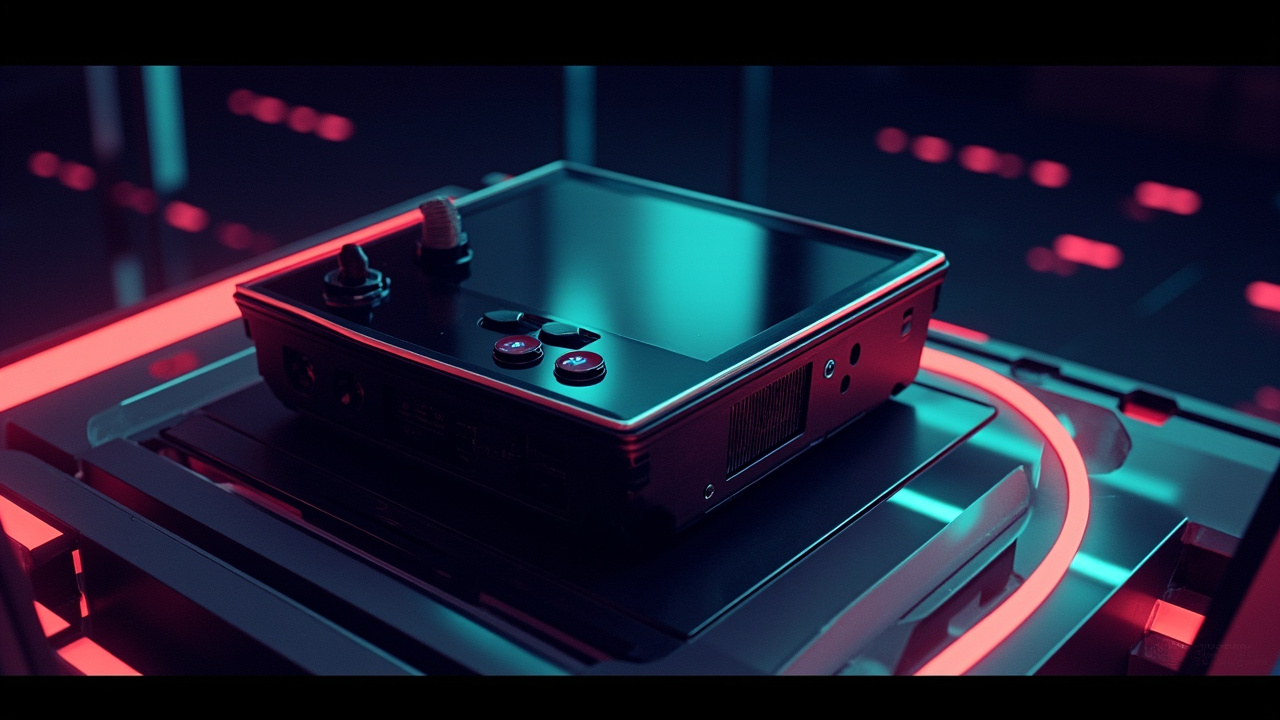
The Zemmix is a home video game console produced by South Korean manufacturer Daewoo Electronics. Released in 1985, it belongs to the third generation of consoles and occupies a distinctive niche as one of the most prominent MSX-based systems sold in the Korean market. While the MSX standard was conceived as a global home computer and gaming specification, the Zemmix remained a regional product for the entirety of its commercial life.
Built around the Zilog Z80 8-bit processor and accepting software on ROM cartridges, the Zemmix sat alongside competing third-generation hardware from Japan and elsewhere. Its release aligned with the broader MSX rollout of the mid-1980s, an era in which standardized computer architectures sought to unify the fragmented home computing market. Daewoo’s interpretation of the standard gave Korean consumers an entry point into the MSX ecosystem under a recognizable domestic brand, and the platform became one of the more enduring regional interpretations of the MSX specification.
Quick Facts
| Spec | Detail |
|---|---|
| Maker | Daewoo Electronics |
| Type | Home console |
| Generation | 3 |
| Released | 1985 (South Korea) |
| Media | ROM cartridge |
| CPU | 8-bit Zilog Z80 processor |
History
The Zemmix console line was introduced by Daewoo Electronics in 1985, marking the company’s first major entry into the home gaming hardware market. At the time, Daewoo was already an established Korean electronics conglomerate, and the Zemmix represented an effort to bring standardized home computing to South Korean households under a recognizable domestic label. The platform’s positioning within the MSX standard gave it a degree of credibility that purely proprietary systems of the era could not easily replicate.
Rather than producing a single fixed hardware design, Daewoo iterated the Zemmix platform across multiple models over a ten-year commercial run. The earliest standard iteration carried the designation CPC-50. This was followed by the CPC-51, described as the MSX-compatible configuration of the line. A higher-specification model known as the Turbo was also produced, and this unit is characterized as MSX2+-compliant, putting it among the more advanced consumer hardware of its era within the MSX family.
The variety of models meant that the Zemmix line spanned multiple generations of the MSX standard itself. From the original MSX baseline through MSX2 and onward to MSX2+, the platform evolved in step with the broader ecosystem while maintaining compatibility with software written for earlier MSX machines. This compatibility across standards was one of the Zemmix line’s defining technical characteristics, allowing most software written for the MSX ecosystem to run across different Zemmix configurations.
The Zemmix continued in production until 1995, an unusually long commercial lifespan for an 8-bit console line that originally launched in the mid-1980s. Its longevity reflected both the durability of the MSX standard in Asian markets and Daewoo’s commitment to maintaining a domestic alternative in a hardware landscape that, elsewhere, was moving decisively toward newer architectures. By the time of the line’s discontinuation, the Zemmix had served South Korean gamers for a full decade through several hardware revisions.
The Game Library
The Zemmix relied on ROM cartridges as its primary software distribution medium, consistent with other MSX machines of the era. The console shared the broader MSX software ecosystem, meaning that titles produced for the MSX standard in general could typically be played on Zemmix hardware. This cross-platform compatibility was a deliberate feature of the MSX architecture and gave Zemmix owners access to a wider library than might otherwise have been available to a regional-only console.
Daewoo did not establish a particularly large library of proprietary Zemmix-exclusive titles, and the platform’s value to consumers derived largely from its participation in the wider MSX catalog. Korean gamers gained access to arcade ports, homebrew software, and educational titles through the same cartridge format used by MSX machines elsewhere in Asia. Because the Zemmix spanned MSX, MSX2, and MSX2+ specifications across its model range, later games requiring more advanced hardware could be played on the higher-tier models such as the Turbo.
The source material for the Zemmix does not enumerate specific notable titles for the platform, which reflects the console’s character as a regional MSX variant rather than a platform with a strong first-party software identity. Collectors and historians interested in the Zemmix catalog typically approach it through the lens of the broader MSX software ecosystem rather than through Zemmix-specific releases. The library available on each model depends on which MSX standard that particular Zemmix configuration was built to satisfy.
Legacy
The Zemmix never received an official retail release outside of South Korea, which has made it a relatively obscure platform in global gaming history. Within Korea, however, the console line is recognized as an important part of the early domestic gaming market, providing a locally branded alternative to imported Japanese consoles. The platform’s regional exclusivity has shaped its modern reputation as a curiosity for international collectors and a familiar fixture for Korean enthusiasts.
The hardware lineage spans the major MSX standards of the 1980s and early 1990s, beginning with the standard CPC-50 model and culminating in the MSX2+-compliant Turbo. This range demonstrates Daewoo’s engineering commitment to keeping the platform current throughout its commercial life. The shared Zilog Z80 8-bit processor architecture across the line tied the Zemmix firmly to the MSX family and made its software catalog interoperable with other MSX machines of the period.
In more recent years, the Zemmix legacy has been carried forward through modern reimplementations known as the Zemmix Neo and Zemmix Mini. These products continue the brand name via emulation rather than through original hardware, providing a contemporary way for enthusiasts to experience MSX software without acquiring vintage components. The continued use of the Zemmix name in this context reflects a degree of brand recognition within Korean retro computing circles, even decades after the original hardware was discontinued.
Collecting It Today
For collectors interested in the Zemmix, the most important consideration is regional availability. Because the console was never sold outside of South Korea, original hardware tends to surface primarily through Korean second-hand markets, domestic auction sites, and the occasional international reseller. Buyers outside Korea should expect to encounter limited inventory and should be prepared to verify authenticity and condition carefully when considering purchases. Documentation, original packaging, and matching power supplies are typically harder to source than the consoles themselves.
Several distinct models exist within the Zemmix lineup, including the CPC-50, the CPC-51, and the Turbo. Each represents a different point in the MSX standard’s evolution, and collectors with an interest in a specific specification should confirm which model they are acquiring. The condition of the cartridge slot, the integrity of any internal batteries used for memory storage, and the presence of original controllers or cables are all relevant factors, as is typical for hardware of this era. Yellowed plastics, leaking capacitors, and worn key matrices are common concerns across 1980s Korean and Japanese consoles alike.
Modern emulation-based products bearing the Zemmix name offer an alternative to acquiring original hardware. These devices allow users to run MSX software without dealing with vintage components, though they do not replicate the experience of original cartridges and controllers. Many collectors view such reimplementations as complementary to vintage hardware rather than a replacement for it, and the original consoles remain desirable for their historical significance and their connection to Korean computing history.
For broader context on the third generation of consoles and the wider MSX ecosystem, the consoles hub provides additional background on competing systems and contemporaries of the Zemmix. Anyone exploring the Korean retro computing scene more broadly will find the Zemmix to be a worthwhile subject of study, both for its domestic significance and for its position within the global MSX standard.