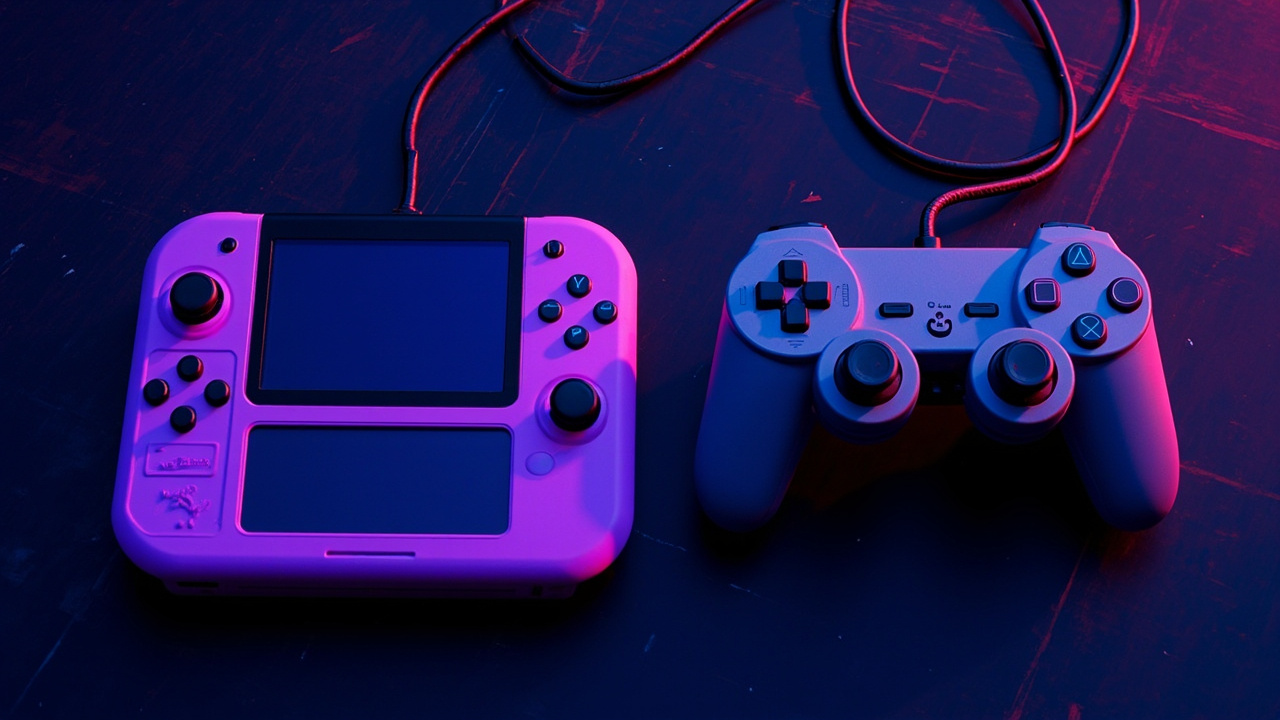
A new feature from Time Extension highlights an inventive retro project: a hobbyist has wired up a Game Boy Advance to behave like a Nintendo Switch, complete with a dock and television output, in order to revisit overlooked Japanese releases from the handheld’s catalog.
The piece frames the build as a love letter to Nintendo’s older portables. The writer recounts first encountering the original Game Boy in a schoolyard in 1990 and later picking up a GBA in early adulthood, eventually returning to the system to dig into Japanese-exclusive titles that never received Western localizations. The DIY dock setup reportedly allows the handheld to plug into a TV much like Nintendo’s hybrid console, reframing a 2000s-era device through a modern lens.
Why It Matters to Retro Fans
The GBA was notorious among import enthusiasts for its deep library of Japan-only releases. Role-playing games, puzzle titles, and odd experiments frequently launched in the Japanese market without an English translation, leaving Western fans to either learn the language, rely on fan translations, or skip the games entirely. Hardware projects like the one profiled give collectors a new way to experience those cartridges, pairing original media with a presentation that feels closer to contemporary living-room gaming.
The project also reflects a broader maker culture around aging Nintendo hardware. Enthusiasts have long modded Game Boys with backlit screens, rechargeable batteries, and alternative shells. Adding TV output represents a more ambitious step, turning a portable into something resembling the company’s later Switch hardware concept, where the same device can be played on a couch screen or on the move. That blend of preservation and reinvention tends to resonate strongly with the retro arcade and homebrew communities.
Historical Context
The Game Boy Advance launched in 2001 in Japan as the successor to the Game Boy Color, slotting into a portable lineup that had begun with the original Game Boy in 1989. Despite a global install base, the GBA’s Japanese software roster was particularly deep, supported by developers ranging from major publishers to small studios producing limited-run cult favorites that rarely crossed regional borders.
Nintendo’s later hybrid console, the Switch, effectively merged home and portable play into a single ecosystem, normalizing the dock-and-handheld pattern that the modder replicates here. The Switch launched years after the GBA was discontinued, meaning the underlying concept predates Nintendo’s own adoption of it by a wide margin. Projects like the one in the Time Extension feature keep that lineage visible for a new generation of retro collectors and tend to spark further tinkering across the community.
For more retro gaming coverage and modder spotlights, browse the RetroArcade news section.
Source: Time Extension