This article contains Amazon affiliate links — as an Amazon Associate, RetroArcade earns from qualifying purchases.

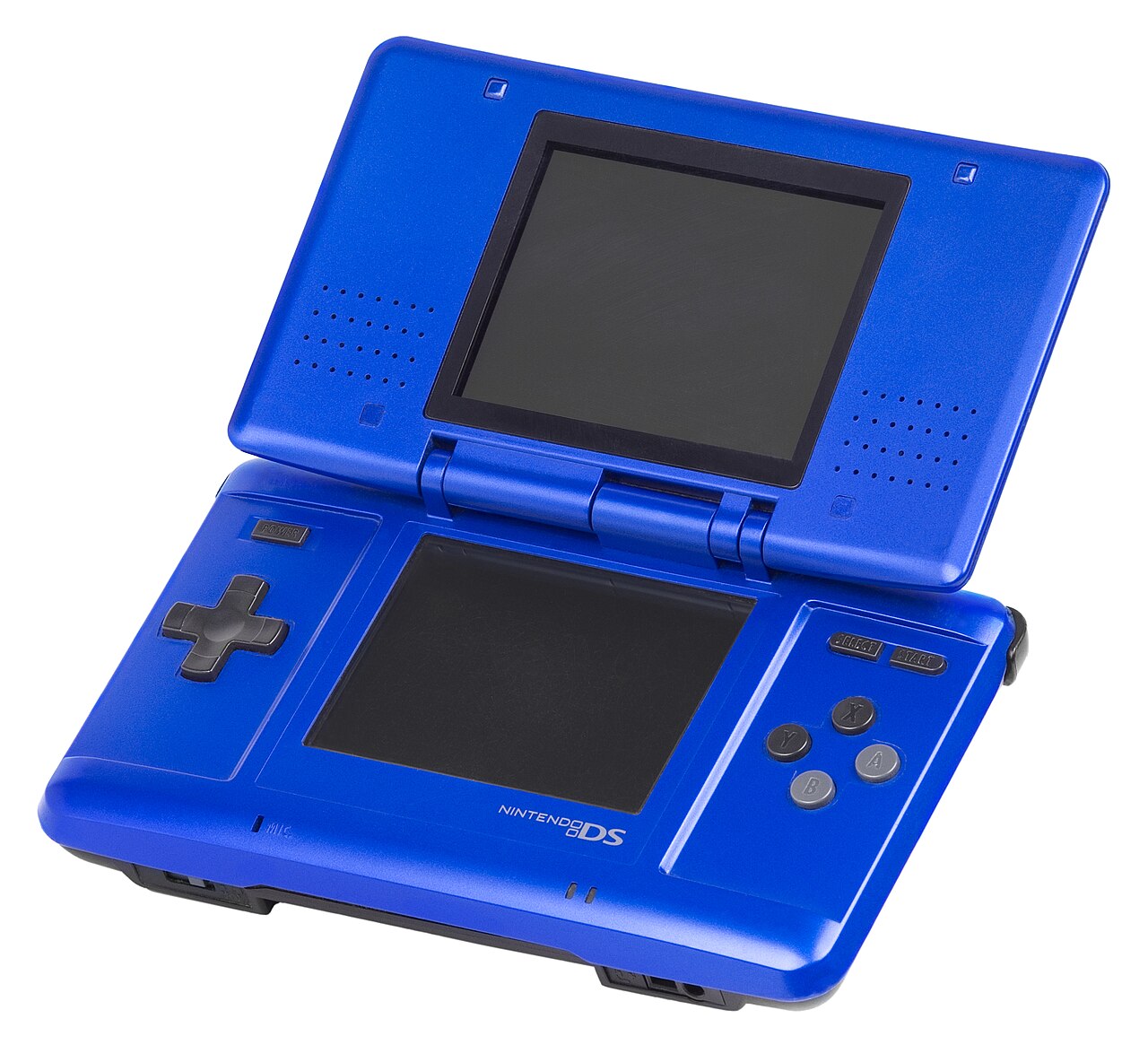
The Nintendo DS is a seventh-generation handheld console released by Nintendo, debuting in North America and Japan in 2004 before reaching Europe and Australia in 2005.
Spec Table
| Spec | Value |
|---|---|
| Maker | Nintendo |
| Type | Handheld |
| Generation | 7th generation |
| Release Date | Japan: 2004 (initial); North America: 2004; Europe: 2005; Australia: 2005 |
| Launch Price | $149.99 |
| Units Sold | 154.02 million |
| Media | Nintendo DS Game Cards (8–512 MiB capacity); backward compatible with Game Boy Advance cartridges |
| CPU | Dual ARM processors: ARM946E-S at 67 MHz (primary) + ARM7TDMI at 33 MHz (secondary); 4 MB PSRAM |
| Predecessor / Successor | Game Boy Advance / Nintendo 3DS |

History
Released in Japan in December 2004 and North America in November 2004, the Nintendo DS revolutionized handheld gaming with its dual-screen design and lower touch-sensitive display. Rather than chase raw horsepower against Sony’s PSP, Nintendo targeted a broader audience with software like Nintendogs and Brain Training that used touchscreen input in ways no prior handheld had explored. Wi-Fi connectivity let players trade Pokémon and race in Mario Kart DS online, cementing wireless multiplayer as an expected feature on future Nintendo handhelds.
The DS Lite revision of 2006 slimmed the hardware and brightened the screens, eventually accounting for over 60% of all DS-family sales by itself. New Super Mario Bros. launched on the platform in 2006 as the franchise’s first all-new side-scrolling entry since the Super NES era, becoming the best-selling game in the DS library. By the time the Nintendo 3DS succeeded it, the DS family had sold 154.02 million units, ranking third among all consoles ever sold and proving that mainstream audiences would embrace dedicated gaming hardware built around casual play and touch input.
Library Highlights
The DS library paired traditional Nintendo franchises with software that only made sense on dual-screen, touch-enabled hardware, a mix that helped the system appeal to lifelong gamers and newcomers at the same time.
- New Super Mario Bros.
- Pokemon Diamond and Pearl
- The Legend of Zelda: Spirit Tracks
- Animal Crossing: Wild World
- Mario Kart DS
- Brain Training
- Nintendogs
- Grand Theft Auto: Chinatown Wars

Variants
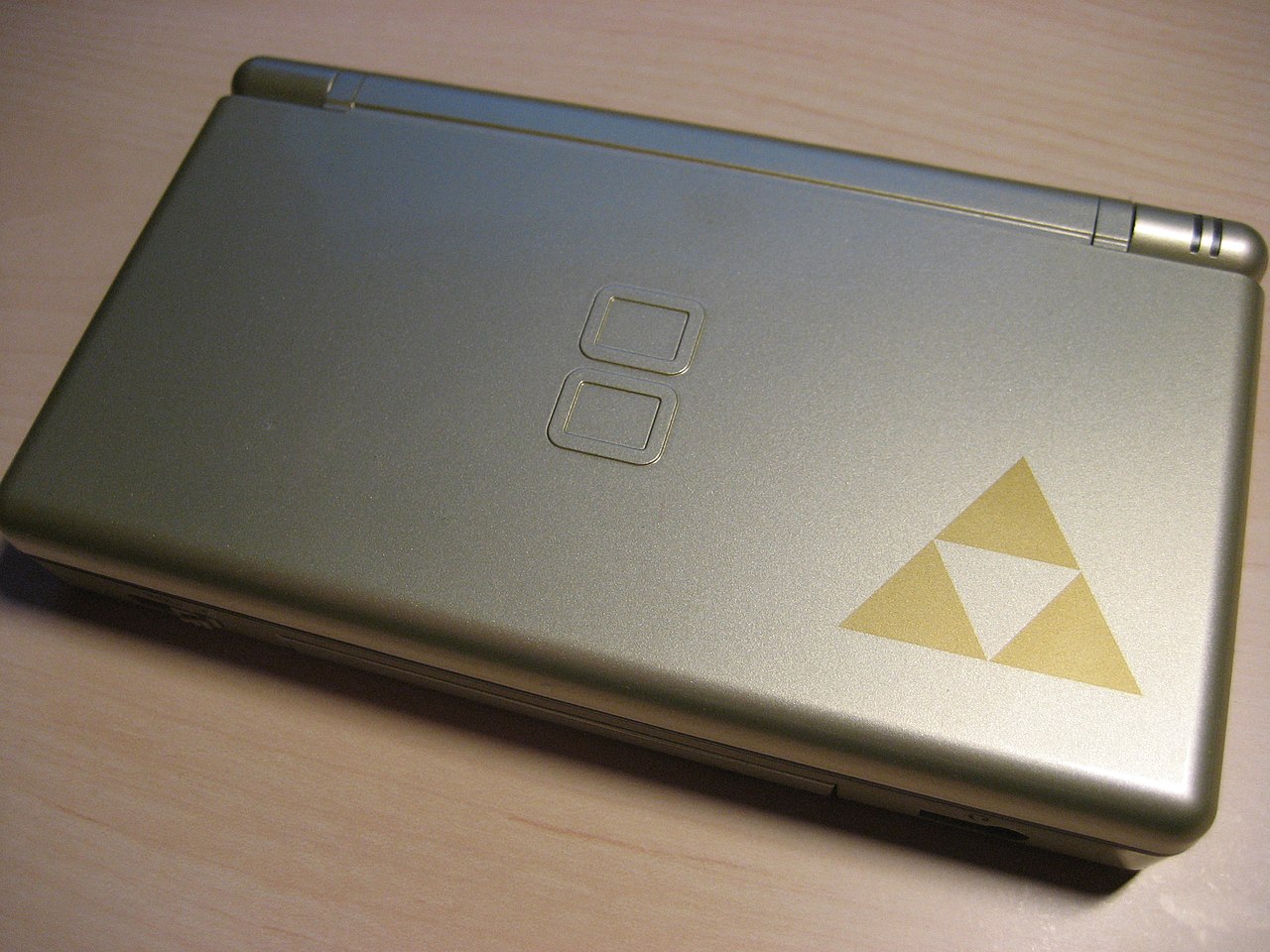
The original Nintendo DS was followed by several hardware revisions rather than a single fixed design. The DS Lite (2006) slimmed the shell and brightened both screens, and it alone accounted for roughly 93.08 million of the family’s total sales, over 60% of the entire DS line. Nintendo later released the Nintendo DSi and DSi XL, which added cameras and a larger DSi-exclusive software store but dropped Game Boy Advance slot compatibility present on the original model and DS Lite. See the full Nintendo manufacturer hub for other systems the company released.
Collector Value
Original-model Nintendo DS units are the least common on the secondhand market today, since most surviving hardware in circulation is the later, far more numerous DS Lite, DSi, and DSi XL revisions. Condition matters most for hinge integrity and screen coating wear, both common failure points on this hardware, and complete-in-box examples with working styluses and chargers command a premium over loose consoles. Because the DS Game Card format is small and easily lost, sellers listing complete game copies with original cases and manuals typically price noticeably higher than cart-only listings.
Buying Guide
Before buying a used Nintendo DS, confirm which model you’re getting (original, DS Lite, DSi, or DSi XL), since the specification and this page cover the original launch hardware specifically. Check that both hinges are tight and that neither screen shows scratches or a peeling protective coating, since replacement screens are a common and somewhat involved repair. Bring or ask about a charger, as the DS uses a proprietary AC adapter that isn’t interchangeable with later Nintendo handhelds, and test the Game Card slot with a cartridge rather than trusting a simple power-on.
FAQs
When did the Nintendo DS come out?
The Nintendo DS launched in North America and Japan in 2004, followed by Europe and Australia in 2005.
How many units did the Nintendo DS sell?
The Nintendo DS family sold 154.02 million units across all hardware revisions, making it the best-selling handheld console in history.
How much did the Nintendo DS cost at launch?
The Nintendo DS launched at $149.99.
What CPU does the Nintendo DS use?
It uses dual ARM processors, an ARM946E-S running at 67 MHz for primary processing and an ARM7TDMI running at 33 MHz for secondary tasks, alongside 4 MB of PSRAM.
What console followed the Nintendo DS?
Nintendo’s next handheld was the Nintendo 3DS, which succeeded the DS as the company’s flagship portable system.

Sources
- https://en.wikipedia.org/wiki/Nintendo_DS
- https://en.wikipedia.org/wiki/List_of_best-selling_game_consoles
Facts on this page last verified 2026-07-15.