This article contains Amazon affiliate links — as an Amazon Associate, RetroArcade earns from qualifying purchases.
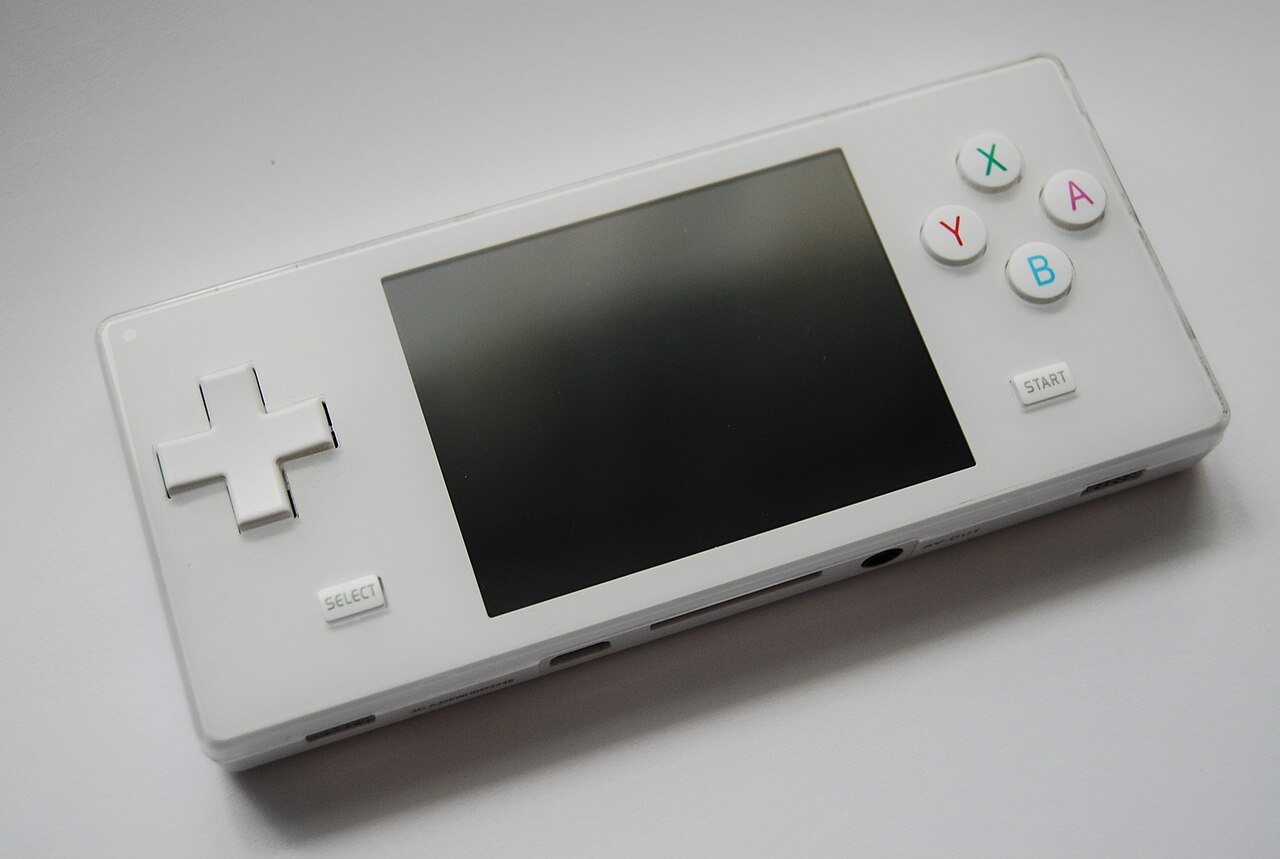
The Dingoo A320 is a seventh-generation handheld console released by Dingoo Digital Technology in China in 2009.
Spec Table
| Spec | Value |
|---|---|
| Maker | Dingoo Digital Technology |
| Type | Handheld |
| Generation | 7th generation |
| Release Date | China: 2009 (initial) |
| Launch Price | Not documented |
| Units Sold | 1 million+ |
| Media | MicroSD/MiniSD card |
| CPU | 360MHz XBurst (MIPS architecture, Ingenic Jz4732/Jz4740 SoC) |
| Predecessor / Successor | None documented |

History
Dingoo Digital Technology, based in Shenzhen’s Futian District, released the A320 in China in February 2009 as a compact media player and gaming handheld built around a 2.8-inch, 320×240 LCD screen. Out of the box it shipped with a small set of official emulators covering NES, SNES, Game Boy Advance, Neo Geo, and Mega Drive/Genesis titles, alongside video, music, photo, and FM radio playback tucked into the same low-cost device. The A320 ran on a proprietary μC/OS-II based firmware, which kept the hardware simple but also limited what official software alone could do.
What set the A320 apart was what happened after launch. Dingoo released free official SDKs, and a community of independent developers responded by building well beyond the stock firmware’s limits. On June 24, 2009, the community shipped “Dingux,” a dual-boot Linux installer that let owners switch between the original firmware and a full Linux environment without needing a PC connection each time. Dingux unlocked a much wider range of emulation, including systems the factory firmware never supported, such as Amiga, various Ataris, ColecoVision, Commodore 64, and the ZX Spectrum, and it enabled native ports of major PC game engines like Prboom (running Doom, Heretic, and Hexen), the Build engine (Duke Nukem 3D, Shadow Warrior), and Quake.
That homebrew momentum turned the A320 into one of the more influential budget handhelds of the late 2000s, cited as an early example of a mainstream, affordable device built around open, community-driven software rather than a closed ecosystem. It belongs to the same wave of Linux-capable emulation handhelds as the seventh console generation, sitting alongside contemporaries like the GP2X in appealing to players who wanted to tinker with their hardware rather than just play licensed titles.
Dingoo Digital Technology followed the A320 with the A330 and A380, incremental hardware revisions that carried the same emulation-and-homebrew formula forward. The original A320 sold in three color options — white, black, and pink — and its more than 1 million units sold made it a commercially significant entry in the affordable-handheld space, even without an official successor line beyond its own variants.
Library Highlights
The A320 had no cartridge or disc-based game library of its own; its appeal instead came from the breadth of other systems it could emulate, first through official firmware and later through the much larger homebrew and Dingux scene.
- Emulated NES titles
- Emulated SNES titles
- Emulated Game Boy Advance titles
- Emulated Neo Geo titles
- Emulated arcade games
Variants
Dingoo Digital Technology followed the original A320 with the A330 and A380, both incremental revisions of the same design rather than full redesigns. See the full Dingoo Digital Technology manufacturer hub for other systems the company released.
Collector Value
The Dingoo A320 remains an affordable pickup for collectors of early homebrew-friendly handhelds, since it sold in large numbers and was never treated as a premium device even at launch. Loose, tested units are the most common find and typically inexpensive; condition concerns center on the analog joystick nub and D-pad, which are prone to wear, and on the MiniSD/MicroSD slot’s contacts. Complete-in-box examples with the original firmware media and cables are less common and command more interest from collectors who focus on the Dingux/homebrew scene specifically.
Buying Guide
Before buying a used Dingoo A320, confirm the seller includes the original USB cable, since it is the only way to load firmware, games, and media onto the device via its MicroSD/MiniSD storage. Test the analog nub and all face buttons for responsiveness, as these are the most common wear points, and check the screen for scratches or dead pixels on its small 2.8-inch display. Ask whether the unit runs the stock firmware or has Dingux installed, since that affects which games and emulators it can run out of the box.
FAQs
When did the Dingoo A320 come out?
The Dingoo A320 was released in China in 2009.
How many units did the Dingoo A320 sell?
The Dingoo A320 sold more than 1 million units.
How much did the Dingoo A320 cost at launch?
A launch price for the Dingoo A320 is not documented in available records.
What CPU does the Dingoo A320 use?
It uses a 360MHz XBurst processor based on the MIPS architecture, built into an Ingenic Jz4732/Jz4740 system-on-chip.
What is Dingux and why does it matter for the Dingoo A320?
Dingux is a community-built dual-boot Linux distribution for the Dingoo A320, released June 24, 2009, that let owners run a much wider range of emulators and homebrew software than the console’s original firmware supported.
Sources
Facts on this page last verified 2026-07-15.