This article contains Amazon affiliate links — as an Amazon Associate, RetroArcade earns from qualifying purchases.
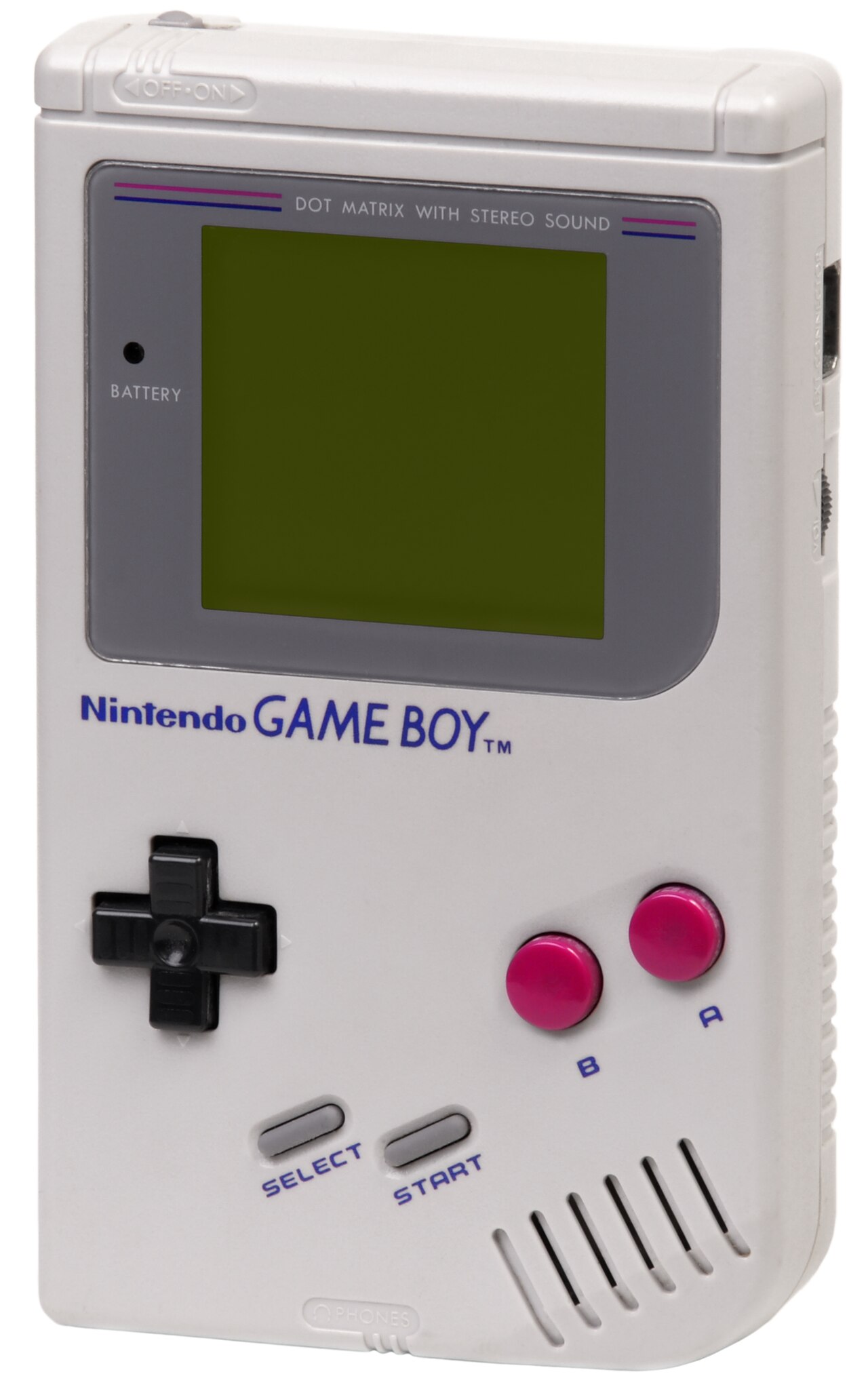
The Game Boy is a fourth-generation handheld console released by Nintendo, launching in Japan and North America in 1989 before reaching Europe in 1990.
Spec Table
| Spec | Value |
|---|---|
| Maker | Nintendo |
| Type | Handheld |
| Generation | 4th generation |
| Release Date | Japan: 1989 (initial); North America: 1989; Europe: 1990 |
| Launch Price | $89.99 USD |
| Units Sold | 118.69 million |
| Media | Game Boy Game Pak cartridges with Memory Bank Controller technology |
| CPU | Sharp SM83 @ 4.194304 MHz |
| Predecessor / Successor | Game & Watch / Game Boy Color |

History
Nintendo’s Research & Development 1 division, led by Gunpei Yokoi alongside engineer Satoru Okada, designed the Game Boy around a simple bet: a cheap, rugged handheld that survived drops and long car rides would beat a fragile, flashy one. That bet paid off. The unit launched in Japan in 1989 and reached North American shelves the same year, with a European rollout following in 1990.
Yokoi had made his name at Nintendo designing toys built around ordinary, well-understood parts rather than bleeding-edge components, and the Game Boy carried that philosophy into a handheld console. Its monochrome screen was a deliberate trade-off. Reviewers and rival manufacturers considered it a technical step behind color handhelds already on shelves, but the low-power display meant a set of four AA batteries could last many hours longer than on those competitors, and the simpler screen also helped keep the retail price down at launch.
Sega’s Game Gear and Atari’s Lynx both arrived with backlit color displays and, on paper, more impressive specs, and both are frequently cited as having offered a stronger technical package than Nintendo’s handheld. The Game Boy nonetheless outsold them by a wide margin. Bundling Tetris with the console in North America and Europe gave Nintendo a launch pack that appealed well beyond the usual teenage gaming audience, reaching parents, commuters, and casual players who had never bought a game console before. That single decision is widely credited with establishing the early sales momentum that color rivals could never fully close.
The Game Boy’s commercial peak arrived years after launch, when Pokemon Red and Green debuted in Japan in 1996, followed by Pokemon Red and Blue internationally and a later Japanese-only Pokemon Yellow tie-in to the anime. Pokemon sold roughly 46 million copies across those versions and turned an aging handheld into a fresh cultural phenomenon among a new generation of players, extending the platform’s commercial life well into the era of its own successor. Across its full run the Game Boy line moved an estimated 118.69 million units, cementing handheld gaming as a mainstream category and setting the template Nintendo would follow with every portable system that came after it, including the console that eventually replaced it, the Game Boy Color.
Library Highlights
The Game Boy’s catalog leaned on puzzle, platforming, and role-playing games that worked well in short handheld sessions, and several of its releases remain among the best-selling games ever made.
- Tetris
- Pokemon Red
- Pokemon Blue
- Pokemon Yellow
- Super Mario Land
- The Legend of Zelda: Link’s Awakening
- Donkey Kong Land
- Metroid II: Return of Samus

Variants
No major hardware variants are documented for the original Game Boy in the available records. See the full Nintendo manufacturer hub for other handhelds and consoles the company released, including the redesigned models that followed this one.
Collector Value
Original Game Boy units are common enough that loose, tested consoles remain affordable and easy to find, while boxed examples with intact manuals and inserts draw a real premium from collectors focused on complete-in-box sets. Cosmetic condition matters most for pricing: screen clarity (older units are prone to fogging or “screen rot” on the protective lens), button feel, and the presence of the original battery cover all affect resale value, and sealed-new units command the highest prices of all. Because the system is cartridge-based, always check that a listed unit has been tested with a game rather than simply powered on.

Buying Guide
Before buying a used Game Boy, check that the battery compartment is free of corrosion, since leaked alkaline batteries are the most common cause of dead units on the secondhand market. Test the cartridge slot with a game rather than trusting a “powers on” claim alone, and inspect the screen for cracks in the protective lens or heavy fogging, which is common on units that were stored poorly. Ask whether the original link cable and AC adapter are included, since both are increasingly hard to find separately.
FAQs
When did the Game Boy come out?
The Game Boy launched in Japan and North America in 1989, with a European release following in 1990.
How many units did the Game Boy sell?
The Game Boy line sold approximately 118.69 million units worldwide, making it one of the best-selling gaming devices ever released.
How much did the Game Boy cost at launch?
The console launched at $89.99 USD.
What CPU does the Game Boy use?
It uses a Sharp SM83 processor running at 4.194304 MHz.
What console followed the Game Boy?
Nintendo’s next handheld was the Game Boy Color, which succeeded the original Game Boy as the company’s flagship portable system.
Sources
Facts on this page last verified 2026-07-15.