This article contains Amazon affiliate links — as an Amazon Associate, RetroArcade earns from qualifying purchases.
The Mega Duck is a fourth-generation handheld console released by Welback Holdings in 1993.
Spec Table
| Spec | Value |
|---|---|
| Maker | Welback Holdings |
| Type | Handheld |
| Generation | 4th generation |
| Release Date | 1993 |
| Launch Price | Not documented |
| Units Sold | Not documented |
| Media | 36-pin ROM cartridges |
| CPU | Sharp SM83 (Z80-like processor, 4.194304 MHz) |
| Predecessor / Successor | Not documented / Not documented |

History
Welback Holdings, a Hong Kong-based hardware manufacturer, released the Mega Duck (model WG-108) in 1993 through its Timlex International division. The system arrived at a point when Nintendo’s Game Boy had already dominated the handheld market for roughly four years, and Welback’s answer was to build hardware that closely mirrored it rather than compete on originality. The Mega Duck used the same Sharp SM83 processor found in the Game Boy, and its 2.7-inch STN dot-matrix screen matched the Game Boy’s 160×144 resolution, which made porting titles between the two systems relatively straightforward for developers already familiar with Nintendo’s platform.
In South America, distributor Cougar USA rebranded the handheld as the Cougar Boy for the Brazilian market, while European buyers encountered it under names like Creatronic and Videojet depending on the local distributor. This pattern of shifting regional branding was common among budget Game Boy competitors of the era, including the Watara Supervision, which pursued a similar low-cost strategy with its own 36-pin cartridge format.
Most Mega Duck software came from Thin Chen Enterprise, a Taiwanese studio that released titles under the Sachen and Commin labels, with the pack-in game The Brick Wall reportedly produced in-house by Timlex. Independent research into the console’s library and box numbering suggests as many as 37 titles may have been planned, though only about 24 cartridges were ultimately released to retail. Reception at the time was lukewarm; contemporary commentary on the system has pointed to a thin lineup of derivative titles and minimal marketing support as reasons it never built a lasting audience outside a small niche of budget-handheld collectors.
The Mega Duck line effectively ended when Welback repurposed the hardware into an educational device, the Mega Duck Super Junior Computer, sold in Germany through Hartung and in Spain as the Super QuiQue through CEFA Toys. No direct gaming successor followed, leaving the original 1993 handheld as a footnote among fourth-generation consoles best remembered today for how closely it copied Nintendo’s design.
Library Highlights
The Mega Duck’s small library leaned heavily on clones of established arcade and console hits, giving budget-minded buyers familiar gameplay on cheaper hardware.
- The Brick Wall
- Street Rider
- Bomb Disposer
- Puppet Knight

Variants
The Mega Duck was sold under several regional names rather than through distinct hardware revisions: Cougar Boy in Brazil and other South American markets, and Creatronic or Videojet branding in parts of Europe. Welback later adapted the underlying hardware into the Mega Duck Super Junior Computer, an educational learning device rather than a games machine. No major hardware revisions beyond these regional re-brands and the educational spin-off are documented. See the Welback Holdings manufacturer hub for other systems tied to the company, or compare it with contemporaries like the Gamate, another budget handheld competing for the same Game Boy overflow audience.
Collector Value
The Mega Duck occupies a niche corner of handheld collecting: it never sold in Game Boy-like numbers, so complete units with their original box and cartridges are considerably scarcer than mainstream 1990s handhelds. Loose consoles turn up occasionally through import sellers and retro-hardware specialists, but working examples with intact screens command a premium, since replacement parts are far harder to source than for more common systems. Regional variants like the Cougar Boy add another layer of interest for collectors chasing rebrand variations rather than functional differences.
Buying Guide
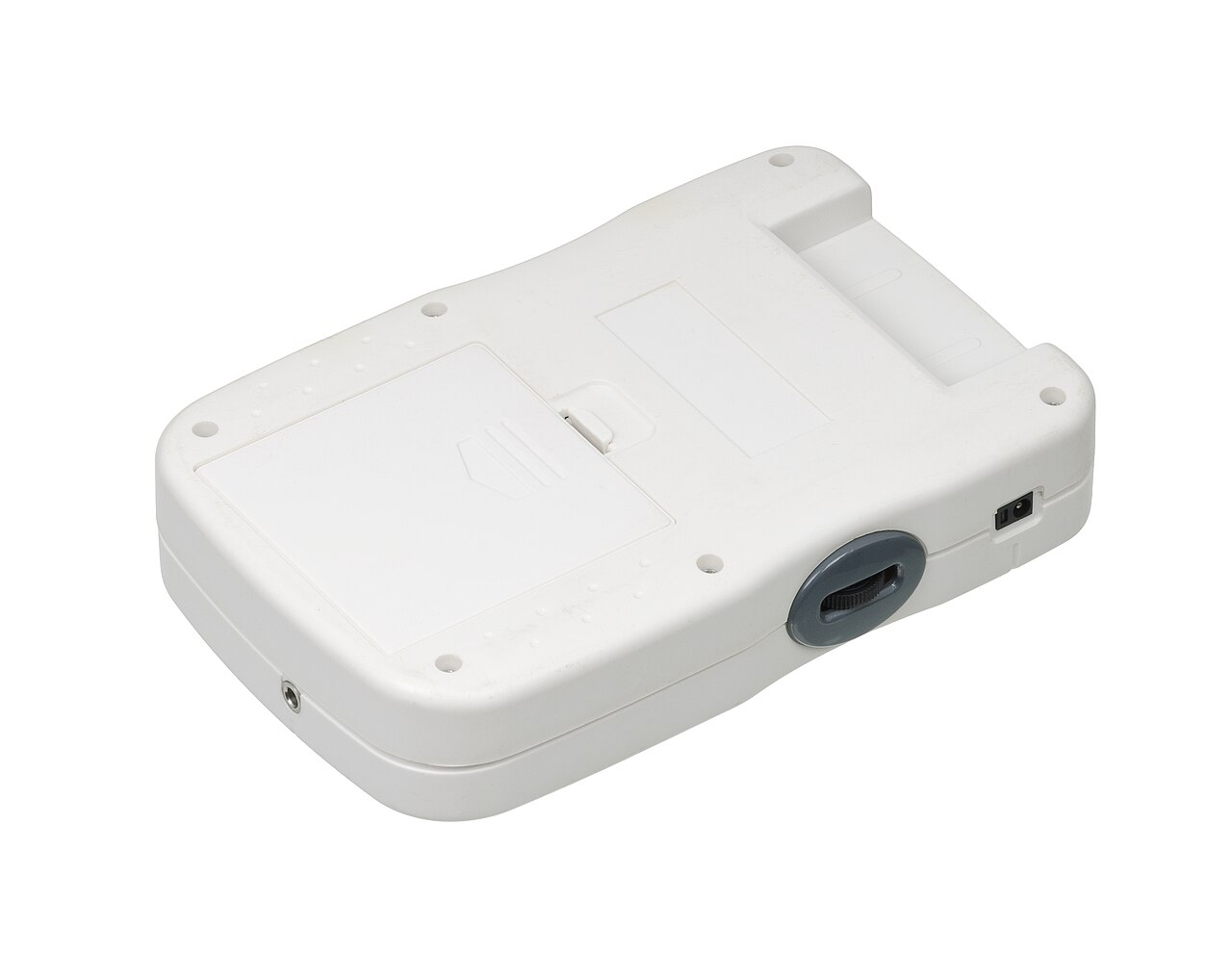
Before buying a used Mega Duck, confirm the seller can demonstrate the screen working, since STN displays of this era are prone to fading, ghosting, or dead pixel columns that are not always visible in listing photos. Check that the battery compartment is free of corrosion, as leaked AA batteries are a common cause of failure on handhelds this age. Because cartridges are scarce and specific to this system’s 36-pin format, verify that any included games are genuine Mega Duck cartridges rather than adapted Supervision carts.
FAQs
When did the Mega Duck come out?
The Mega Duck was released in 1993 by Welback Holdings through its Timlex International division.
How many units did the Mega Duck sell?
Sales figures for the Mega Duck are not documented.
What CPU does the Mega Duck use?
It uses a Sharp SM83 processor, a Z80-like chip running at 4.194304 MHz, the same processor family found in the Game Boy.
Is the Mega Duck the same as the Cougar Boy?
Yes. The Cougar Boy was the same hardware marketed under a different name for Brazil and other South American markets.
What kind of cartridges does the Mega Duck use?
The Mega Duck uses 36-pin ROM cartridges, a format specific to this console and not compatible with other handhelds of the era.
Sources
Facts on this page last verified 2026-07-15.