This article contains Amazon affiliate links — as an Amazon Associate, RetroArcade earns from qualifying purchases.
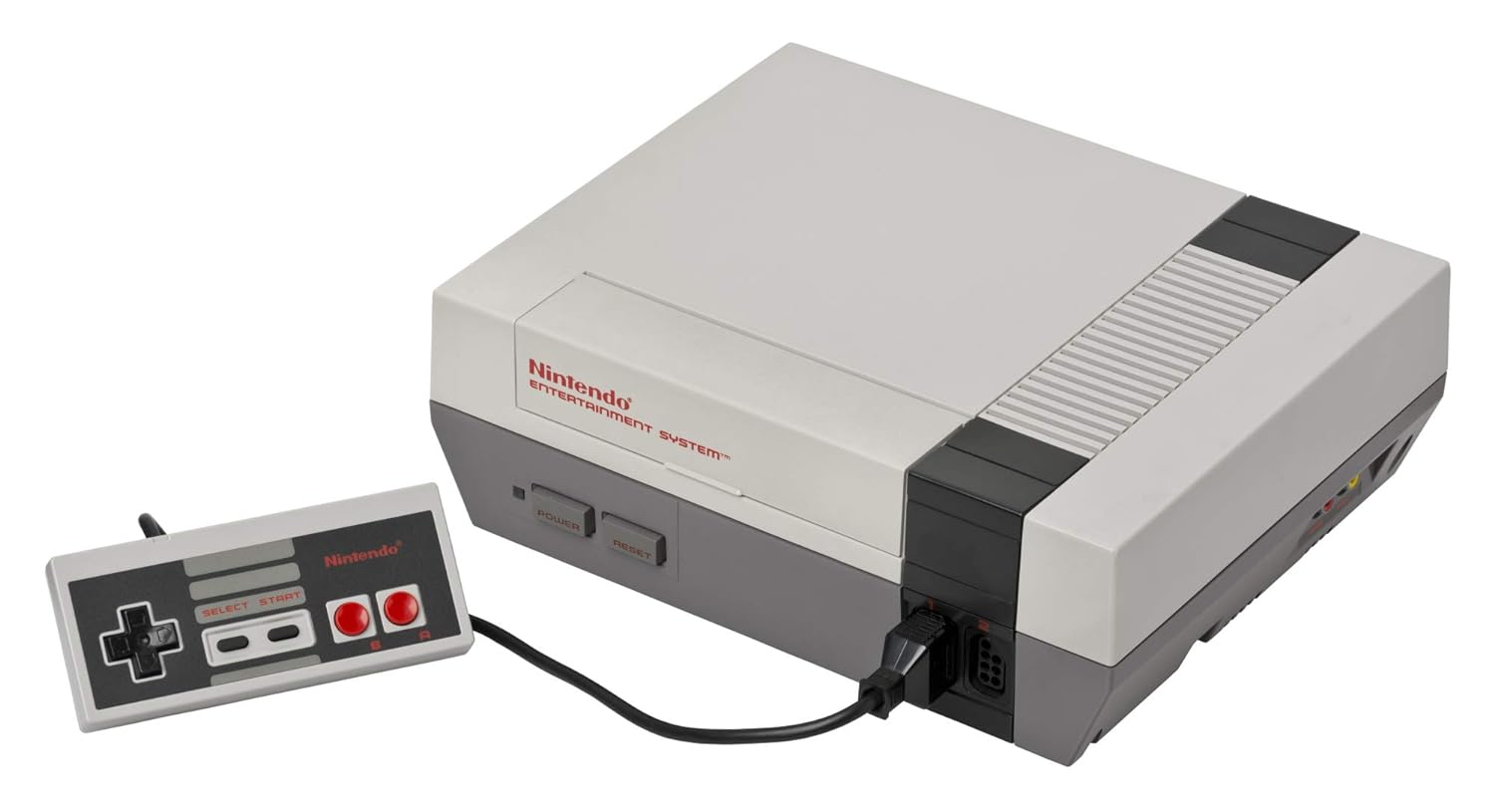
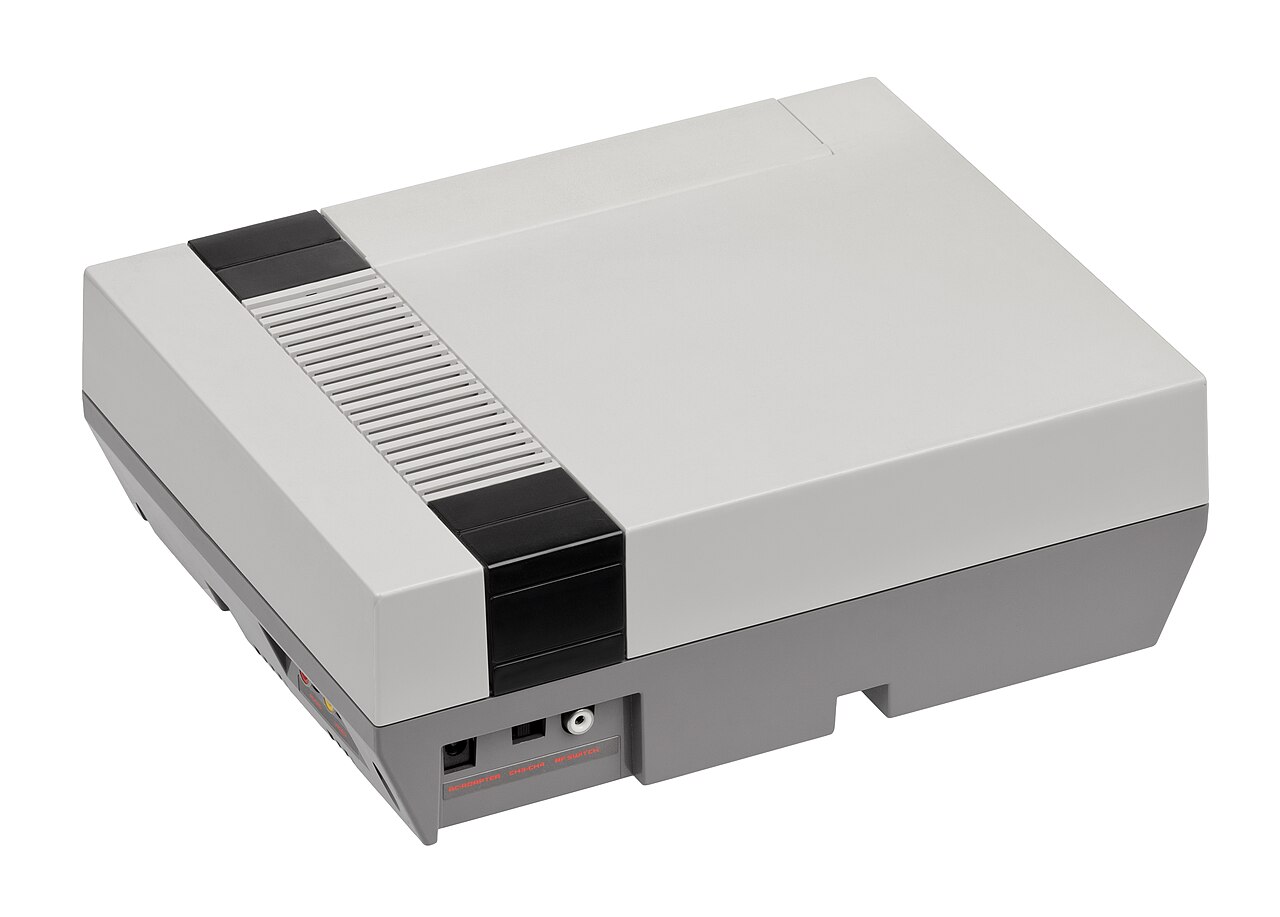
The NES/Family Computer is a third-generation home console released by Nintendo, debuting in Japan in 1983 before reaching North America in 1986.
Spec Table
| Spec | Value |
|---|---|
| Maker | Nintendo |
| Type | Home console |
| Generation | 3rd generation |
| Release Date | Japan: 1983 (initial); North America: 1986; Europe: 1987 |
| Launch Price | $180 USD |
| Units Sold | 61.91 million |
| Media | Nintendo Entertainment System Game Pak (cartridges) |
| CPU | Ricoh 2A03 (NTSC) @ 1.79 MHz / Ricoh 2A07 (PAL) @ 1.66 MHz |
| Predecessor / Successor | None / Super Nintendo Entertainment System |
History
Nintendo released the Family Computer, or Famicom, in Japan on July 15, 1983, as a cartridge-based successor to its earlier Color TV-Game line. North America saw nothing like it for another three years, largely because the region’s toy and department store buyers still associated home consoles with the glut of low-quality software that had gutted the market in 1983. Rather than pitch a “video game system” to wary retailers, Nintendo first tested an odd hybrid called the Advanced Video System, styled like a home computer with a keyboard and cassette drive, at the 1985 Winter CES. Buyer reaction was lukewarm, so Nintendo pivoted, proving the hardware’s appeal through arcade cabinets built on its VS. System board instead.
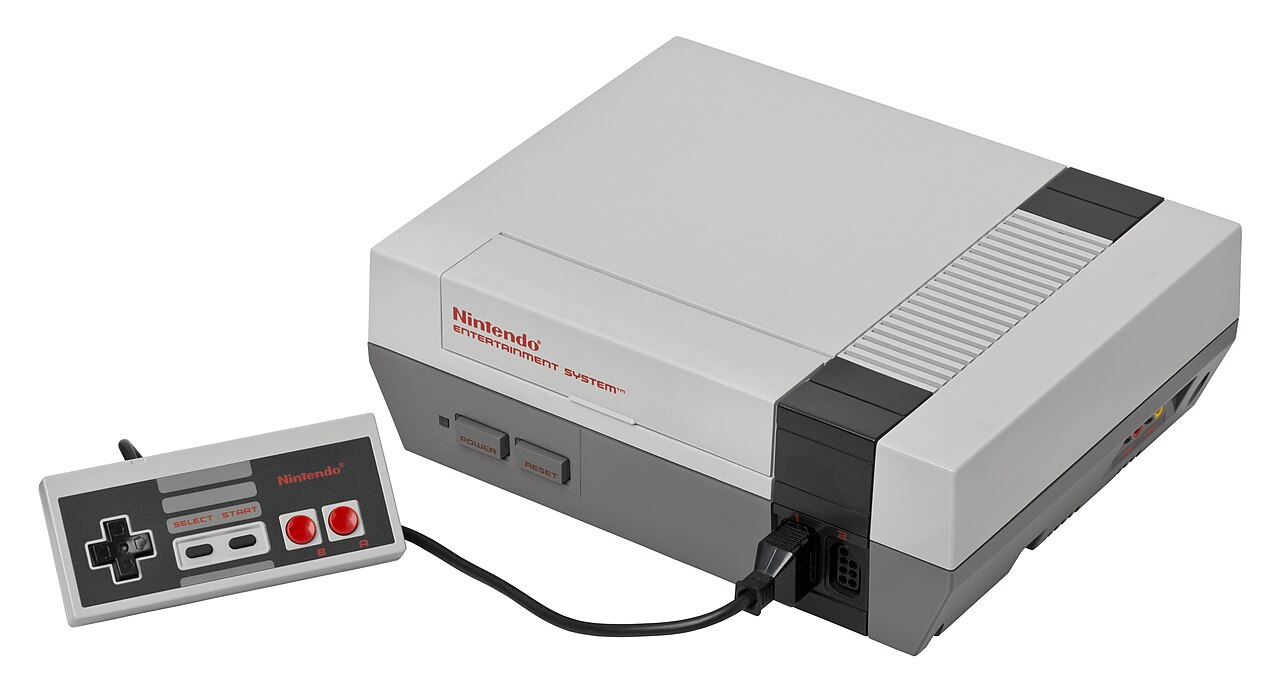
That arcade groundwork paid off. Nintendo launched a redesigned, front-loading console in a limited New York City test market on October 18, 1985, bundling it with the Zapper light gun and R.O.B., a robot toy accessory designed to make the machine look like sophisticated electronics rather than another game console. The strategy worked well enough that Nintendo expanded to Los Angeles in early 1986 before rolling the NES out nationwide that September, with Europe following in 1987. It anchors the third console generation in North America even though Sega and Atari had technically launched earlier in that cycle.
The console arrived at a moment when American retailers had all but written off video games. Analysts have pointed to a glut of poorly made cartridges, flooding from newly legalized third-party publishers, and stiff competition from home computers as the crash’s core causes. Nintendo’s response was structural rather than promotional: strict licensing terms limited outside developers to a handful of releases per year, the 10NES lockout chip physically blocked unlicensed cartridges from running, and the Official Nintendo Seal of Quality gave stores and parents a mark to trust. Those measures, controversial enough to later draw a Federal Trade Commission antitrust settlement in 1991, nonetheless rebuilt retailer confidence in game hardware.
By the early 1990s Nintendo held a commanding share of a North American games market worth billions, a dramatic reversal from the near-empty shelves of 1983. The NES continued selling in Japan long after Nintendo discontinued Western support in 1995, with Famicom production only ending in 2003. Its legacy runs deeper than sales figures: the D-pad design first fitted to its controller became the template nearly every subsequent gamepad has copied, and the licensing framework it pioneered still shapes how console makers manage third-party software today.
Library Highlights
The NES built its reputation on tightly designed platformers and early role-playing games that established genre conventions still followed decades later, alongside ports that brought arcade favorites into living rooms.
- Super Mario Bros.
- Super Mario Bros. 3
- The Legend of Zelda
- Dragon Quest
- Final Fantasy
- Duck Hunt
- Donkey Kong
- Metroid
Variants
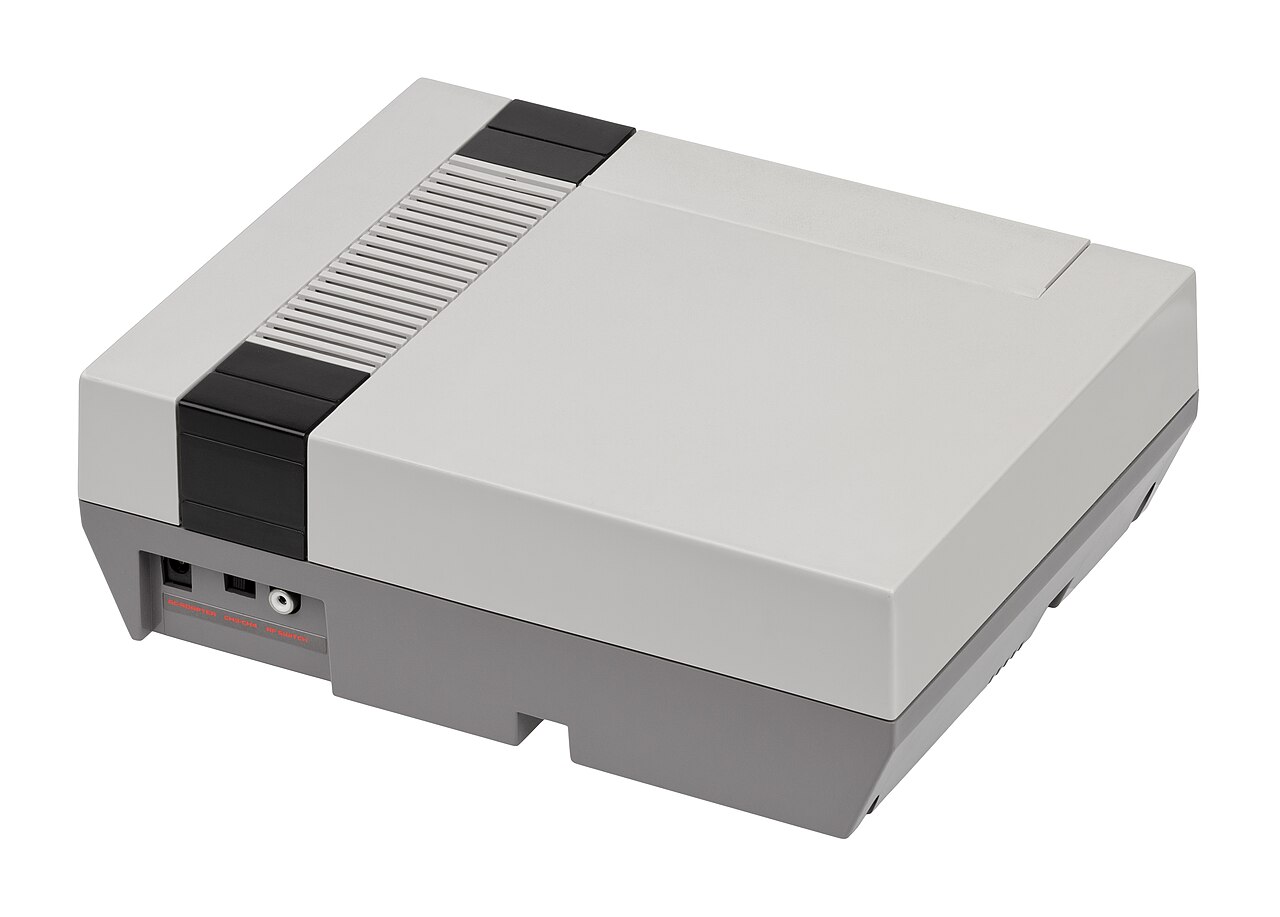
The Japanese Family Computer and the North American/European NES differ substantially in industrial design: the Famicom is a low red-and-white unit with a top-loading cartridge slot and hardwired controllers, while the NES adopted the front-loading, VCR-inspired gray case built for Western retail. Nintendo later released a smaller, top-loading NES redesign (the NES-101, sometimes called the “toaster” model by collectors) near the end of the console’s North American life. No other major hardware variants beyond these regional and late-life redesigns are documented. See the full Nintendo manufacturer hub for other systems the company released.
Collector Value
Loose, tested NES consoles remain common and affordable given the system’s enormous production run, but complete-in-box units, especially with intact styrofoam inserts and manuals, draw a real premium. Condition of the cartridge slot matters more than almost anything else: the NES’s original zero-insertion-force mechanism wears out over decades of use, and consoles with a well-maintained or professionally replaced slot sell for noticeably more than ones that need the cartridge jiggled to boot. Sealed launch-era stock and rare early Famicom variants can command collector prices far above a typical loose unit.
Buying Guide
Before buying a used NES, confirm the seller includes the original AC adapter, since third-party replacements vary in voltage quality and can damage the console. Test or ask about the cartridge slot’s condition, as the classic “blinking screen” problem stems almost entirely from worn connector pins in the zero-insertion-force mechanism rather than a broken game or motherboard. Also check that RF or composite cables are included, since NES-specific cabling is no longer sold new and period-correct cables are getting harder to find.
FAQs
When did the NES/Family Computer come out?
The Family Computer launched in Japan in 1983, with the NES following in North America in 1986 and Europe in 1987.
How many units did the NES/Family Computer sell?
The NES/Family Computer sold roughly 61.91 million units worldwide, making it one of the best-selling consoles of all time.
How much did the NES/Family Computer cost at launch?
The console launched at $180 USD.
What CPU does the NES/Family Computer use?
It uses a Ricoh 2A03 processor running at 1.79 MHz on NTSC units, or a Ricoh 2A07 at 1.66 MHz on PAL units.
What console followed the NES/Family Computer?
Nintendo’s next home console was the Super Nintendo Entertainment System, which succeeded the NES as the company’s flagship system.
Sources
- https://en.wikipedia.org/wiki/Nintendo_Entertainment_System
- https://en.wikipedia.org/wiki/1983_video_game_crash
Facts on this page last verified 2026-07-15.