
This article contains Amazon affiliate links — as an Amazon Associate, RetroArcade earns from qualifying purchases.
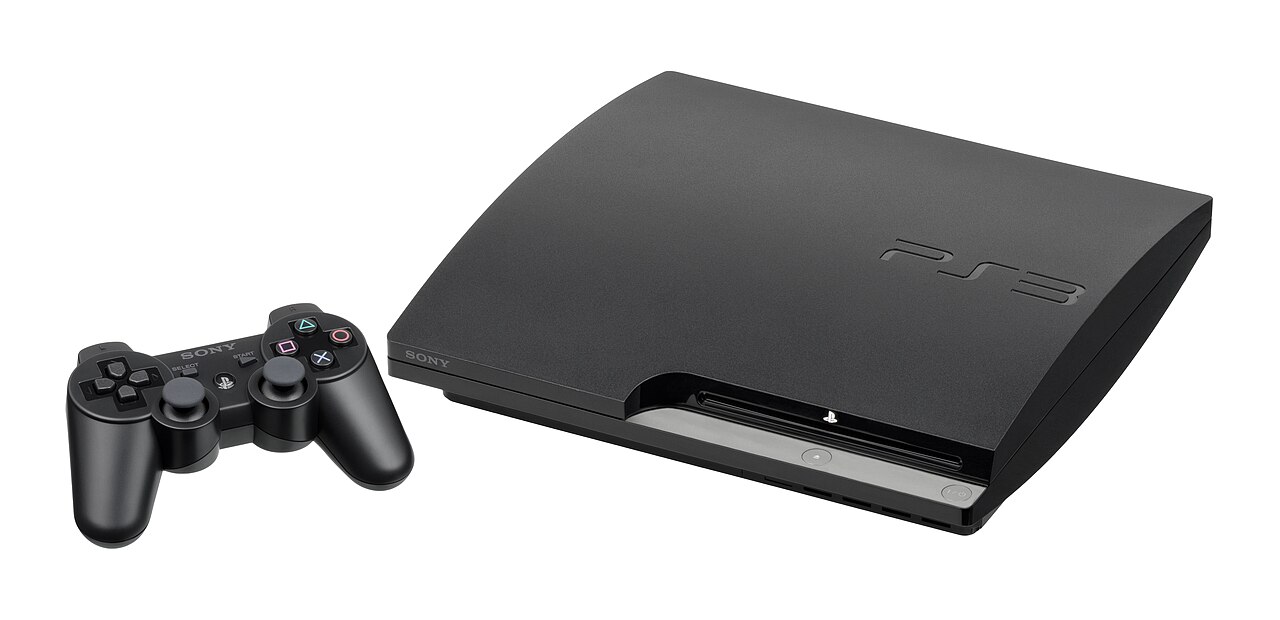
The PlayStation 3 is a seventh-generation home console released by Sony Computer Entertainment in 2006.
Spec Table
| Spec | Value |
|---|---|
| Maker | Sony Computer Entertainment |
| Type | Home console |
| Generation | 7th generation |
| Release Date | Japan: 2006 (initial); North America: 2006; Europe: 2007 |
| Launch Price | $599.99 USD |
| Units Sold | 87.4 million |
| Media | Blu-ray Disc |
| CPU | Cell Broadband Engine (3.2 GHz) – 1 Power Processing Element + 7 Synergistic Processing Elements |
| Predecessor / Successor | PlayStation 2 / PlayStation 4 |
History
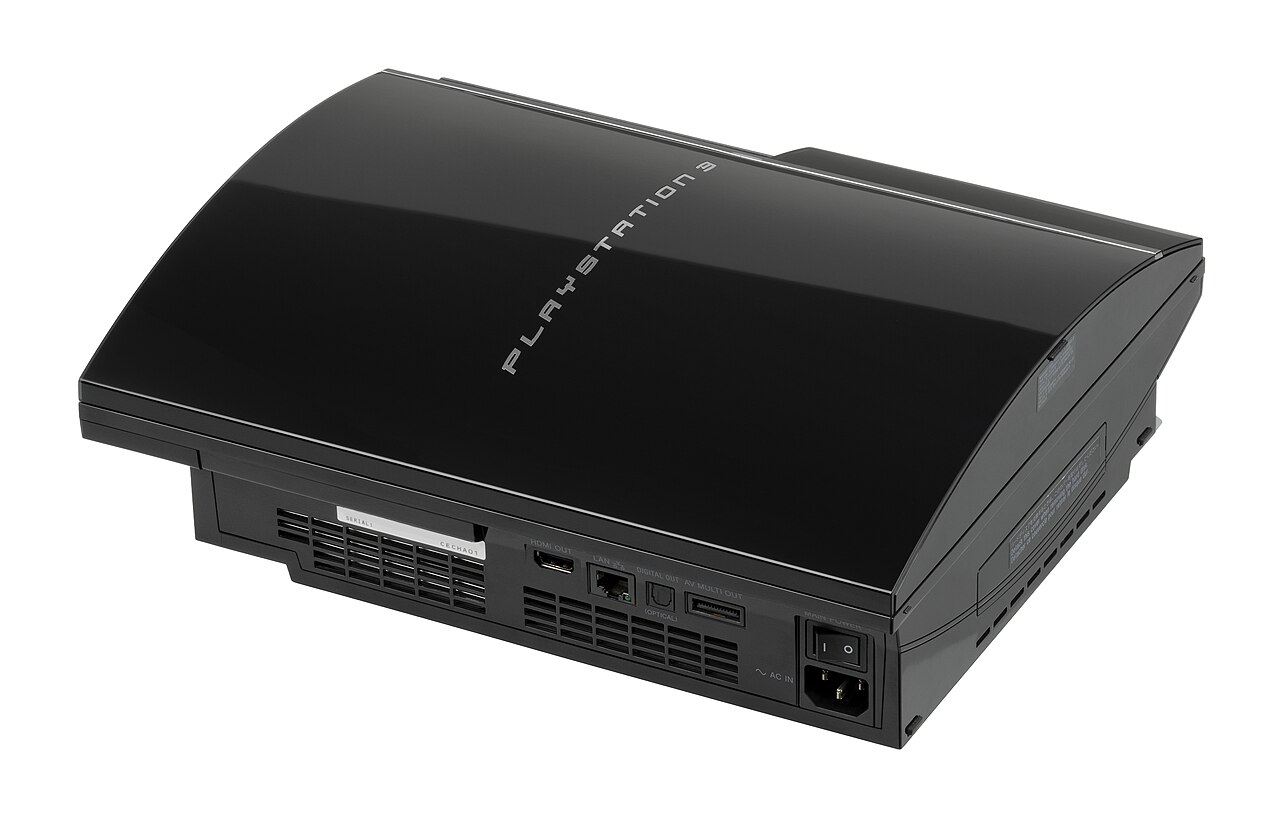
Sony launched the PlayStation 3 in Japan and North America in November 2006, with the European release delayed into 2007 by manufacturing constraints. The console arrived at a steep $599.99 for the 60GB model (with a $499.99 20GB option), a price that drew immediate criticism from press and consumers alike. Development had begun years earlier, when Sony executive Ken Kutaragi announced a partnership with IBM and Toshiba to build a custom processor he described as “a supercomputer for the living room.” That processor, the Cell Broadband Engine, paired a single Power Processing Element with seven Synergistic Processing Elements running at 3.2 GHz, and reportedly cost the three companies around $400 million to co-develop.
The Cell’s unconventional design made it difficult for many studios to program for efficiently, and Sony brought in Nvidia late in development to supply a dedicated graphics processor rather than relying solely on Cell for rendering. Combined with the high launch price, the rocky start left the PS3 struggling against Microsoft’s Xbox 360, which had a full year’s head start, and Nintendo’s surprise hit Wii. Sony absorbed heavy losses selling the console below cost in those early years, with total hardware losses estimated at roughly $3.3 billion. It stands among the defining systems of the seventh console generation.
Sony’s choice to build the PS3 around Blu-ray Disc technology, confirmed back in 2004, turned out to be a decisive advantage. The built-in Blu-ray drive gave every PS3 owner a capable high-definition disc player at a time when standalone players were expensive, and it helped tip the format war against the rival HD DVD standard backed by Toshiba, which conceded the format war in February 2008. Meanwhile, Sony worked aggressively to bring manufacturing costs down; production expense per unit fell substantially over the following years, allowing steady price cuts and a slimmer redesign that broadened the console’s appeal.
Firmware updates continued to reshape the platform throughout its life, including a controversial 2010 update that removed the “OtherOS” feature allowing Linux installation, a move Sony attributed to security concerns. Despite that rough patch and the difficult launch, the PS3 closed out its run as a commercial success, ultimately selling more than 87 million units worldwide, essentially matching the Xbox 360’s lifetime tally and building one of the most acclaimed exclusive game libraries of its generation.
Library Highlights
The PS3’s library grew into one of the strongest of its generation, anchored by narrative-driven exclusives and long-running franchises that helped define Sony’s first-party identity going forward.
- Grand Theft Auto V
- Gran Turismo 5
- The Last of Us
- Uncharted series
- Metal Gear Solid 4
- Killzone 2
- LittleBigPlanet
- Resistance series
Variants
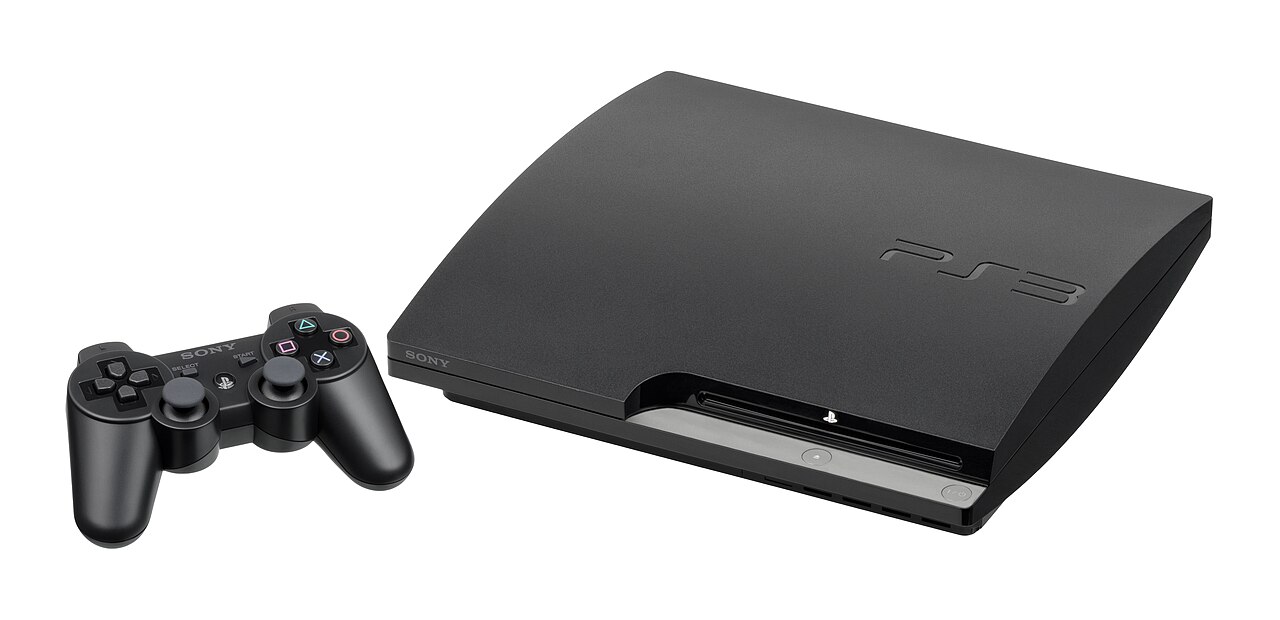
Sony revised the PS3’s hardware several times over its lifespan. The original “fat” launch models came in 20GB and 60GB configurations, with the larger model offering backward compatibility with PlayStation 2 discs through onboard hardware, a feature later models dropped in favor of software emulation and eventually removed entirely. A slimmer redesign arrived in September 2009 with a smaller case and lower price, followed by an even more compact “Super Slim” revision in late 2012. See the full Sony Computer Entertainment manufacturer hub for other systems the company released.
Collector Value
PlayStation 3 consoles remain widely available and affordable on the secondhand market, with pricing shaped mainly by model variant and condition rather than scarcity. Original 60GB “fat” launch units with PS2 backward compatibility carry a premium among collectors specifically seeking that feature, while later Slim and Super Slim units are common and inexpensive. Loose, tested consoles are easy to find, but buyers should watch for the “yellow light of death” hardware failure associated with early launch units, and sealed or complete-in-box examples are comparatively rare for a console this recent.

Buying Guide
Before buying a used PS3, check that the seller includes the original power cable, since the console uses a common but specific figure-8 style connector, and confirm the unit powers on and reads a disc rather than just lighting up. Ask about the model number: only original 20GB and 60GB “fat” launch units offer hardware-based PS2 backward compatibility, a feature later Slim and Super Slim models lack. Watch for signs of the “yellow light of death,” a known hardware failure on early units caused by heat-related solder issues.
FAQs
When did the PlayStation 3 come out?
The PlayStation 3 launched in Japan and North America in 2006, followed by Europe in 2007.
How many units did the PlayStation 3 sell?
The PS3 sold approximately 87.4 million units worldwide over its lifetime.
How much did the PlayStation 3 cost at launch?
The console launched at $599.99 USD.
What CPU does the PlayStation 3 use?
It uses the Cell Broadband Engine, running at 3.2 GHz with one Power Processing Element and seven Synergistic Processing Elements.
What console followed the PlayStation 3?
Sony’s next home console was the PlayStation 4, which succeeded the PS3 as the company’s flagship system.
Sources
- https://en.wikipedia.org/wiki/PlayStation_3
- https://www.videogameconsolelibrary.com/console/sony-playstation-3/
- https://www.destructoid.com/the-cell-processor-explained/
- https://www.techspot.com/article/1395-blu-ray-war-dvd-evolution/
Facts on this page last verified 2026-07-15.