This article contains Amazon affiliate links — as an Amazon Associate, RetroArcade earns from qualifying purchases.
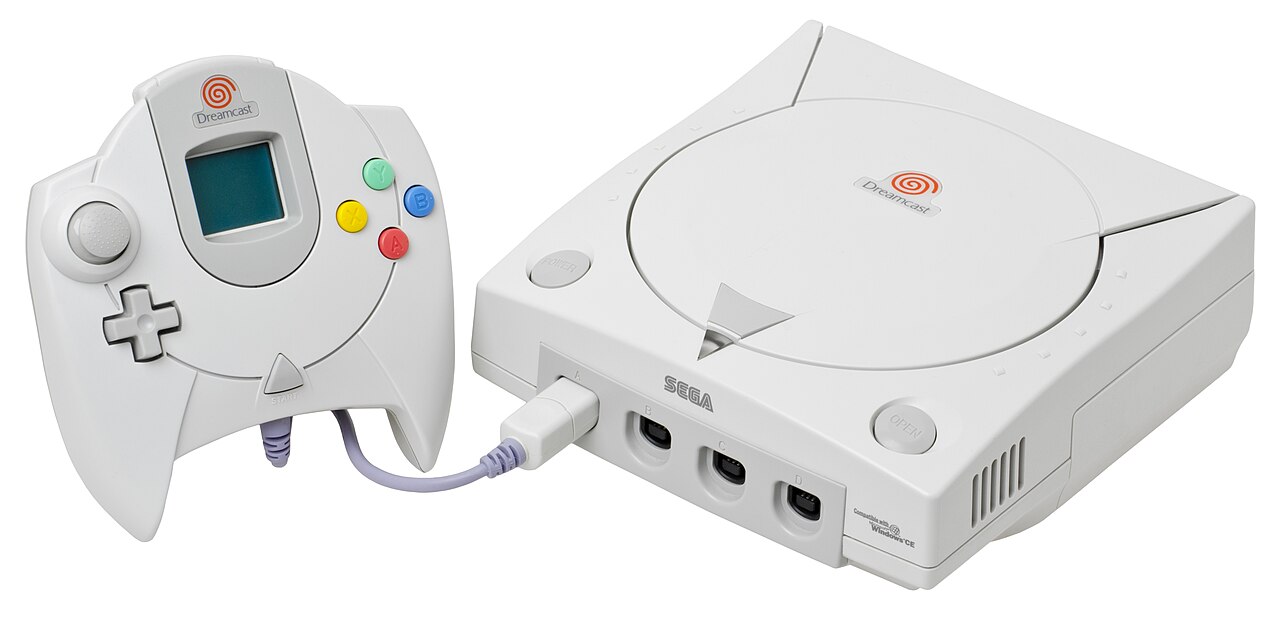
The Dreamcast is a sixth-generation home console released by Sega, debuting in Japan in 1998 before arriving in North America and Europe in 1999.
Spec Table
| Spec | Value |
|---|---|
| Maker | Sega |
| Type | Home console |
| Generation | 6th generation |
| Release Date | Japan: 1998 (initial); North America: 1999; Europe: 1999; Australia: 1999 |
| Launch Price | $199 USD |
| Units Sold | 9.13 million |
| Media | GD-ROM |
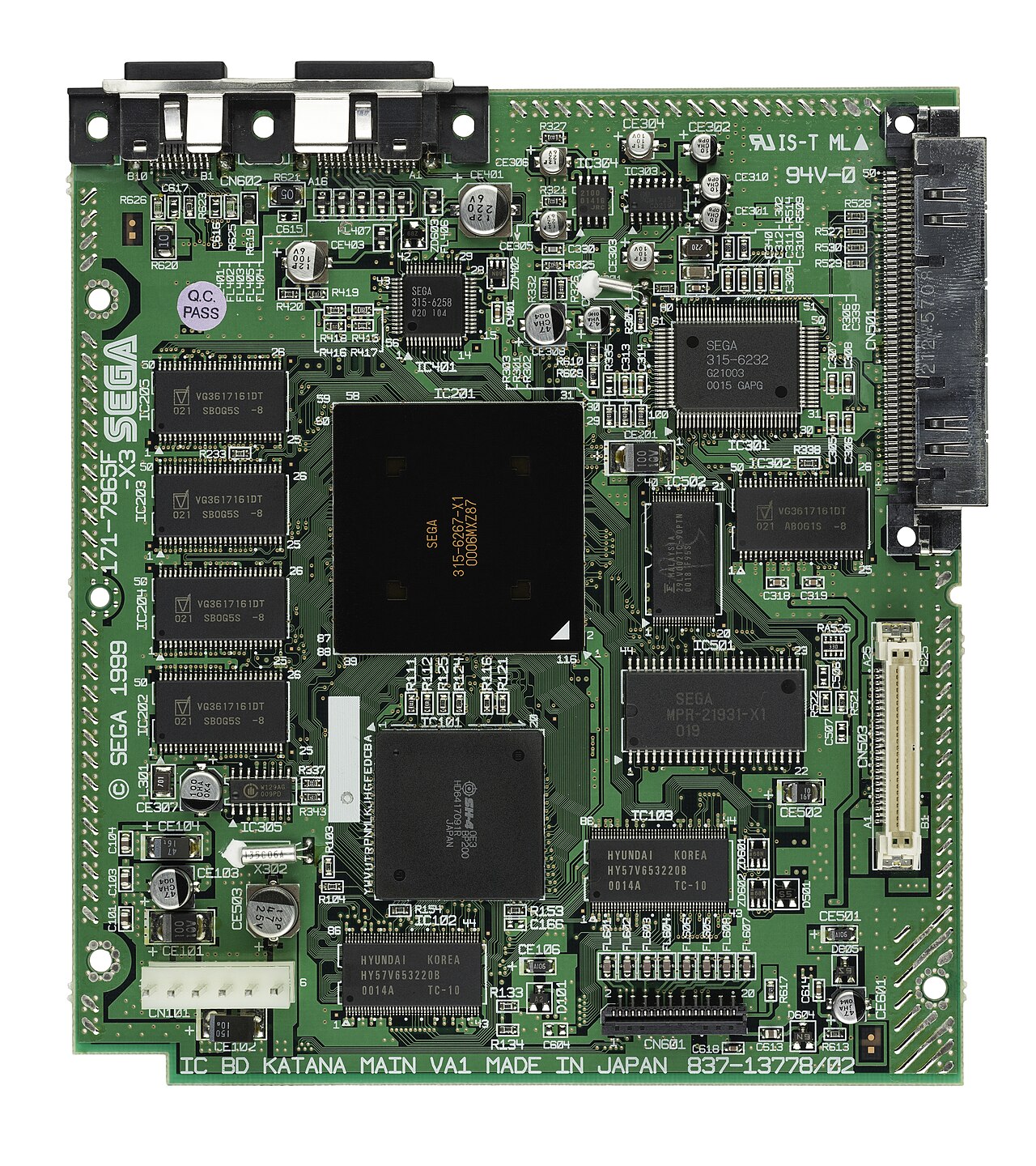
| CPU | Hitachi SH-4 @ 200 MHz |
| Predecessor / Successor | Sega Saturn / None (Sega exited hardware manufacturing) |
History
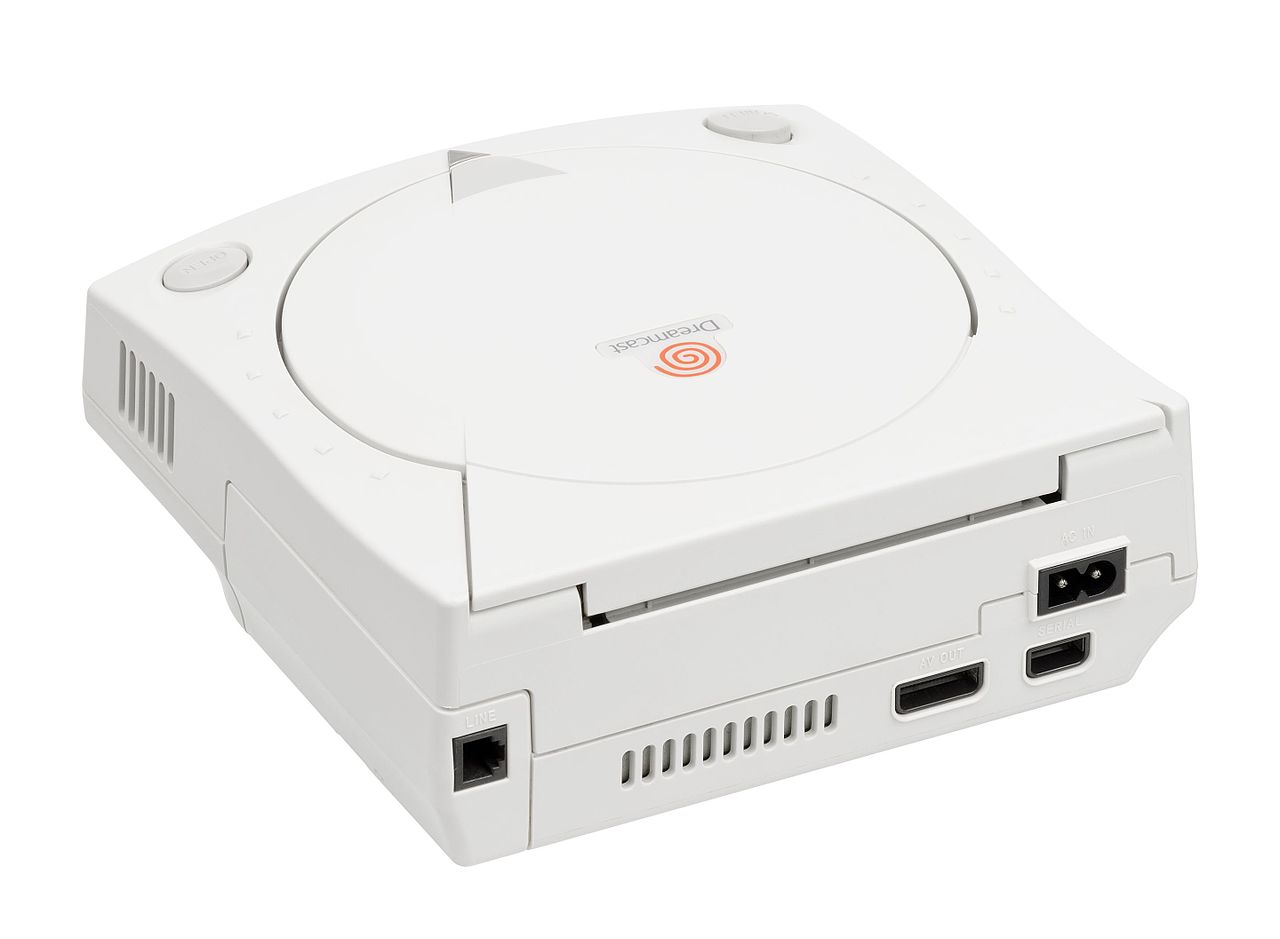
Sega released the Dreamcast in Japan on November 27, 1998, positioning it as the first console of a new hardware generation, arriving well ahead of Sony’s PlayStation 2, Nintendo’s GameCube, and Microsoft’s Xbox. The North American launch followed on September 9, 1999, backed by an aggressive marketing push, with European and Australian releases rounding out that same year. Built around a Hitachi SH-4 processor, the console shipped with a built-in modem, an unusual move for the era that signaled Sega’s ambitions for connected gaming from day one.
Sega backed up that hardware bet with software. On September 7, 2000, Sega.com launched SegaNet, a subscription internet service, timed to coincide with the release of NFL 2K1. SegaNet went on to support online play in titles including Bomberman Online, Quake III Arena, and Unreal Tournament, functionality that was years ahead of what rival consoles offered at the time. Phantasy Star Online extended that online push further, letting players team up over the internet in a genre console owners had rarely experienced before. The console’s library reinforced its reputation for creative risk-taking, with titles like Jet Set Radio and Space Channel 5 embracing bold visual styles, while Shenmue pursued unprecedented environmental detail. Despite this innovation, the dot-com crash and the looming PlayStation 2 led Sega to discontinue the Dreamcast on March 31, 2001, marking the company’s exit from hardware manufacturing and a pivotal moment in the sixth console generation.
Library Highlights
Despite its short commercial life, the Dreamcast built a library still cited as one of the most creatively ambitious of any console, spanning arcade-style racers, cinematic adventures, and genre-defining online multiplayer.
- Sonic Adventure
- Soulcalibur
- NFL 2K
- Phantasy Star Online
- Jet Set Radio
- Shenmue
- Crazy Taxi
- Space Channel 5
Variants
No major hardware variants are documented. See the full Sega manufacturer hub for other systems the company released, including its predecessor.
Collector Value
Because the Dreamcast was discontinued so early in its life, complete-in-box units and factory-sealed games are considerably scarcer than for longer-lived contemporaries, and pricing is heavily influenced by condition of the swirl-pattern case (which yellows and scratches easily) and whether the original controller and VMU memory unit are included. Loose consoles and common titles remain reasonably affordable and easy to find, while rarer late-cycle releases and sealed copies of games like Shenmue or Skies of Arcadia can command steep premiums. Working GD-ROM drives are also a key condition factor, since the laser mechanism is a common failure point on aging units.

Buying Guide
Before buying a used Dreamcast, ask the seller to confirm the GD-ROM drive spins up and reads discs reliably, since a slipping or worn drive belt/laser is the system’s most common point of failure. Check that the original AC adapter and controller (ideally with a working VMU, since save data and some minigames depend on it) are included, and inspect the case for the yellowing and hairline cracks common to units of this age. Test the analog stick’s rubber grommet for wear, as it degrades over time and affects games that rely on precise movement.
FAQs
When did the Dreamcast come out?
The Dreamcast launched in Japan in 1998, followed by North America, Europe, and Australia in 1999.
How many units did the Dreamcast sell?
The Dreamcast sold approximately 9.13 million units worldwide over its lifetime.
How much did the Dreamcast cost at launch?
The console launched at $199 USD.
What CPU does the Dreamcast use?
It uses a Hitachi SH-4 processor running at 200 MHz.
Did Sega make another console after the Dreamcast?
No. The Dreamcast was Sega’s last home console; the company discontinued it and exited hardware manufacturing to focus on third-party game publishing.
Sources
- https://en.wikipedia.org/wiki/Dreamcast
- https://en.wikipedia.org/wiki/Dreamcast_online_functionality
Facts on this page last verified 2026-07-15.