This article contains Amazon affiliate links — as an Amazon Associate, RetroArcade earns from qualifying purchases.
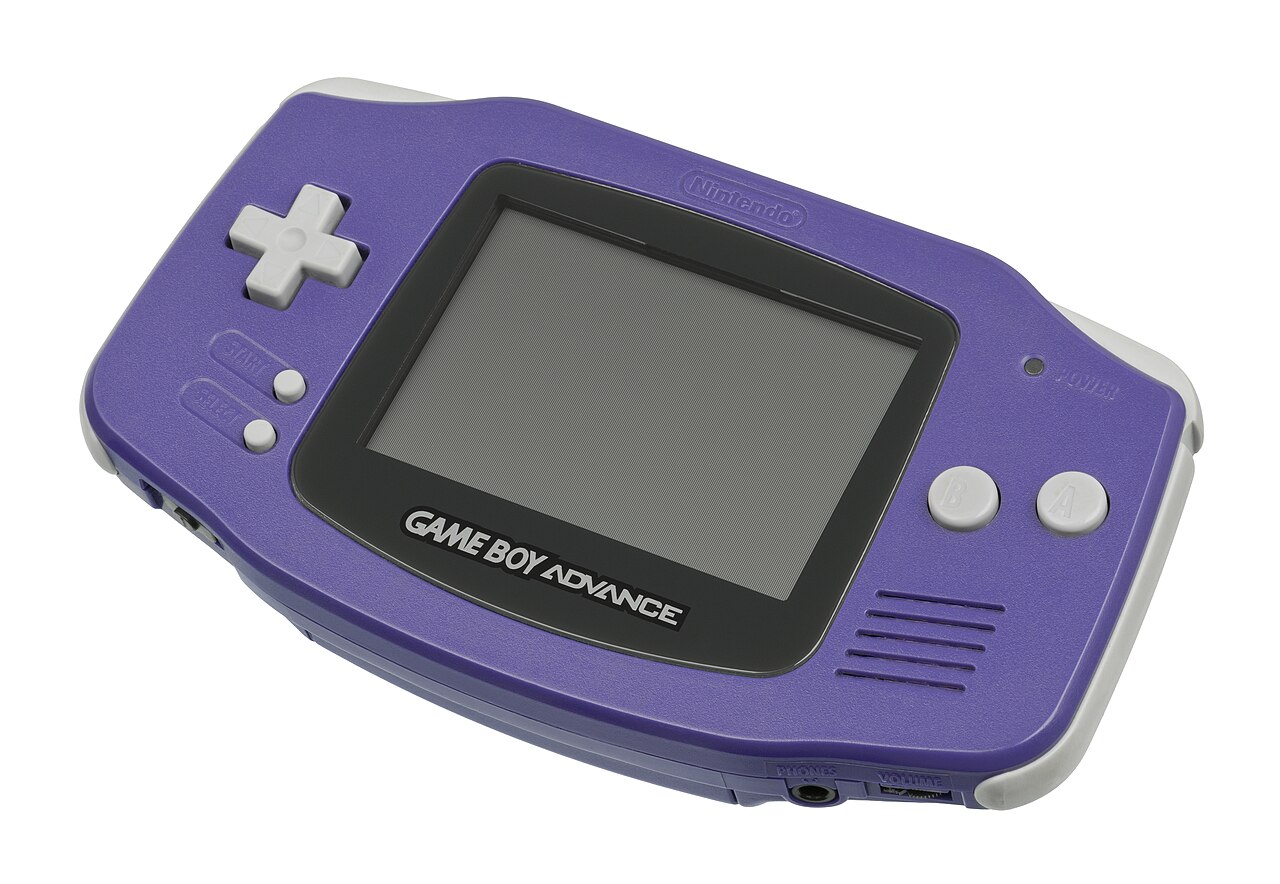
The Game Boy Advance is a sixth-generation handheld console released by Nintendo in 2001.
Spec Table
| Spec | Value |
|---|---|
| Maker | Nintendo |
| Type | Handheld |
| Generation | 6th generation |
| Release Date | Japan: 2001 (initial); North America: 2001; PAL: 2001; China: 2004 |
| Launch Price | $99.99 USD |
| Units Sold | 81.51 million |
| Media | Game Boy Advance Game Paks (cartridges) |
| CPU | ARM7TDMI @ 16.776 MHz (GBA games); Sharp SM83 @ 4.194–8.389 MHz (backward compatibility) |
| Predecessor / Successor | Game Boy Color / Nintendo DS |

History
Nintendo’s path to the Game Boy Advance began years earlier with an internal effort known as Project Atlantis, led by veteran designer Satoru Okada, who had also worked on the original Game Boy. That early-1990s prototype paired a color screen with a 32-bit ARM processor, but the team judged the results unsatisfactory and shelved the concept by 1997. When rival handhelds such as the WonderSwan and Neo Geo Pocket started drawing attention, Nintendo dusted off pieces of that shelved research, folding the color-screen work into 1998’s Game Boy Color while continuing development of a true 32-bit successor under the internal codename Advanced Game Boy.
Nintendo showed the finished hardware publicly at Space World in August 1999 and confirmed the system a year later, revealing launch dates and its first ten games on August 24, 2000. For the shape of the machine itself, Nintendo turned to French industrial designer Gwénaël Nicolas and his Tokyo studio, Curiosity Inc., rather than iterating on the familiar portrait-style Game Boy body. Nicolas reoriented the unit to a horizontal, landscape layout and moved the face buttons to the sides of the screen, a deliberate break from the vertical form factor the original Game Boy and Game Boy Color had used for over a decade.
By March 2001, Nintendo had locked in a $99.99 US price and a slate of 15 launch titles, with more than 60 promised before year’s end. Japan received the console first on March 21, 2001, alongside the racer F-Zero for Game Boy Advance as a same-day launch title, with North America and PAL territories following that June and China not gaining an official release until 2004. Beyond a fresh 32-bit ARM7TDMI processor running at 16.776 MHz, the GBA carried a Sharp SM83 chip purely to run original Game Boy and Game Boy Color cartridges, letting Nintendo’s back catalog transfer directly onto the new hardware rather than starting the library from zero.
The gamble paid off commercially in a way few handhelds have matched. Nintendo went on to refresh the hardware twice, with the clamshell Game Boy Advance SP in 2003 and the pocket-sized Game Boy Micro in 2005, while the base GBA line kept selling alongside them. Across its nine years on the market the console family moved 81.51 million units worldwide before Nintendo wound down production in 2010, cementing the GBA’s place as one of the best-selling handhelds in the medium’s history and setting up a smooth handoff to its dual-screen successor.
Library Highlights
The GBA’s library leaned heavily on Nintendo’s strongest handheld franchises, mixing new entries with remade classics that took full advantage of the system’s color screen and expanded cartridge sizes.
- Pokémon Ruby and Sapphire
- The Legend of Zelda: The Minish Cap
- Metroid Fusion
- Fire Emblem
- Advance Wars
- Golden Sun
- Final Fantasy VI
- Mario Kart: Super Circuit

Variants
Nintendo revised the hardware twice during its production run. The Game Boy Advance SP, released in 2003, folded into a clamshell shape and added a front-lit screen and a rechargeable battery, addressing widespread complaints about the original model’s dim, unlit display. A later SP hardware revision known as AGS-101 improved on that lighting with a proper backlight in 2005. That same year, Nintendo also released the Game Boy Micro, a dramatically smaller unit with swappable faceplates that sacrificed backward compatibility with older Game Boy and Game Boy Color cartridges in exchange for its compact size. See the full Nintendo manufacturer hub for other systems the company released.
Collector Value
Loose Game Boy Advance units remain plentiful and affordable, since Nintendo sold tens of millions of them, but pricing climbs quickly for complete-in-box examples and rarer shell colors from Japanese and PAL releases. The AGS-101 backlit SP revision commands a premium over standard SP units among buyers who want a brighter screen without modding, and sealed carts for late-release, lower-print titles can fetch far more than the console itself. Screen condition, working hinges on SP models, and functioning cartridge slot pins are the main factors collectors check before paying up for a given unit.

Buying Guide
Before buying a used Game Boy Advance, confirm which model you’re getting: the original front-loading unit has an unlit screen that’s hard to see without external lighting, while SP and AGS-101 models add their own lighting but use a smaller rechargeable battery that may need replacement after years of storage. Test the cartridge slot with a game rather than relying on a seller’s description, and check SP hinges for cracks, since that’s the most common wear point on clamshell units. If buying an original AA-powered model, make sure the battery contacts are free of corrosion.
FAQs
When did the Game Boy Advance come out?
The Game Boy Advance launched in Japan, North America, and PAL regions in 2001, with an official China release following in 2004.
How many units did the Game Boy Advance sell?
The Game Boy Advance family sold approximately 81.51 million units worldwide over its production run.
How much did the Game Boy Advance cost at launch?
The console launched at $99.99 USD.
Is the Game Boy Advance backward compatible?
Yes. The GBA includes a Sharp SM83 processor specifically to run original Game Boy and Game Boy Color cartridges alongside its main ARM7TDMI chip for GBA games.
What console followed the Game Boy Advance?
Nintendo’s next handheld was the Nintendo DS, which succeeded the Game Boy Advance as the company’s flagship portable system.
Sources
- https://en.wikipedia.org/wiki/Game_Boy_Advance
- https://retrododo.com/looking-back-on-24-years-of-the-game-boy-advance/
Facts on this page last verified 2026-07-15.