This article contains Amazon affiliate links — as an Amazon Associate, RetroArcade earns from qualifying purchases.
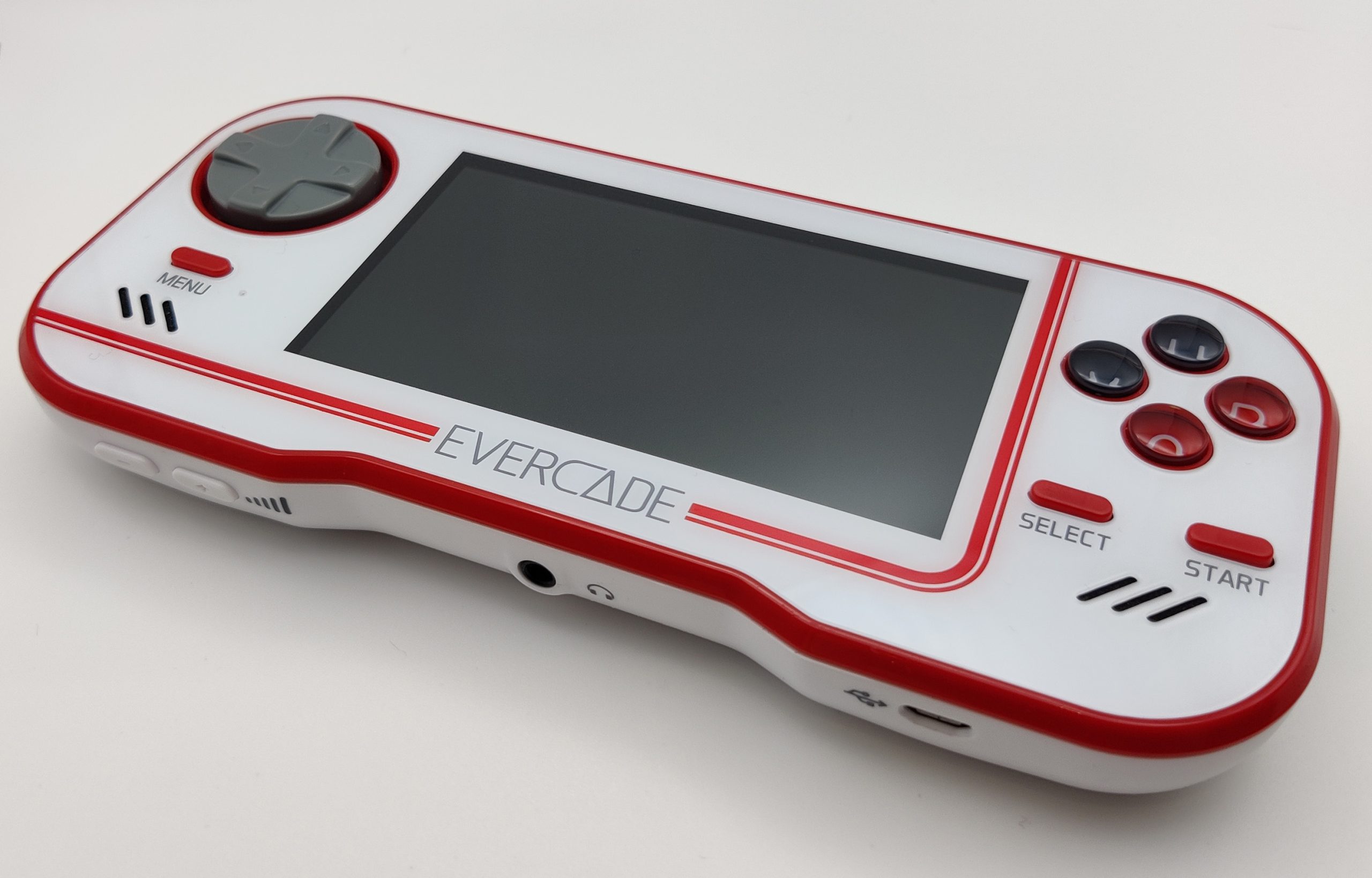
The Evercade is a handheld retro gaming console developed by British company Blaze Entertainment, released worldwide in 2020.
Spec Table
| Spec | Value |
|---|---|
| Maker | Blaze Entertainment |
| Type | Handheld |
| Generation | Not documented |
| Release Date | Worldwide: 2020 |
| Launch Price | $80 USD |
| Units Sold | Not documented |
| Media | NAND-flash cartridges |
| CPU | 1.2 GHz Cortex-A7 |
| Predecessor / Successor | None / Evercade EXP |

History
Blaze Entertainment released the Evercade in May 2020, positioning it as a curated alternative to the wave of software-emulator handhelds that had dominated the retro market. Rather than pack a single device with thousands of ROMs, Blaze built the system around physical NAND-flash cartridges, each one a licensed, pre-selected bundle of games from a specific publisher or platform. The approach echoed the cartridge-swapping ritual of systems like the Atari 2600 and NES, giving the Evercade a tactile identity that software-only handhelds lacked.
At launch, Blaze shipped ten cartridges holding 122 games total, drawing from publishers including Atari, Bandai Namco, and Arc System Works. The lineup spanned Atari 2600, NES, SNES, Sega Genesis, Intellivision, arcade, and home computer titles, letting a single handheld stand in for shelves of separate original hardware. Early coverage was mixed at first; the handheld device review site Seafoam Gaming noted that initial units drew criticism over button mapping and HDMI audio output, problems that tempered enthusiasm before the hardware won reviewers over. Once those concerns settled, the same review praised the emulation quality and controller feel, eventually awarding the console a 9 out of 10 and calling it “a retro gamer’s dream handheld.”
Under the hood, the Evercade runs on a 1.2 GHz Cortex-A7 processor paired with 256MB of RAM, driving a 4.3-inch, 480×272 LCD screen. That modest spec sheet was enough to emulate the target library faithfully, and it kept the retail price accessible at launch. The licensing-first model set the Evercade apart from competitors that relied on unlicensed ROM dumps, a distinction that mattered to publishers wary of piracy and to collectors who valued a legitimate release.
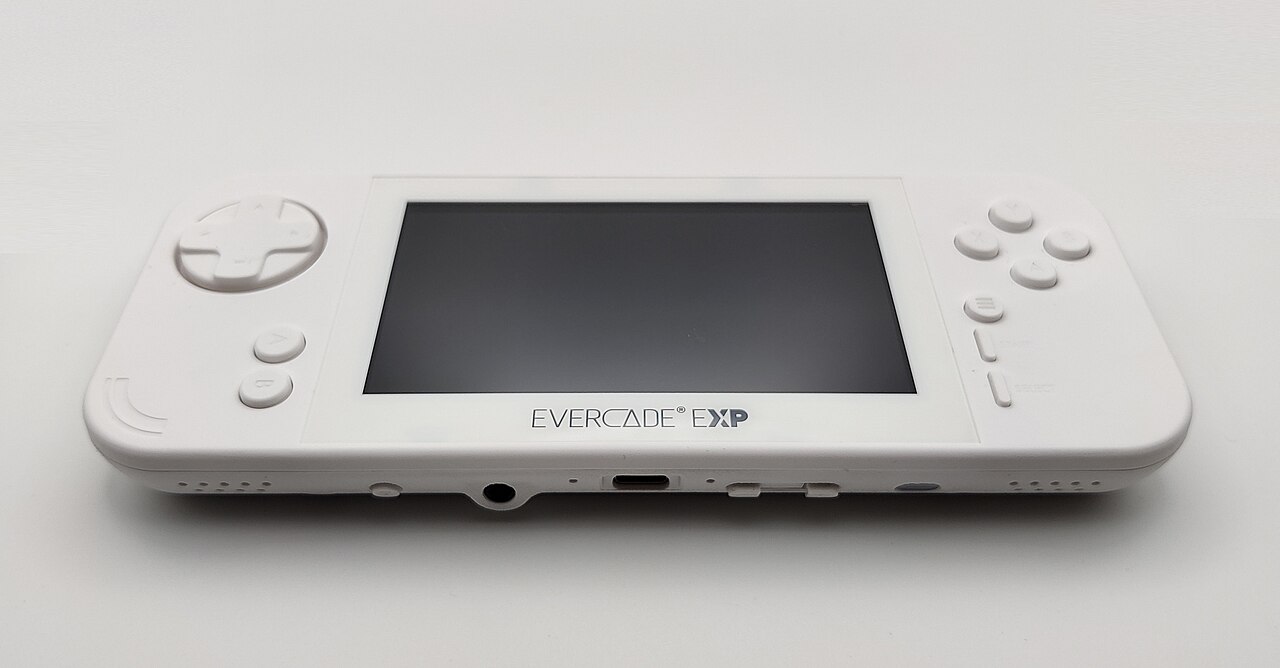
The original handheld’s commercial reception encouraged Blaze to grow the concept into a full product line. The Evercade VS brought the same cartridge library to a home console format with four-player support and 1080p output, while the Evercade EXP refined the handheld with an improved screen and control layout. A further successor, the Evercade Nexus, was planned as the next system in the lineup. Across that product line, the original 2020 Evercade remains the device that established the cartridge-based revival format.
Library Highlights
Rather than a single fixed game list, the Evercade’s library is built from cartridge collections spanning multiple historic platforms, giving owners a curated cross-section of classic gaming eras in one handheld.
- Atari 2600 titles
- NES titles
- SNES titles
- Sega Genesis titles
- PlayStation titles
- Intellivision titles
- Arcade titles
- Home computer titles

Variants
No major hardware revisions of the original 2020 Evercade handheld are documented. Blaze instead expanded the product line with related systems rather than revising the original unit: the Evercade VS home console, the Evercade EXP handheld, and a next-generation Evercade Nexus. Each shares cartridge compatibility with the original handheld’s game library rather than replacing it outright. See the Blaze Entertainment manufacturer hub for the full family of systems the company has released.
Collector Value
Because the Evercade is a relatively recent release still in production as part of an active product line, complete, boxed units are widely available and generally affordable compared to vintage 1980s and 1990s hardware. Collector interest centers more on the cartridges than the handheld itself: early or limited-run cartridge collections can command a premium once discontinued, while the console unit’s value stays fairly stable given ongoing retail availability. Buyers should check that the screen shows no dead pixels and that the cartridge slot’s contacts are clean, since a loose or dirty connection is the most commonly reported issue with this hardware.
Buying Guide
Before buying a used Evercade, confirm the seller includes the original power cable, since the handheld’s charging port and connector are not universally standard across accessories. Test the cartridge slot with an actual cartridge rather than relying on a power-on test alone, and ask whether the included cartridges (if any) are genuine Blaze-published collections rather than reproductions. Inspect the LCD screen closely for dead or stuck pixels, a known point of variance on early units.
FAQs
When did the Evercade come out?
The Evercade launched worldwide in 2020.
How much did the Evercade cost at launch?
The Evercade launched at $80 USD.
How many units did the Evercade sell?
Official lifetime unit sales for the Evercade are not documented.
What games can you play on the Evercade?
The Evercade plays cartridge collections spanning Atari 2600, NES, SNES, Sega Genesis, Intellivision, PlayStation, arcade, and home computer titles.
What console followed the Evercade?
Blaze Entertainment’s next handheld in the line was the Evercade EXP, released after the original Evercade and the home-console Evercade VS.

Sources
- https://en.wikipedia.org/wiki/Evercade
- https://seafoamgaming.com/2021/09/06/evercade-handheld-review/
Facts on this page last verified 2026-07-15.