This article contains Amazon affiliate links — as an Amazon Associate, RetroArcade earns from qualifying purchases.
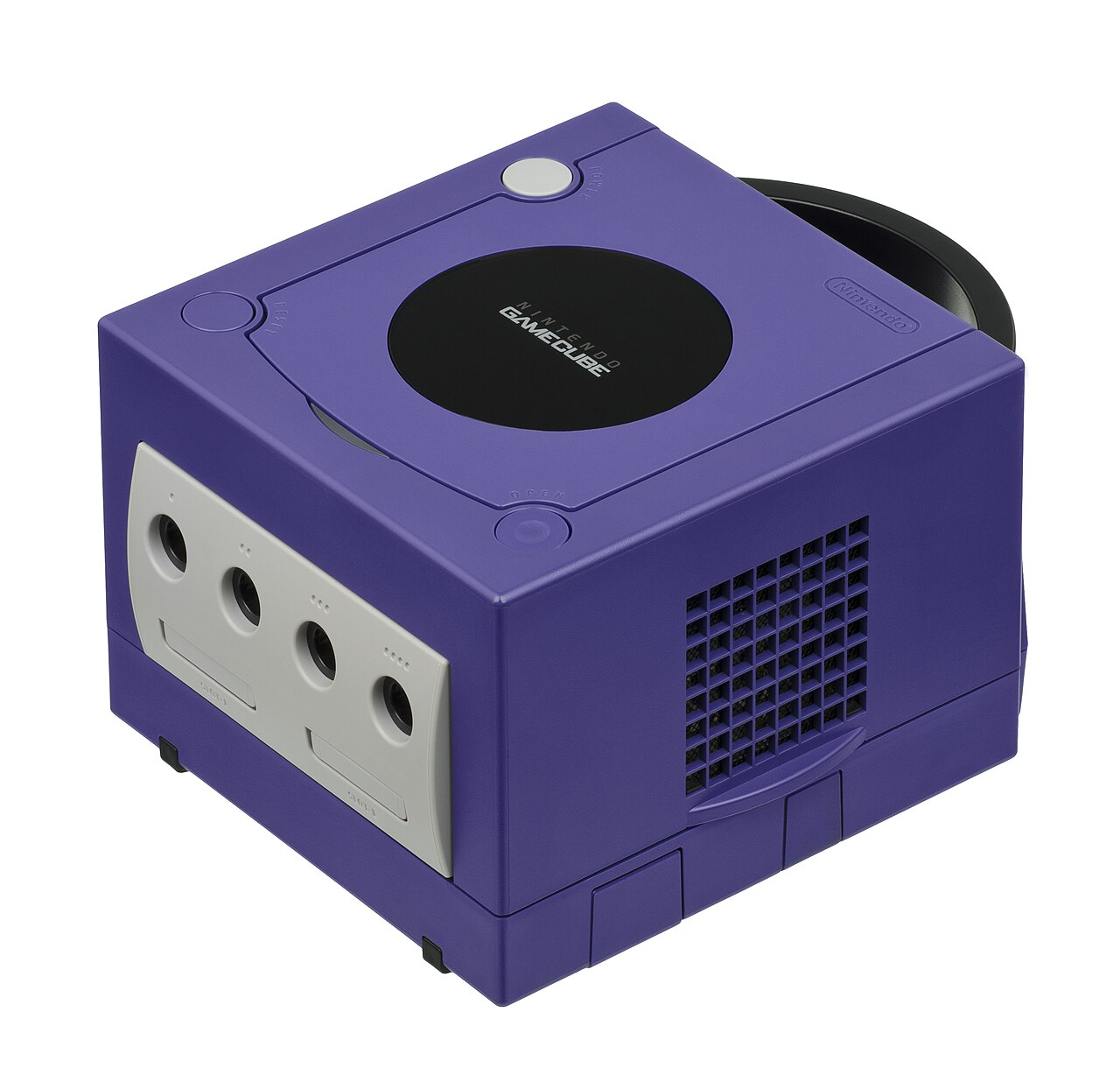
The GameCube is a sixth-generation home console released by Nintendo, debuting in Japan in 2001 before arriving in North America and Europe later that year.
Spec Table
| Spec | Value |
|---|---|
| Maker | Nintendo |
| Type | Home console |
| Generation | 6th generation |
| Release Date | Japan: 2001 (initial); Australia: 2001; North America: 2001; Europe: 2001 |
| Launch Price | $199 USD |
| Units Sold | 21.74 million |
| Media | GameCube Game Disc (miniDVD-based optical format, 1.5GB capacity) |
| CPU | IBM Gekko PowerPC 486 MHz with 1.9 GFLOPS FPU, peak 10.5 GFLOPS |
| Predecessor / Successor | Nintendo 64 / Wii |

History
Nintendo built the GameCube, internally codenamed “Dolphin,” to overcome the Nintendo 64’s developer friction. Partnering again with ArtX on the “Flipper” GPU and IBM on the Gekko CPU, Nintendo chose proprietary miniDVD optical discs over cartridges—a first for the company, balancing speed against cartridge production costs and developer accessibility.
Launched globally in 2001 at USD, the GameCube undercut the PlayStation 2 but faced perception headwinds: a weak launch lineup, the cel-shaded The Wind Waker reveal disappointing fans expecting mature visuals, a carry handle perceived as toyish outside Japan, and the loss of Rareware to Microsoft in 2002. Delayed developer kits, echoing N64’s struggles, limited third-party support throughout its life.
Yet the GameCube built one of Nintendo’s fondest remembered libraries: Super Smash Bros. Melee, Metroid Prime, and The Legend of Zelda: The Wind Waker led a roster of creative exclusives. The console finished second among sixth-generation systems with 21.74 million units sold (behind PlayStation 2’s ~155 million) before discontinuation in February 2007. The Flipper GPU’s architecture lived on in the Wii, which shipped backward compatible with GameCube discs and controllers.
Library Highlights
The GameCube’s library is remembered less for third-party breadth than for a run of distinctive, creatively confident first-party exclusives that still define the console’s reputation today.
- Super Smash Bros. Melee
- Metroid Prime
- The Legend of Zelda: The Wind Waker
- Resident Evil 4
- Eternal Darkness: Sanity’s Requiem

Variants
The GameCube supported the Game Boy Player accessory, which attached to the base of the console and let it run Game Boy and Game Boy Advance cartridges on a television, effectively extending the system’s library into Nintendo’s handheld catalog. No major hardware revisions to the GameCube itself are documented. See the full Nintendo manufacturer hub for other systems the company released.
Collector Value
Complete-in-box GameCube consoles hold steady collector interest, with price driven mainly by cosmetic condition, the presence of original packaging and manuals, and controller/memory card completeness, since Nintendo never sold the console with a memory card included. Loose, tested units remain common and affordable, while sealed consoles and colored limited-edition shells command a real premium. Because the console uses miniDVD-style optical discs rather than cartridges, always check that a used unit’s laser reads discs reliably before buying, since a worn or misaligned optical drive is the most common GameCube repair issue.

Buying Guide
Before buying a used GameCube, check that the seller includes the original AC adapter and AV cable, since these are increasingly hard to source separately and third-party replacements vary in quality. Ask whether the console has been tested reading a disc rather than just powering on, since the miniDVD-format optical drive is the part most likely to fail with age. Also confirm which controller ports and memory card slots are functional, as worn slots are a common issue on units that saw heavy use.
FAQs
When did the GameCube come out?
The GameCube launched in Japan, North America, Australia, and Europe in 2001.
How many units did the GameCube sell?
The GameCube sold approximately 21.74 million units worldwide, placing it second among sixth-generation home consoles behind the PlayStation 2.
How much did the GameCube cost at launch?
The console launched at $199 USD.
What CPU does the GameCube use?
It uses an IBM Gekko PowerPC processor running at 486 MHz, with a floating-point unit rated at 1.9 GFLOPS and a peak of 10.5 GFLOPS.
What console followed the GameCube?
Nintendo’s next home console was the Wii, which succeeded the GameCube and remained backward compatible with its discs and controllers.
Sources
- https://en.wikipedia.org/wiki/GameCube
- https://www.nintendolife.com/news/2021/09/hardware_classics_nintendo_gamecube
Facts on this page last verified 2026-07-15.