This article contains Amazon affiliate links — as an Amazon Associate, RetroArcade earns from qualifying purchases.
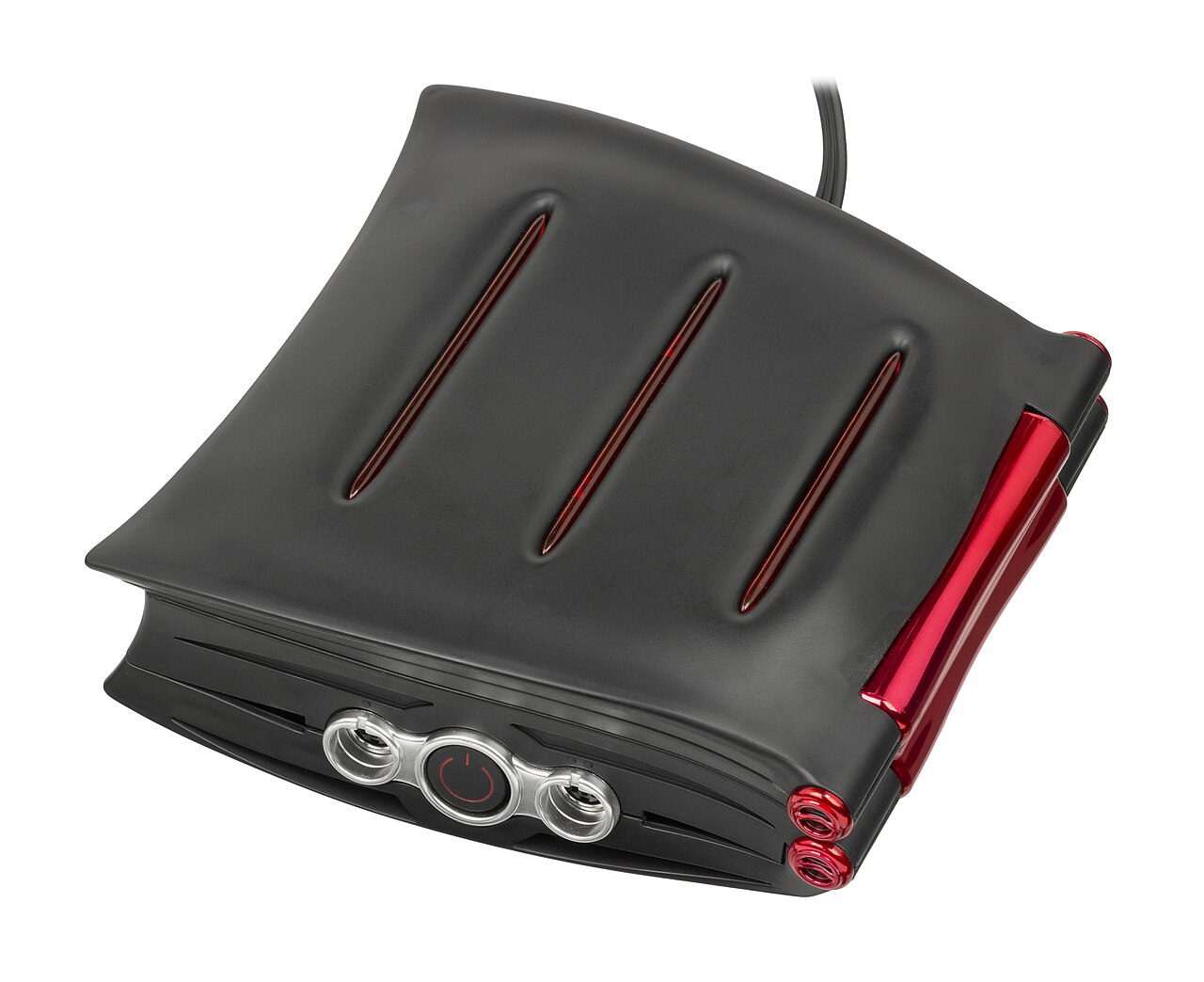
The HyperScan is a seventh-generation home console released by Mattel in 2006.
Spec Table
| Spec | Value |
|---|---|
| Maker | Mattel |
| Type | Home console |
| Generation | 7th generation |
| Release Date | North America: 2006 |
| Launch Price | $69.99 USD |
| Units Sold | ~30,000 |
| Media | CD-ROM |
| CPU | Sunplus SPG290 (108 MHz) |
| Predecessor / Successor | None documented |

History
Mattel launched the HyperScan in North America on October 23, 2006, at $69.99, entering the seventh-generation console race already dominated by the PlayStation 3, Xbox 360, and Wii. Rather than compete on graphical horsepower, Mattel bet on a novelty: a built-in 13.56 MHz RFID scanner that read proprietary “IntelliCards,” letting players unlock characters, boost stats, and carry save data between sessions by tapping a card to the console. The pitch targeted tweens through licensed properties, pairing the hardware with Marvel and Cartoon Network franchises rather than original games.
The hardware itself was modest even by 2006 standards, built around a Sunplus SPG290 processor clocked at 108 MHz with 16MB of DDR SDRAM, outputting 640×480 video through a CD-ROM drive rather than cartridges or a hard disk. That combination left the HyperScan unable to match the visual fidelity of same-generation rivals, and reviewers singled out its “outdated 2D graphics” as an early sign the console had arrived overmatched. Compounding the hardware’s limits, the RFID reader that was supposed to be the system’s defining feature reportedly worked unreliably, undermining the one mechanic Mattel had built the whole platform around.
Mattel’s software plans collapsed almost as quickly as they began. Only five games ever reached retail: X-Men, Spider-Man, Marvel Heroes, Ben 10, and Interstellar Wrestling League. Two more titles, an Avatar: The Last Airbender tie-in and a Nickelodeon extreme-sports game, were finished or nearly finished but never shipped once Mattel pulled the plug. Collectible IntelliCards, sold separately from the games, added extra cost on top of an already thin library, and the console faced direct competition from VTech’s V.Flash, a similarly positioned CD-based system that beat it to market by a month.
Retail prices collapsed within months of launch, with the console reportedly discounted to $9.99 and games to $1.99 as Mattel cleared inventory. By 2007 the company had discontinued the HyperScan entirely, closing out a run that sold only around 30,000 units and stands as one of the least commercially successful home consoles ever released. It was Mattel’s only entry into the seventh console generation, a rare misstep for a company whose earlier Intellivision had been a genuine contender in the early home console market decades before.
Library Highlights
With only five games ever released, the HyperScan’s library leaned entirely on licensed superhero and cartoon properties rather than original design, and none of its titles achieved lasting recognition.
- X-Men
- Spider-Man
- Marvel Heroes
- Ben 10
- Interstellar Wrestling League

Variants
No major hardware variants are documented for the HyperScan. Mattel released a single console configuration in North America before discontinuing the platform in 2007, and no regional re-brands or bundle revisions are recorded in available sources.
Collector Value
The HyperScan’s rarity today comes less from demand than from how few units ever circulated in the first place, with roughly 30,000 consoles sold and an even smaller number of complete-in-box examples surviving with their IntelliCards intact. Loose consoles turn up occasionally at a modest premium as a curiosity piece for collectors of failed hardware, but complete sets with games and cards in good condition are considerably scarcer and priced accordingly. Because the console’s core feature depended on a scanner with known reliability problems, buyers should treat working RFID functionality as a bonus rather than an assumption.
Buying Guide
Before buying a used HyperScan, confirm the seller can demonstrate the RFID scanner actually reading an IntelliCard, since the reader was unreliable even when new and age has not helped. Check that the power adapter and AV cables included are original or period-correct, as third-party replacements for this short-lived system are scarce. Because only five games and a limited run of IntelliCards were ever produced, verify exactly what software and cards are included before paying a premium for a “complete” listing.
FAQs
When did the HyperScan come out?
The HyperScan launched in North America in October 2006, specifically on October 23, 2006.
How many units did the HyperScan sell?
The HyperScan sold approximately 30,000 units before Mattel discontinued it in 2007, making it one of the worst-selling home consoles ever released.
How much did the HyperScan cost at launch?
The HyperScan launched at $69.99 USD.
What made the HyperScan different from other consoles?
The HyperScan’s defining feature was a built-in RFID scanner that read collectible IntelliCards to unlock characters, boost stats, and carry save data, a mechanic that was innovative but ultimately unreliable in practice.
How many games were released for the HyperScan?
Only five games reached retail: X-Men, Spider-Man, Marvel Heroes, Ben 10, and Interstellar Wrestling League, before Mattel discontinued the platform in 2007.
Sources
- https://en.wikipedia.org/wiki/HyperScan
- https://www.svg.com/968730/why-the-mattel-hyperscan-was-a-complete-failure/

Facts on this page last verified 2026-07-15.