This article contains Amazon affiliate links — as an Amazon Associate, RetroArcade earns from qualifying purchases.
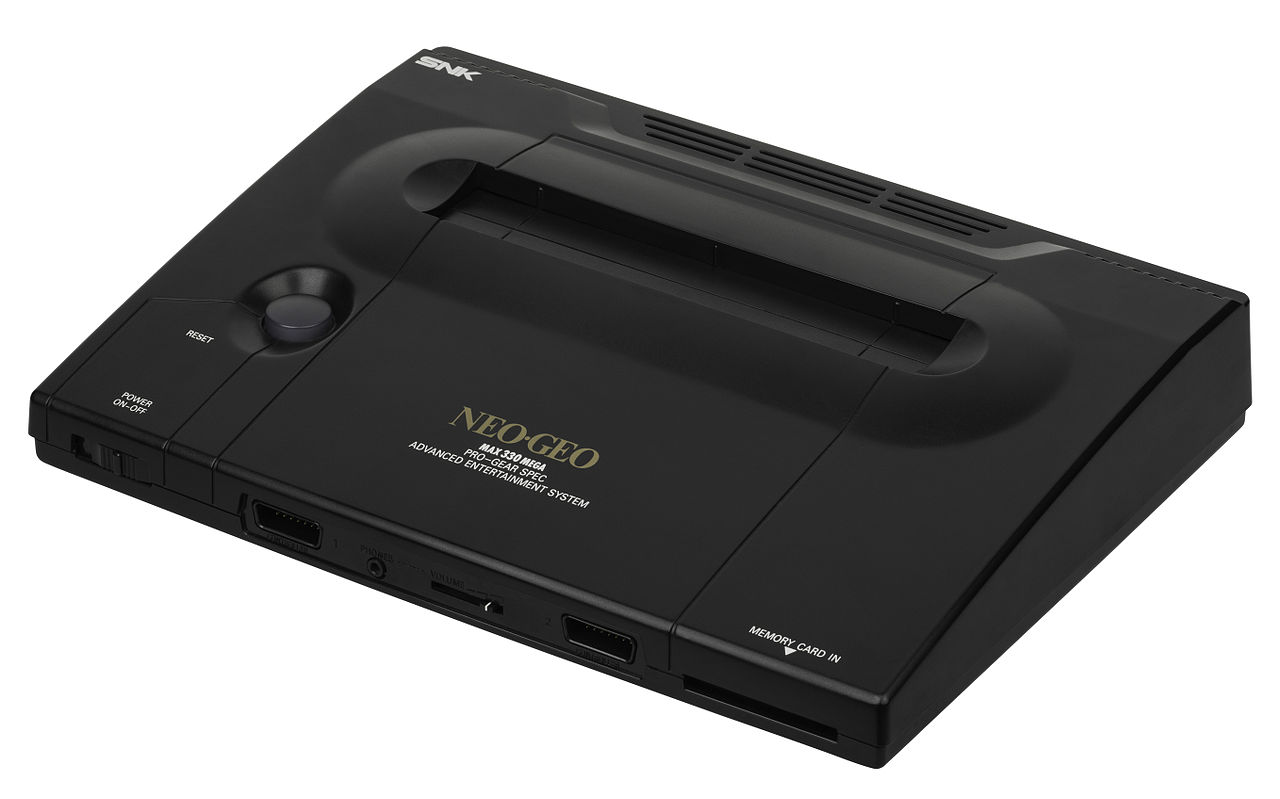
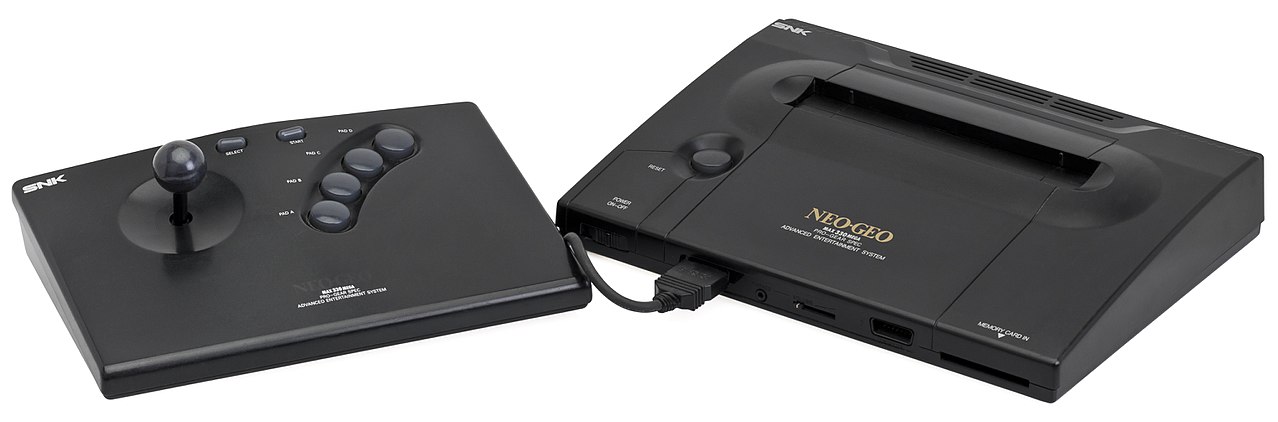
The Neo Geo AES is a fourth-generation home console released by SNK, arriving in Japan in 1990 and reaching North America in 1991.
Spec Table
| Spec | Value |
|---|---|
| Maker | SNK |
| Type | Home console |
| Generation | 4th generation |
| Release Date | Japan: 1990 (initial); North America: 1991; Europe: 1991 |
| Launch Price | $649.99 USD |
| Units Sold | 980,000 |
| Media | ROM cartridges |
| CPU | Motorola 68000 @ 12 MHz with Zilog Z80 coprocessor @ 4 MHz |
| Predecessor / Successor | Not documented / Not documented |
History
SNK introduced the Neo Geo AES, short for Advanced Entertainment System, in Japan on April 26, 1990, but not initially as a retail product. The company first placed the hardware into rental kiosks at video rental shops, hotels, and restaurants, letting curious players sample arcade-caliber games for a fee rather than committing to a purchase. Demand from that rental scheme proved strong enough that SNK reversed course and began selling the console directly to consumers later that year, followed by North American and European retail launches in 1991.
What made the pitch unusual was authenticity: the AES ran on essentially the same board design as SNK’s MVS arcade system, so a game played at home looked and performed identically to its coin-operated counterpart, a claim few rival consoles of the fourth generation could make. That fidelity came at a steep cost. At $649.99, the AES launched as the most expensive home video game console yet released, equivalent to roughly $1,540 in 2025 dollars, and individual cartridges often ran $200 to $300 apiece because they used the same expensive ROM chips found in arcade boards rather than cheaper mass-market cartridge stock. SNK later tried to widen the console’s reach with a stripped-down “Silver System” variant priced at $399.99, though the core lineup remained a luxury purchase throughout its life.
The price tag kept the AES a niche product in Japan and pushed North American sales even lower, since American shoppers had cheaper fourth-generation alternatives from Nintendo and Sega, including the rival Sega Genesis/Mega Drive, competing hard for the same living rooms. SNK also released a CD-based sibling, the Neo Geo CD, aimed at undercutting the AES’s cartridge costs with cheaper discs, and the two systems together moved roughly 980,000 units worldwide, a fraction of what Nintendo and Sega achieved in the same era. Capcom pursued a similar home-arcade concept later in the generation with its own CPS Changer, though that system never approached the Neo Geo’s cultural footprint.
Despite its commercial struggles, the AES became one of the longest-supported platforms in video game history. SNK kept publishing new cartridges for the system for fourteen years, with the fighting game Samurai Shodown V Special arriving in 2004 as the final official release. Low production numbers and high original prices later transformed the AES into a heavily pursued collector’s system, with certain rare European cartridges reportedly changing hands for tens of thousands of dollars decades after the console’s discontinuation.
Library Highlights
The AES library leaned heavily on 2D fighting games and run-and-gun action, built around franchises that SNK continued to expand for over a decade and that still anchor tournament and collector interest today.
- Fatal Fury
- Art of Fighting
- Samurai Shodown
- The King of Fighters
- Metal Slug
- Twinkle Star Sprites
- Garou: Mark of the Wolves
- Shock Troopers

Variants
Beyond the standard retail unit, SNK produced the lower-cost “Silver System” AES variant at $399.99 to broaden the console’s appeal, and the Japanese launch briefly existed only as commercial rental hardware in shops, hotels, and restaurants before SNK opened it to retail sale. No other major hardware revisions are documented. See the full SNK manufacturer hub for the company’s other systems, including the disc-based Neo Geo CD.
Collector Value
The Neo Geo AES sits among the most sought-after consoles in retro collecting, a direct legacy of its low production numbers and originally prohibitive price. Loose cartridges remain the most accessible entry point, while complete-in-box copies command steep premiums, and a handful of rare European releases produced in small print runs have reportedly sold for tens of thousands of dollars. Because AES cartridges use the same board-level construction as arcade MVS carts, buyers should watch for battery corrosion on titles with internal saves and confirm a cartridge boots cleanly before paying collector-grade prices.

Buying Guide
Before buying a used Neo Geo AES, confirm the seller includes the original AC adapter and RF cable, since period-correct SNK cables are scarce and expensive to replace. Inspect the cartridge slot’s connector pins for corrosion or bent contacts, and ask whether the console has actually been tested with a cartridge rather than simply powered on, since a bad connection is the most common issue on aging units. Given how expensive individual cartridges can be, verify authenticity and box condition carefully before paying collector prices for rarer titles.
FAQs
When did the Neo Geo AES come out?
The Neo Geo AES launched in Japan in 1990, followed by North America and Europe in 1991.
How many units did the Neo Geo AES sell?
The Neo Geo AES sold approximately 980,000 units worldwide over its lifetime.
How much did the Neo Geo AES cost at launch?
The console launched at $649.99 USD, roughly $1,540 in 2025 dollars, making it the most expensive home console at the time of its release.
What CPU does the Neo Geo AES use?
It uses a Motorola 68000 processor running at 12 MHz, paired with a Zilog Z80 coprocessor running at 4 MHz.
Why is the Neo Geo AES so expensive to collect today?
Low original sales volume combined with the console’s already-high launch price left relatively few units and cartridges in circulation, and rare European releases in particular have become some of the most valuable cartridges in retro game collecting.
Sources
Facts on this page last verified 2026-07-15.