This article contains Amazon affiliate links — as an Amazon Associate, RetroArcade earns from qualifying purchases.

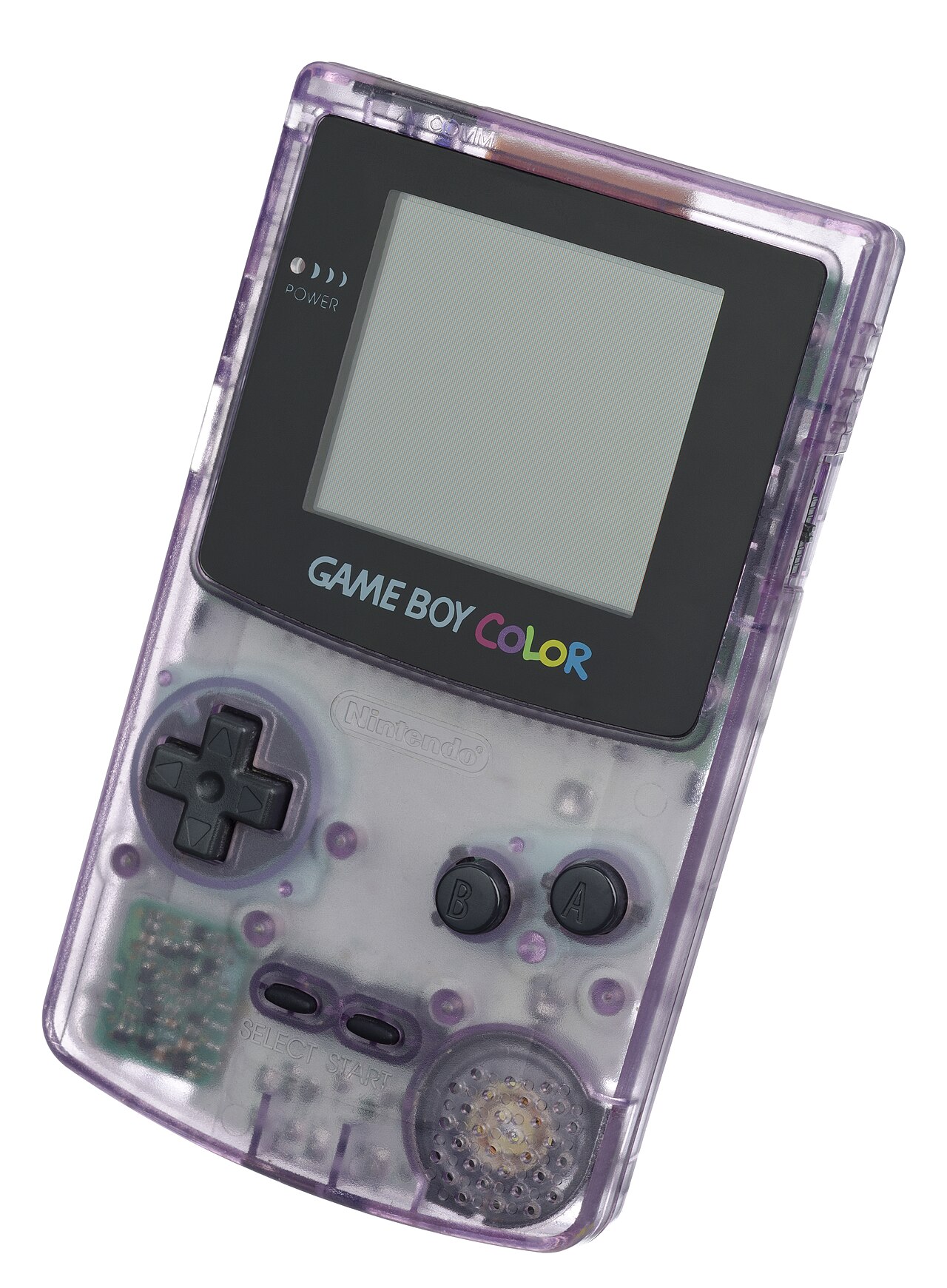
The Game Boy Color is a fifth-generation handheld console released by Nintendo in 1998.
Spec Table
| Spec | Value |
|---|---|
| Maker | Nintendo |
| Type | Handheld |
| Generation | 5th generation |
| Release Date | Japan: 1998; North America: 1998; Europe: 1998; Australasia: 1998 |
| Launch Price | .95 USD |
| Units Sold | 118.69 million (combined Game Boy and Game Boy Color) |
| Media | Game Boy Game Pak cartridges |
| CPU | Sharp SM83 processor at 4.194304 MHz (8.388608 MHz dual-speed mode) |
| Predecessor / Successor | Game Boy / Game Boy Advance |

History
Nintendo unveiled the Game Boy Color in March 1998 and rolled it out worldwide that fall, launching in Japan on October 21, then reaching North America on November 18, Europe on November 23, and Australasia on November 27. Priced at .95, the new handheld kept the same Game Pak cartridge slot as the original Game Boy so existing owners could upgrade without abandoning their libraries. Nintendo positioned it as a mid-generation refresh rather than a wholly new platform, a strategy that let the company move quickly while rivals were still finishing their own hardware.
The refresh arrived just as Nintendo faced its first serious handheld threat in years. Gunpei Yokoi, the engineer who had designed the original Game Boy, left Nintendo and was later hired by Bandai to help create a rival system called the WonderSwan, announced in late 1997. SNK also entered the field, shipping its own monochrome Neo Geo Pocket in Japan that October before rushing out a color version, the Neo Geo Pocket Color, only five months later in 1999. Bandai’s WonderSwan launched in March 1999 in the same monochrome state, meaning both challengers effectively ceded the color handheld market to Nintendo for a full year.
Where the Game Boy Color pulled decisively ahead was its screen and its software. Its reflective TFT display added color without the battery drain of a backlight, and the doubled clock speed plus four times the memory of the original Game Boy gave developers real room to build more ambitious games. That hardware, paired with the existing Game Boy back catalog rendered in full color, meant Nintendo could offer both familiarity and novelty at once, something neither the WonderSwan nor the Neo Geo Pocket line could match once they finally shipped color hardware of their own. It remains a defining handheld of the fifth console generation.
No single release mattered more to the Game Boy Color’s fortunes than Pokémon Gold and Silver, which arrived in Japan in late 1999 and sold roughly 23 million copies worldwide, reigniting a fan base that had already made the franchise a cultural phenomenon on the original Game Boy. Against that momentum, the WonderSwan managed about 3.5 million units sold entirely within Japan, and the Neo Geo Pocket line sold only around two million units globally despite a wider release. The Game Boy Color went on to sell more than 118 million units combined with its predecessor, and it held the title of best-selling handheld console until the Nintendo DS surpassed it years later.
Library Highlights
The Game Boy Color’s library leaned heavily on Nintendo’s established handheld franchises, refreshed in color and joined by a handful of new original titles that showed off the hardware’s improved capabilities.
- Pokémon Gold and Silver
- Tetris DX
- Wario Land II
- Pocket Bomberman
- The Legend of Zelda: Link’s Awakening DX
- Kirby’s Dream Land 2
- Donkey Kong Land
- Super Mario Land 2: 6 Golden Coins

Variants
No major hardware variants are documented for the Game Boy Color itself, though Nintendo sold the unit in a wide range of translucent and solid case colors, and later bundled it with individual game releases such as Pokémon-themed units. See the full Nintendo manufacturer hub for the other handhelds and consoles the company released around the same era.
Collector Value
Game Boy Color units are plentiful and generally affordable compared with rarer retro hardware, though pricing still varies by shell color, screen condition, and whether the original box and manual survive. Common colors in loose, tested condition remain inexpensive, while limited-edition colorways and complete-in-box examples command a real premium among collectors. Because the plastic shell can discolor with age and the screen is prone to scratching, condition grading matters more here than for most cartridge-based handhelds, and sealed units are especially scarce given how widely the system was played.

Buying Guide
Before buying a used Game Boy Color, confirm the unit powers on with fresh batteries and check the screen for dead pixels, scratches, or a dim backlight-free display that’s harder to see in low light. Inspect the cartridge slot’s connector pins for corrosion, since a worn slot can cause save-data or graphical glitches with certain games. Ask whether the seller has tested the unit with a cartridge that requires the Real-Time Clock feature, such as Pokémon Gold or Silver, since these games are more likely to reveal a dead internal battery.
FAQs
When did the Game Boy Color come out?
The Game Boy Color launched in Japan, North America, Europe, and Australasia during 1998.
How many units did the Game Boy Color sell?
Nintendo sold roughly 118.69 million units combined across the original Game Boy and Game Boy Color.
How much did the Game Boy Color cost at launch?
The console launched at .95 USD.
What CPU does the Game Boy Color use?
It uses a Sharp SM83 processor running at 4.194304 MHz, or 8.388608 MHz in its dual-speed mode.
What console followed the Game Boy Color?
Nintendo’s next handheld was the Game Boy Advance, which succeeded the Game Boy Color as the company’s flagship portable system.
Sources
- https://en.wikipedia.org/wiki/Game_Boy_Color
- https://www.timeextension.com/features/flashback-almost-30-years-ago-snk-and-bandai-made-the-exact-same-mistake-trying-to-take-down-nintendo
Facts on this page last verified 2026-07-15.