This article contains Amazon affiliate links — as an Amazon Associate, RetroArcade earns from qualifying purchases.
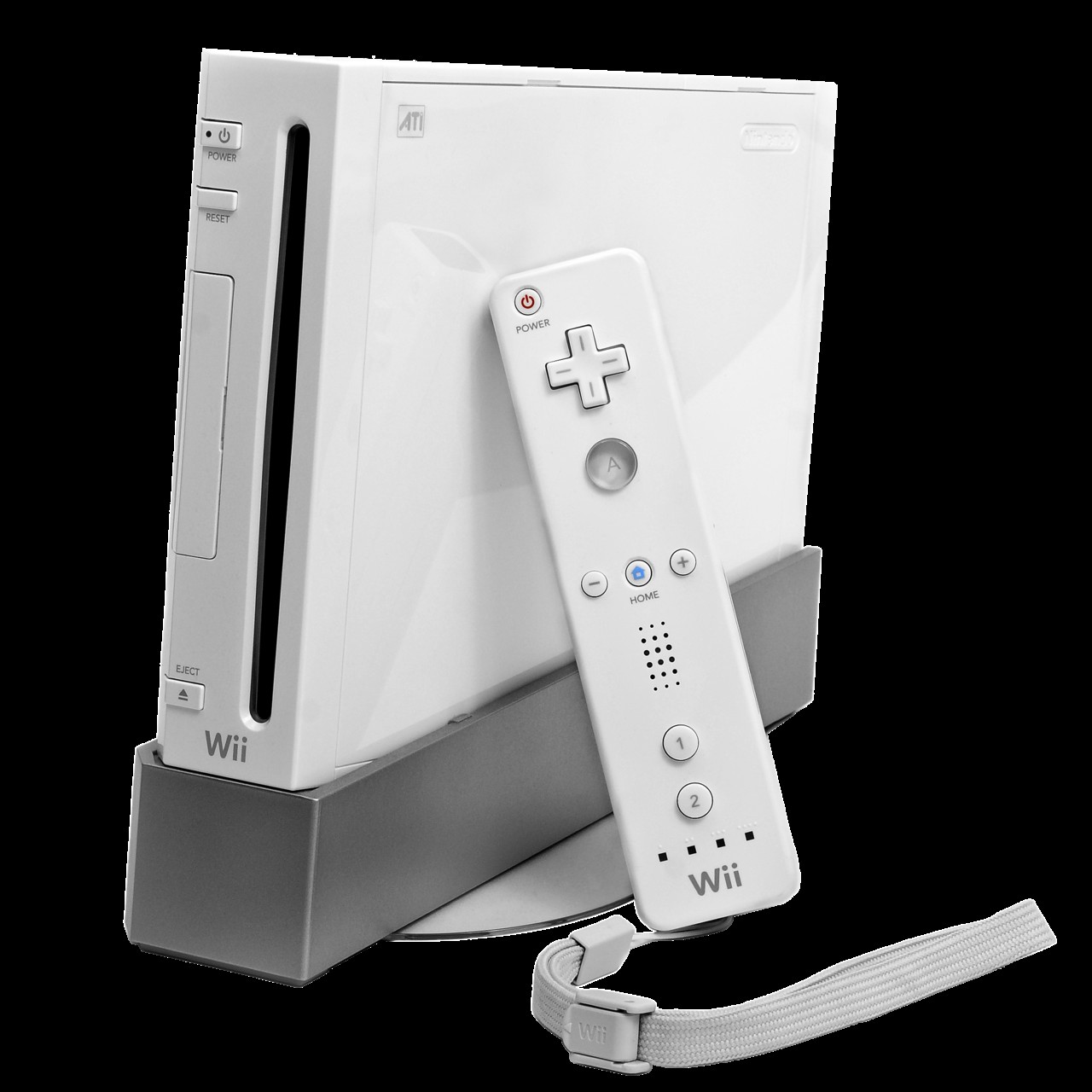
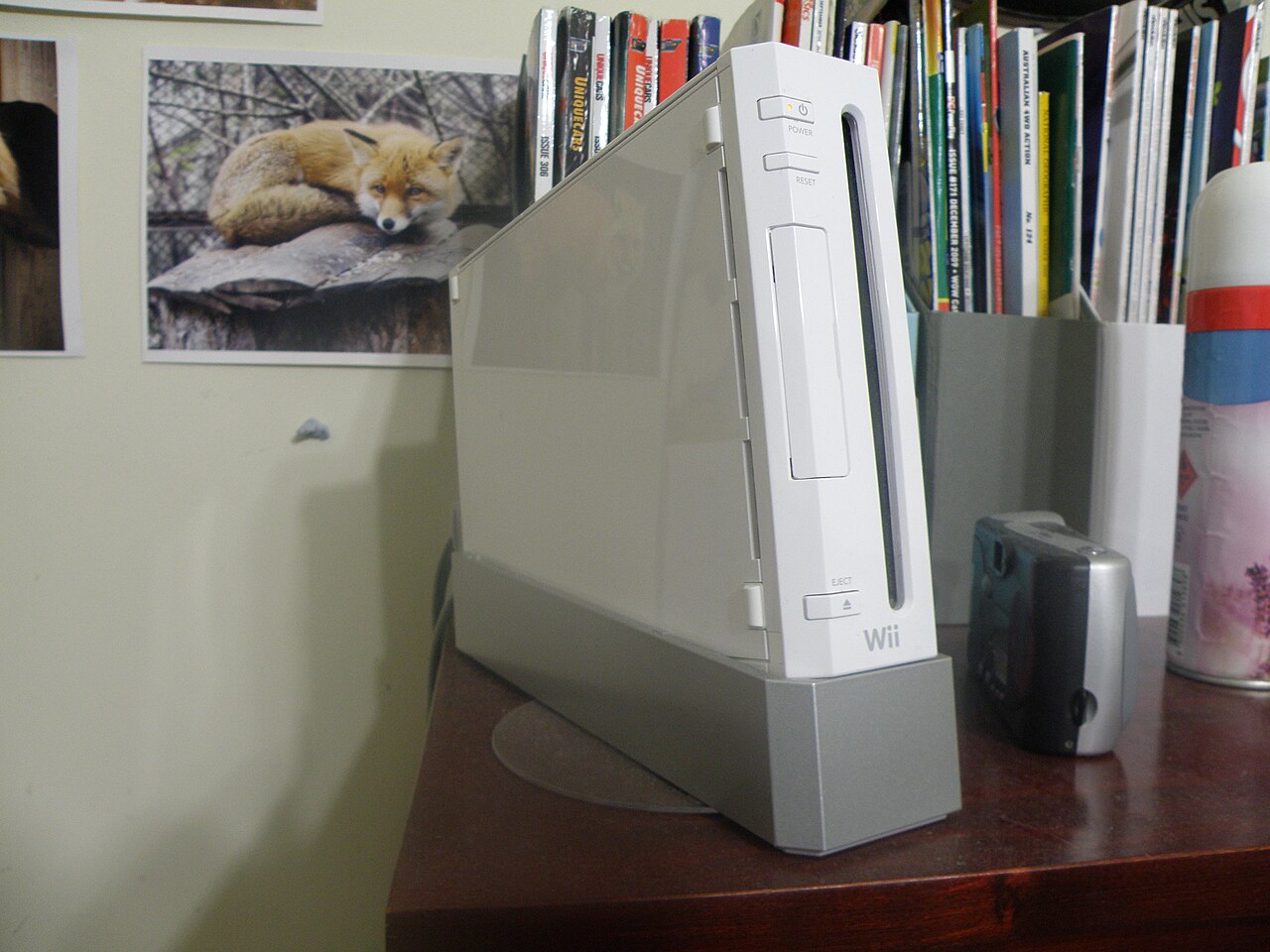
The Wii is a seventh-generation home console released by Nintendo in 2006, best known for introducing motion-based controls to a mainstream audience.
Spec Table
| Spec | Value |
|---|---|
| Maker | Nintendo |
| Type | Home console |
| Generation | 7th generation |
| Release Date | 2006 (North America, Japan, Australia, Europe) |
| Launch Price | $249.99 USD |
| Units Sold | 101.63 million |
| Media | Proprietary Wii optical discs (12 cm) and GameCube discs (8 cm) |
| CPU | Broadway 32-bit PowerPC @ 729 MHz (IBM), Hollywood GPU @ 243 MHz (ATI) |
| Predecessor / Successor | GameCube / Wii U |
History
Nintendo brought the Wii to market on November 19, 2006, positioning it against Sony’s PlayStation 3 and Microsoft’s Xbox 360 in the seventh console generation. Rather than compete purely on graphical horsepower, Nintendo bet on an entirely different control scheme built around the wireless Wii Remote, which let players swing, point, and tilt to steer on-screen action instead of relying solely on buttons and joysticks. That approach was a deliberate departure from the arms race Nintendo had been losing throughout the GameCube era, and it opened the console to people who had never considered themselves gamers.
Pricing reinforced the strategy. At $249.99, the Wii undercut both of its rivals by a wide margin; the Xbox 360 launched at $399 and the PlayStation 3 started around $499 to $599 depending on configuration. Every console shipped with Wii Sports, a bundled compilation of tennis, bowling, baseball, golf, and boxing built to showcase the remote’s motion sensing. The pack-in quickly became a cultural phenomenon in its own right, eventually selling roughly 82.78 million copies and ranking among the best-selling video games ever made.
The combination of low price, an approachable control method, and a genuinely fun pack-in title drove sustained demand well beyond typical console launches, with retailers frequently struggling to keep units in stock through the following year. Nintendo followed the momentum with software built specifically around casual, living-room appeal, including Wii Fit’s balance board fitness games, while its first-party library still delivered traditional core experiences such as The Legend of Zelda: Twilight Princess, Mario Kart Wii, and Super Smash Bros. Brawl. The console belongs to the seventh console generation alongside the PlayStation 3 and Xbox 360, though its design philosophy diverged sharply from both.
The Wii’s success reshaped how the industry thought about control schemes; Microsoft answered with Kinect’s camera-based tracking and Sony introduced PlayStation Move’s wand controllers, both explicit responses to motion gaming’s newfound mainstream appeal. By the time production wound down, the Wii had sold 101.63 million units, making it the third-best-selling home console in history and Nintendo’s best-selling home system until the Switch eventually overtook it in 2021. Some longtime fans felt the console’s casual focus came at the expense of technical ambition, but its commercial impact on the industry was undeniable.
Library Highlights
The Wii’s library balanced motion-driven newcomer-friendly titles with entries in Nintendo’s flagship franchises, giving it broad appeal across casual and dedicated players alike.
- Wii Sports
- The Legend of Zelda: Twilight Princess
- Super Monkey Ball: Banana Blitz
- Red Steel
- Wii Fit
- Mario Kart Wii
- Super Smash Bros. Brawl
- Donkey Kong Country Returns

Variants
Nintendo released a lower-cost Wii Family Edition later in the console’s life, removing GameCube compatibility and the memory card slots. A slimmer redesign, sometimes called the Wii Mini in North America, dropped online connectivity and GameCube disc support entirely. See the full Nintendo manufacturer hub for other systems the company released.
Collector Value
Because so many units were sold, loose and complete Wii consoles remain inexpensive and widely available compared to earlier Nintendo hardware, with pricing driven mostly by bundle contents, controller count, and cosmetic condition of the white plastic shell. Sealed units and less common variants such as the Wii Mini command a modest premium, while original Wii Remotes with working MotionPlus and functioning Sensor Bars add value to a used bundle. Collectors should verify that included game discs are not scratched, since the console’s laser assembly is a common point of failure on well-used units.

Buying Guide
Before buying a used Wii, confirm the seller includes the AC adapter, Sensor Bar, and at least one Wii Remote with its wrist strap, since these are frequently missing from loose consoles. Test that the disc drive reads reliably, as laser wear is the most common issue on high-mileage units, and check whether the console has been updated enough to still connect to Nintendo’s online services if that matters to you. Confirm GameCube compatibility if that is a priority, since some later revisions removed it.
FAQs
When did the Wii come out?
The Wii launched in North America, Japan, Australia, and Europe in 2006, debuting on November 19, 2006 in North America.
How many units did the Wii sell?
The Wii sold approximately 101.63 million units worldwide, making it Nintendo’s best-selling home console until the Switch surpassed it in 2021.
How much did the Wii cost at launch?
The Wii launched at $249.99 USD, undercutting the Xbox 360 ($399) and PlayStation 3 ($499-$599) by a significant margin.
What made the Wii’s controller different?
The Wii Remote used motion sensing to let players control games through physical gestures rather than buttons alone, a design that inspired competing systems like Xbox Kinect and PlayStation Move.
What console followed the Wii?
Nintendo’s next home console was the Wii U, released as the Wii’s direct successor.

Sources
- https://en.wikipedia.org/wiki/Wii
- https://www.ebsco.com/research-starters/sports-and-leisure/nintendo-wii
Facts on this page last verified 2026-07-15.